

Cardinal Enrico Dante devoted his entire life and all his efforts to serving the Church and the successive successors of Saint Peter, fulfilling numerous important tasks entrusted to him with trust, which he combined on a daily basis with his priestly ministry. This man was not only Roman by birth — his entire being radiated the famous romanitas. His example inspired numerous generations of priests, teaching them to love the One, Holy, Catholic, and Apostolic Church, whose visible head is the Bishop of Rome. The biography was compiled on the basis of documents found in the Archives of the Papal Masters of Ceremonies.
Source: see!
I. CHILDHOOD AND EDUCATION
Enrico, the third of five sons of Achilles Dante – an Italian patriot devoted to Giuseppe Garibaldi – and Zenaide Ingegni (she died when he was eight), was born on July 5, 1884.
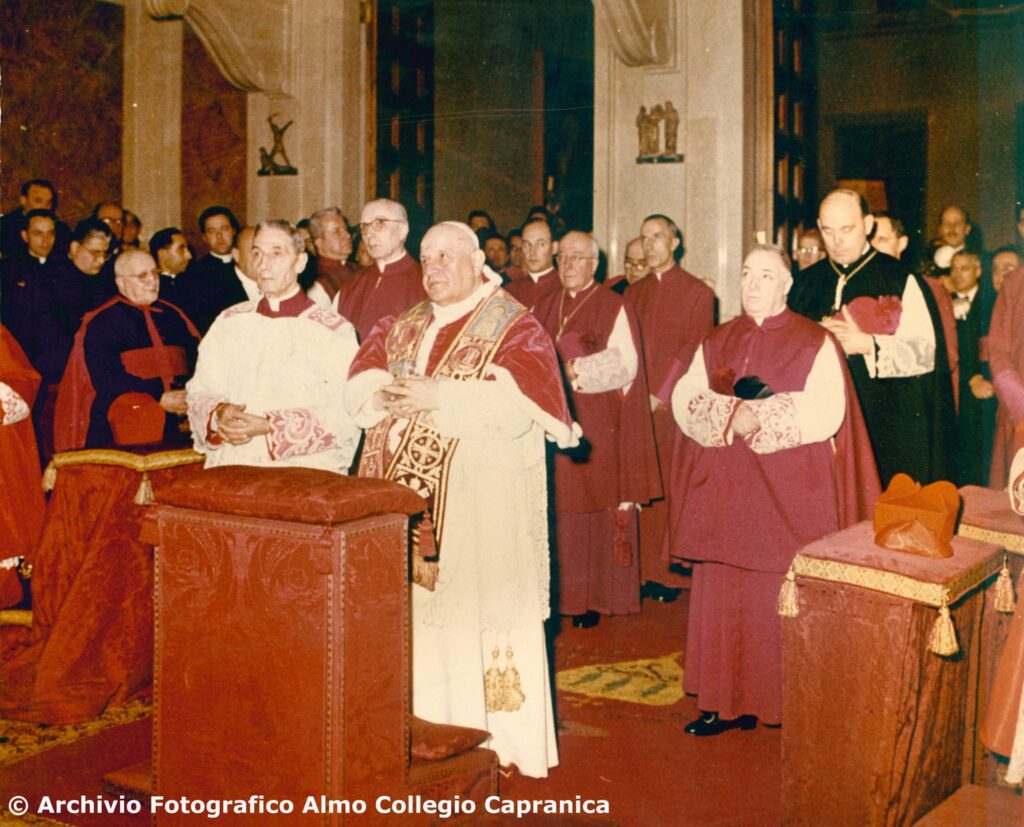
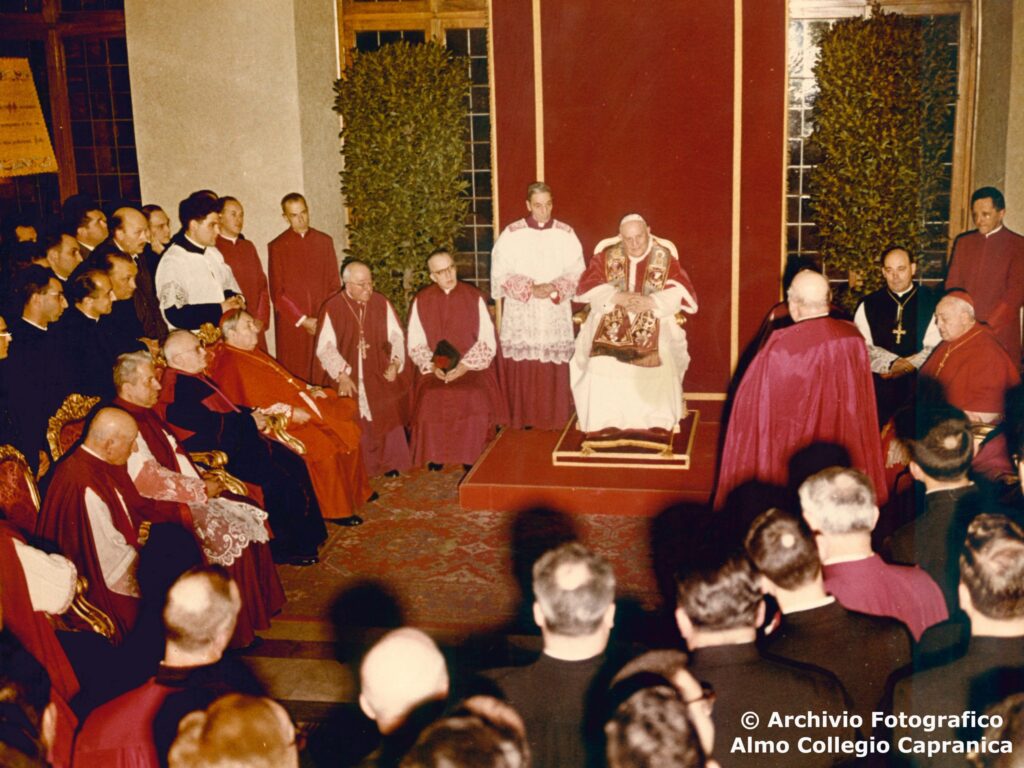
As a young boy, Enrico was sent by his parents to Paris, where, under the tutelage of the Fathers of Our Lady of Sion, he became one of the best students, acquiring a solid knowledge of Greco-Roman classics and the necessary cultural and humanistic knowledge. After completing the first stage of his education, he moved to Rome’s Almo Collegio Capranica, where he received the necessary formation and preparation for the priesthood, while simultaneously edifying his fellow brothers with his example of profound piety.
Source: Almo Collegio Capranica
At the same time, starting in 1901, he began studying at the Pontifical Gregorian University, which he completed with honors after many years of hard work, receiving doctorates in philosophy (July 14, 1906), theology (June 22, 1910), and canon law (August 26, 1914). According to Roman nomenclature, these allowed him to enjoy the title of Doctor sive Magister. He also studied at the Tribunal of the Holy Roman Rota, which allowed him to obtain a diploma as an advocate of that office.
Having acquired the necessary philosophical and theological knowledge, Enrico Dante was ordained a priest on July 3, 1910, by the Latin Patriarch of Constantinople, Giuseppe Ceppetelli, who held the office of Viceregente di Roma. The ceremony took place in the church of St. Apollinaris (Sant’Apollinare Nuovo, titular church of one of the cardinal deacons).
II. PRIESTLY MINISTRY AND TEACHING
After receiving his ordination as a young priest, continuing his studies at the famous Gregorianum, Enrico Dante zealously took on pastoral duties. He not only exercised spiritual care over Agro Romano, but from the outset distinguished himself as a shepherd concerned for the well-being of souls, hearing confessions and celebrating the Holy Sacrifice in numerous urban and suburban parishes. This was extremely significant at the time, as for the people of those areas, the only solace in their hardships was the sight of a servant of God and the Church (Don Dante celebrated Mass for them every Sunday and on holy days of obligation).
Father Dante also became known as an active pastor in Terra Nova (on Via Casilina), where he celebrated Mass, administered the Holy Sacraments, led catechesis for children and adults, and comforted the sick and dying.
The Roman priest’s apostolate was particularly prominent in the Lateran Basilica (San Giovanni in Laterano) — the cathedral of the Bishop of Rome, the Mother and Head of the omnium ecclesiarum — at a time when the church grounds were under the sway of anti-religious propaganda. There, Father Dante, without much thought of the possible dangers, participated in missions for the people and encouraged them with blessings. He also took care of the inhabitants of the neglected Porta Metronia district and provided priestly ministry to members of Catholic Action.
Source: Wikimedia Commons
Source: John Sonnen.
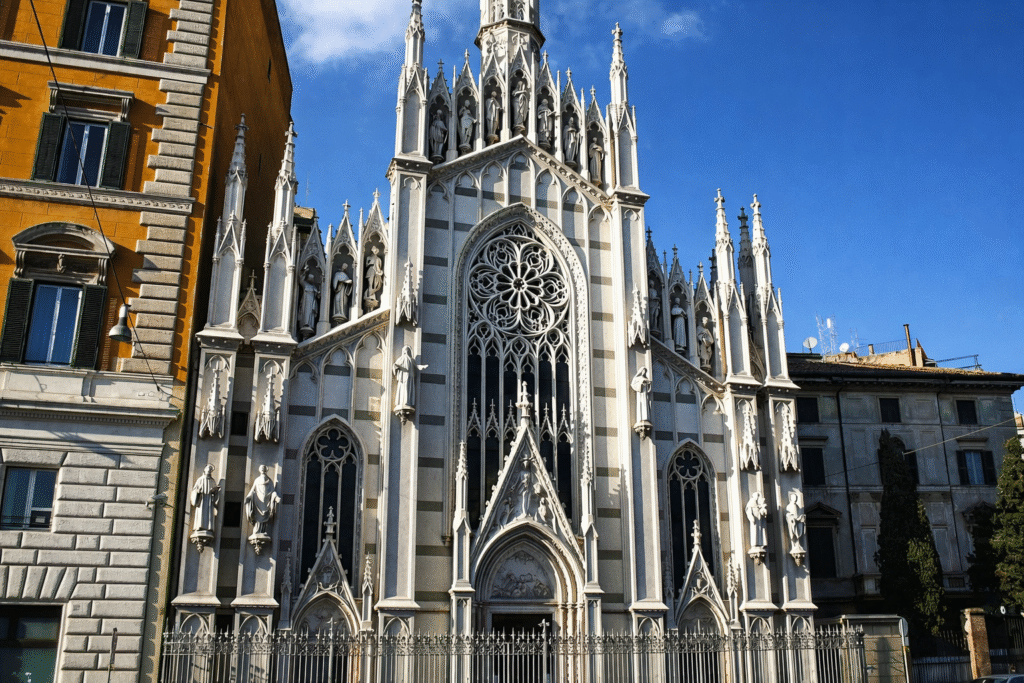
The Roman church of Sacro Cuore al Suffragio became the place where every morning, punctually at eight o’clock, immediately after celebrating Mass in the chapel of the religious institute in the Prati district (he walked this route from the Holy Office, where he lived), he would sit in the confessional where he had heard confessions for forty years, thus also offering his assistance to the parish clergy. This apostolate was not interrupted even in 1913, when Enrico Dante received the title of prelate and began serving the Church in the dicasteries of the Roman Curia. He was also dean of the chapter of the church of Santa Maria in Monte in Piazza del Popolo in Rome.
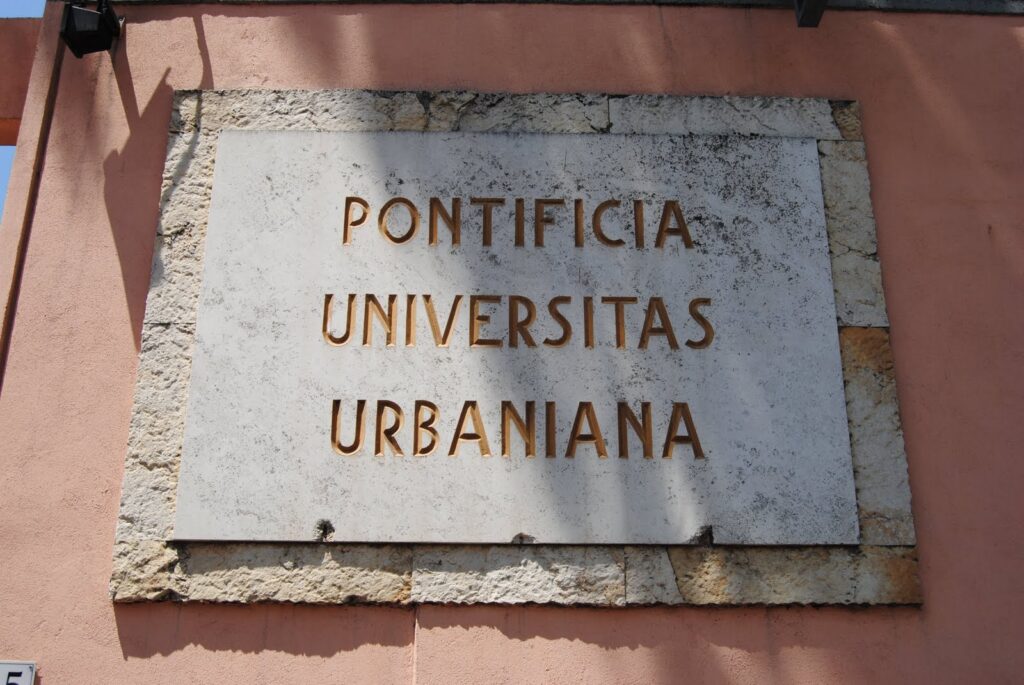
Between his ministerial duties, Father Dante also fulfilled the responsibilities of a professor at the Pontifical University, popularly known as the Urbanianum (belonging to the Sacred Congregation for the Propagation of the Faith), where he taught at the chair of philosophy from 1911 to 1928, and later, until 1947 at the chair of theology (his appointment as Professore Ordinario di Teologia Fondamentale nelle Scuole del Pontificio Ateneo Urbano was announced on July 11, 1928). It is worth noting that this happened just one year after he received the priesthood, precisely because of the future cardinal’s extensive, even erudite knowledge in the fields of philosophy, theology, and canon law.
Sport was also one of Enrico Dante’s passions, and he was actively involved in founding a Roman soccer team. He was also a lover of the mountains (he practiced mountaineering) and an enthusiast of athletics.
It is also very telling that in the last two years of his life, after receiving his cardinal’s hat, Dante administered First Communion and the Sacrament of Confirmation to hundreds of children.
III. ECCLESIASTICAL CAREER
For the one who is today called the „legendary Master of Papal Ceremonies” (a comparison to the famous Magistri Caeremoniarum Papalium of the 15th and 16th centuries, especially Paride de Grassi), the climb up the ladder of the ecclesiastical career began very quickly – and in the very heart of the Church – as early as 1913, when Dante was appointed an official in the Sacred Apostolic Penitentiary.
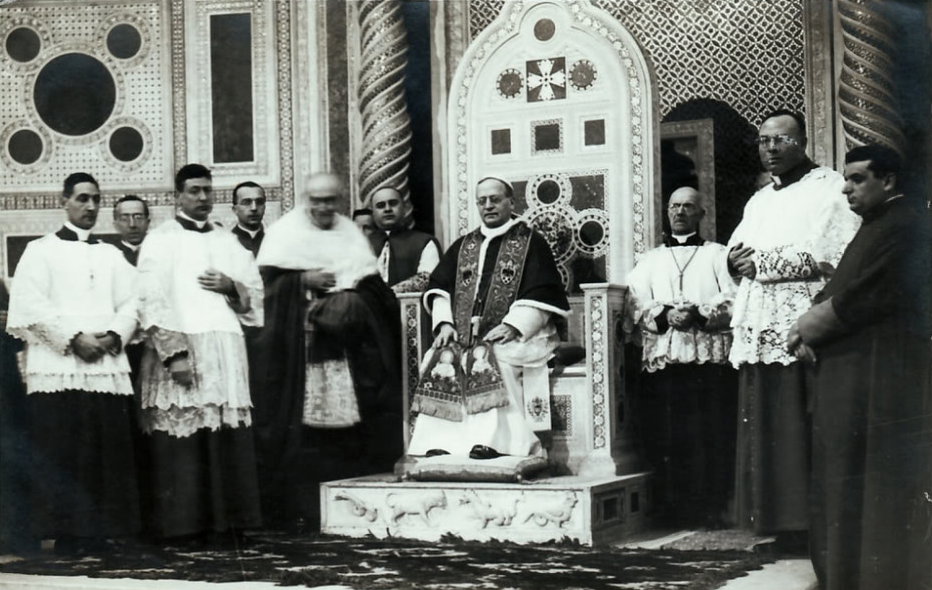
Just one year later (appointment dated March 25, 1914), he began a path that greatly served the cult of God and the successive Successors of St. Peter, and which also brought him the greatest respect – Enrico Dante was admitted to the college of papal ceremonialists, guardians of the sacred liturgy. His unquestionable competence in this field allowed him to head the college as its Prefect (Magister, Præfectus, Antistes), a position he held for eighteen years (from June 13, 1947, to 1965, when he received the cardinal’s purple), replacing Mons. Carlo Respighi, his friend. Earlier, from May 27, 1943, he served as Undersecretary of the Sacred Congregation of Ceremonies.
Source: see!
In 1923, he refused Pope Pius XI’s request to get involved in reopening the nunciature in France, which had been destroyed by the revolution. The reason he rejected the proposal, which would have allowed him to advance his career much more quickly, was the presence of his two sisters in Rome, whom he did not want to leave alone. Instead, on October 26 of that year, he was appointed advisor (substitutus adjunctus) to the Sacred Congregation of Rites, with which he would be associated: from September 28, 1930, as a full advisor (substitutus); from May 27, 1943, as undersecretary; from January 24, 1959, as pro-secretary; and finally, from January 5, 1960, as secretary (secretarius) – thus replacing the distinguished cardinal Alfonso Carinci, who had held this office for decades. On May 15, 1943, he received the title of domestic prelate of His Holiness.
Dilecte Fili, salutem et apostolicam benedictionem. Caeremoniarum Apostolicarum Praefectus Nos rogat ut promerita ob tua te, Nostrum Caeremoniarum ex numero participantium Magistrum, inter Praelatos domesticos coptare dignemur. Precibus igitur memoratis benigne annuentes, ut hujusmodi benevolentiae Nostrae pignus tibi publice tribuamus, hisce te Litteris Apostolicis atque auctoritate Nostra Antistitem Urbanum idest Praelatum domesticum Nostrum eligimus, facimus ac renuntiamus, Tibi proinde, dilecte fili, concedimus ut violaceas vestes induere atque, etiam in Romana Curia, lineum amiculum manicatum, quod Rochetum vocant, gestare licite possis ac valeas; itemque utaris fruaris singulis quibusque honoribus, privilegiis, praerogativis, indultis, quibus alii ecclesiastici viri hac dignitate aucti utuntur, fruuntur vel uti, frui possunt ac poterunt. Contrariis non obstantibus quibuslibet. Datum Romae, apud Sanctum Petrum, sub anulo Piscatoris, die XV mensis Maji, anno MCMXXXXIII, Pontificatus Nostri quinto.

Appointment of Enrico Dante as Prelate of His Holiness (praelatus domesticus).
Brevi Apostolici N. 356/1943 (with a note Gratis ex privilegio)
ACP sc 0255
In 1955, Pope Pius XII granted Dante the title of Protonotary Apostolic ad instar (along with the decree, Dante also received one copy of each of the two motu proprio decrees mentioned in the decree and a copy of the prerogatives from the pontificate of Pius XII), and three years later, he was able to use the title Eccellenza Reverendissima (the granting of these titles was related to the functions held in the Roman Curia).
Dilecte fili, salutem et Apostolicam Benedictionem. Oblatis nobis precibus benigne annuentes, cum compertum habeamus quibus peculiaribus animi ingenniique dotibus eniteas, quo etiam studio ac labore catholicas res provehendas cures, ut nostram benevolentiam tibi publice significemus, nunc te Henricum Dante ex Urbe Protonotarium Apostolicum ad instar particpantium eligimus, facimus ac renuntiamus. Tibi ideo privilegia, honores, praerogativas concedimus cum hac dignitate coniuncta ex apostolicis constitutionibus tum „Inter multiplices” s. Pii PP. X, tum „Ad incrementum” Pii PP. XI, quarum exemplar tibi tradi iubemus, cautum vero ut solitum praestes iuramentum atque alia serves, quae per easdem constitutiones servanda praescribuntur. Datum Romae, apud s. Petrum, Die XVII mensis Augusti anno MCMLV

Enrico Dante's appointment as Apostolic Protonotary signed – by special mandate of Pope Pius XII – by secretary (substitutus) Carol Geanof
ACP sc 0255
La Santità di Nostro Signore Si è beniopramente segnata di conferire « ad personam » all’Illustrissimo e Reverendissimo Monsignor Enrico Dante, Prefetto delle Cerimonie Pontificie, il titolo di « Eccellenza Reverendissima ». Tanto si partecipa al medesimo Monsignor Dante, per sua opportuna conoscenza e norma.

Letter from the Secretariat of State signed by Domenico Cardini, dated November 19, 1958, granting Enrico Dante the title of Eccellenza Reverendissima
ACP sc 0255
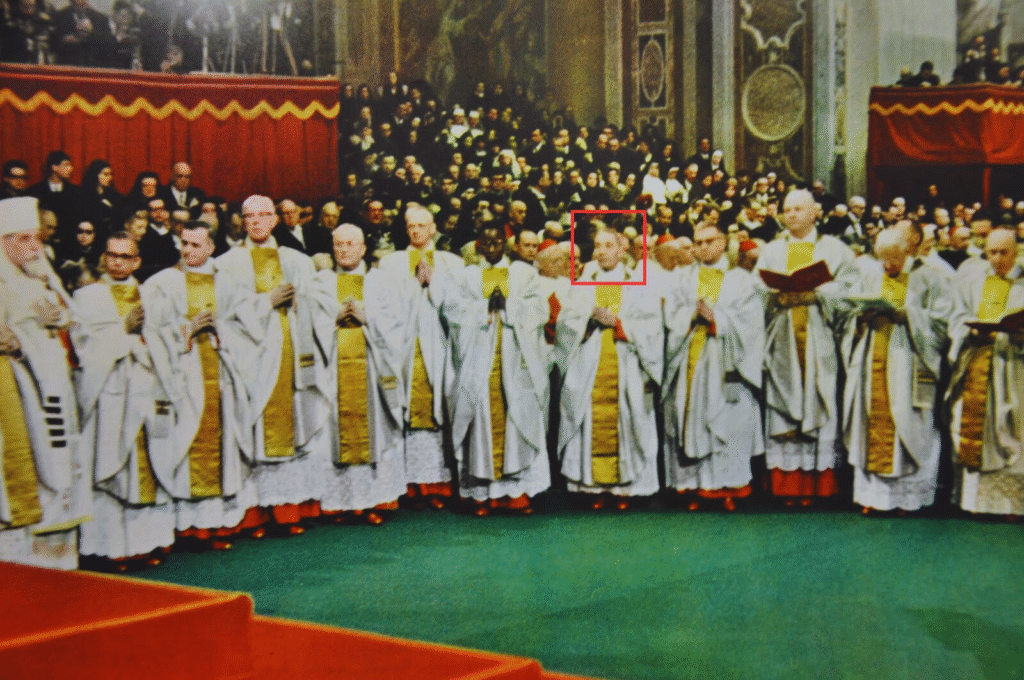
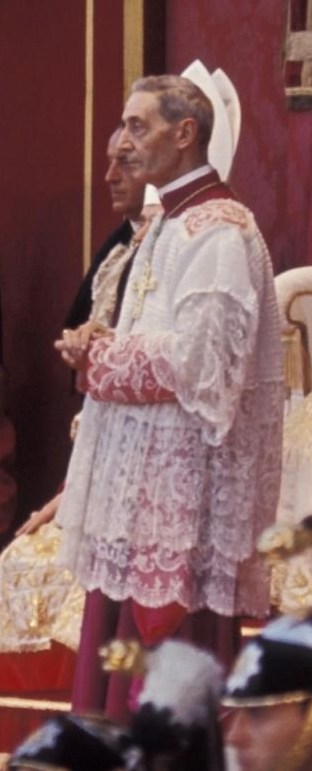
Thanks to his concern and zeal for God’s service, the glory of the Church, and the salvation of souls, Pope John XXIII elevated Dante to the rank of bishop in 1962 (on August 28, to be precise), which allowed him to participate in the deliberations of the Second Vatican Council not only as Master of Ceremonies, one of the advisors or specialists, but as a Father of the Council. This allowed him to actively and more effectively defend the customs, traditions, and doctrine of the Catholic Church. The consecration was performed by the Bishop of Rome himself in his cathedral on September 21, 1962 (the co-consecrators were Francesco Carpino, titular bishop of Sardica and assessor of the Sacred Congregation of the Consistory, and Pietro Parente, titular bishop of Teolemaide di Tebaide and member of the Supreme Sacred Congregation of the Holy Office). Dante received the title, pro illa vice, of archbishop of the local Church of Carpasia in Cyprus. Future cardinals Cesare Zerba, Pietro Palazzini, and Paul-Pierre Philippe O.P. were also ordained bishops at the same time.
Source: John Sonnen
Pope Paul VI created Enrico Dante as a Prince of the Roman Church – a cardinal during a public consistory held on February 22, 1965. He received the cardinal’s biretta and the diaconate (one of the churches of Rome) of Santa Agata dei Goti, which was elevated to the rank of presbyteral title (titulus romanus), pro illa vice, on February 25, 1965. As a cardinal, he was assigned to the Sacred Congregation for the Propagation of the Faith and the Sacred Congregation of Rites.
IV. WORKS AND ACHIEVEMENTS
Enrico Dante’s life could be described as one great opus (work) for the glory and service of the Church. This refers in particular to what he accomplished over half a century as one of the papal masters of ceremonies, and later their prefect, as well as secretary of the Sacred Congregation of Ceremonies, within which he headed a college for almost twenty years.
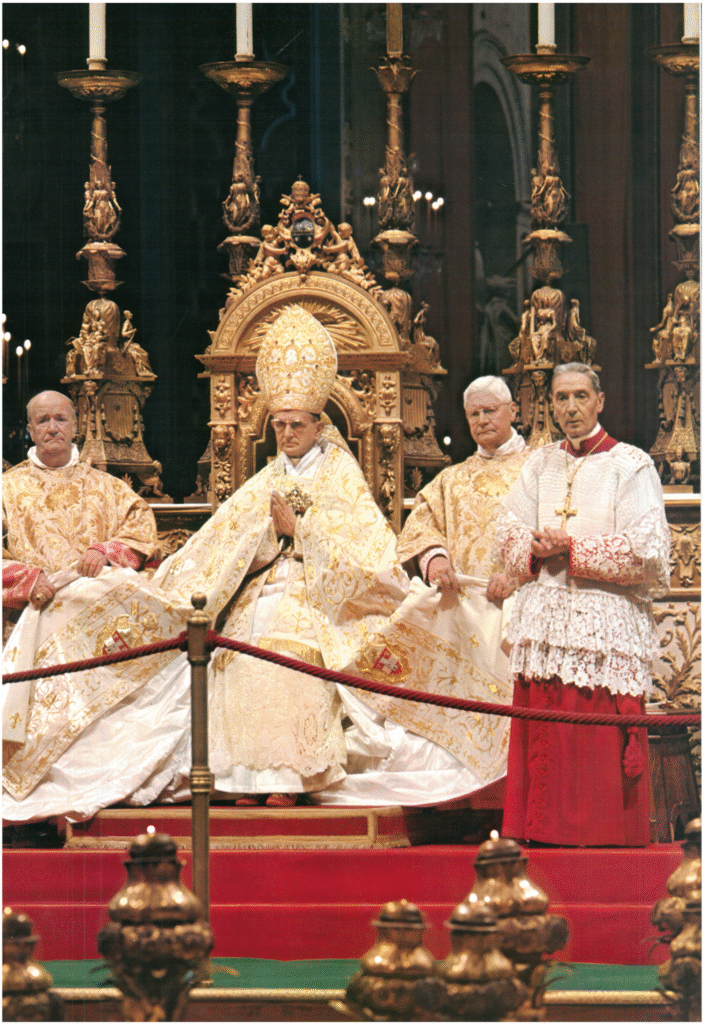
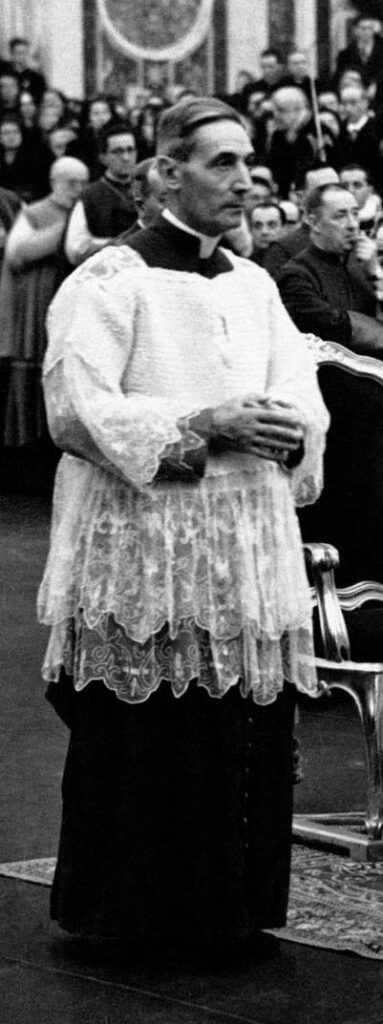
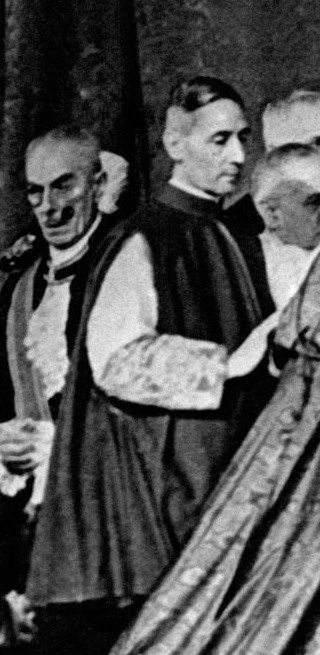
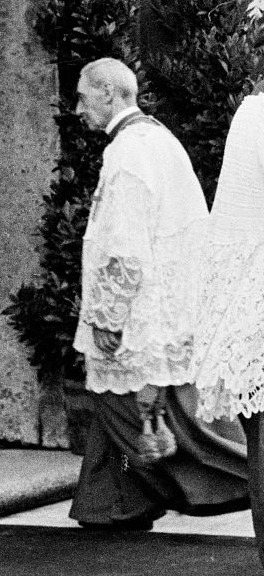
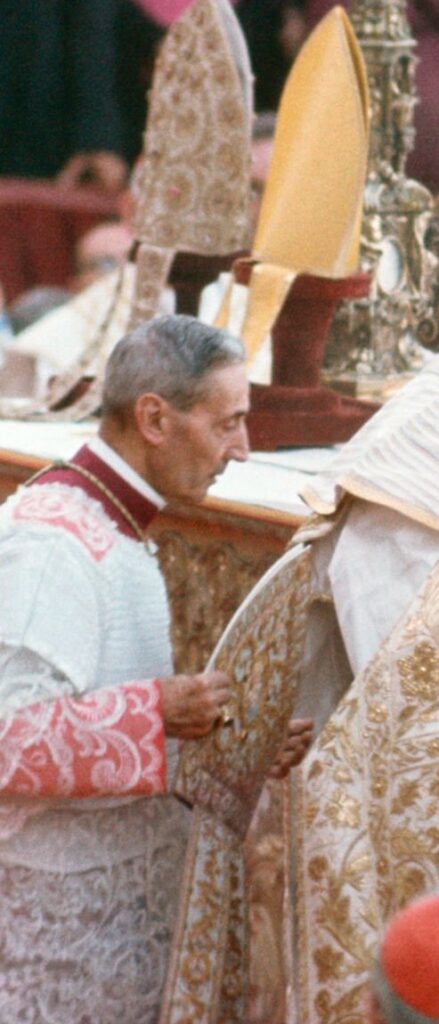
As papal master of ceremonies, Dante also took part in the conclaves that took place in 1914, 1922, 1939, 1958, and 1963, as well as in the solemn coronations of successive popes: Benedict XV, Pius XI, Pius XII, John XXIII, and Paul VI, the last two of which were broadcast live on television. Bishop Joachim Nabuco states that these are the so-called great moments for papal masters of ceremonies: In morte et sepultura Romani Pontificis, in conclavi pro electione novi Pontificis, vel in eius consecratione seu incoronatione, caeremoniarii partem magni momenti habent, et quousque novus pontifex clericos sui cubiculi eligat, eorum officio funguntur (Jus pontificalium – Introductio in caeremoniale episcoporum, Desclée & Socii, Parisiis – Tornaci – Romae – Neo-eboraci, 1956, p. 31).
Source: Getty Images.
During this time, he was also responsible for preparing and celebrating events such as the proclamation of the Dogma of the Assumption of the Blessed Virgin Mary by Pope Pius XII in the Jubilee Year 1950 (as well as for the celebration of the Jubilee itself) and the Second Vatican Council. He also played an important role in the Jubilee ceremonies in 1925 (ordinario) and 1933 (straordinario). To this list could be added countless “Cappelle” (i.e., papal chapels, or liturgies celebrated under the presidency of the Pope, in his presence, or on his behalf) and other rites proper to the Papal Court and the Roman Curia celebrated during the liturgical year.
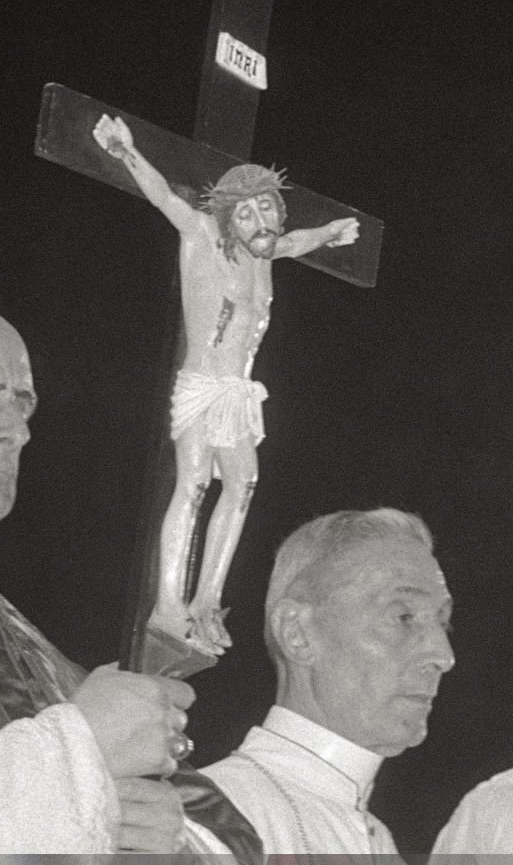
As Prefect of Papal Ceremonies (from Pius XII to Paul VI), he served at numerous celebrations and ceremonies held in basilicas and churches in Lazio, as well as during the pilgrimages of Pope John XXIII to Loreto and Assisi and Paul VI to Orvieto, Montecassino, and Bombay.
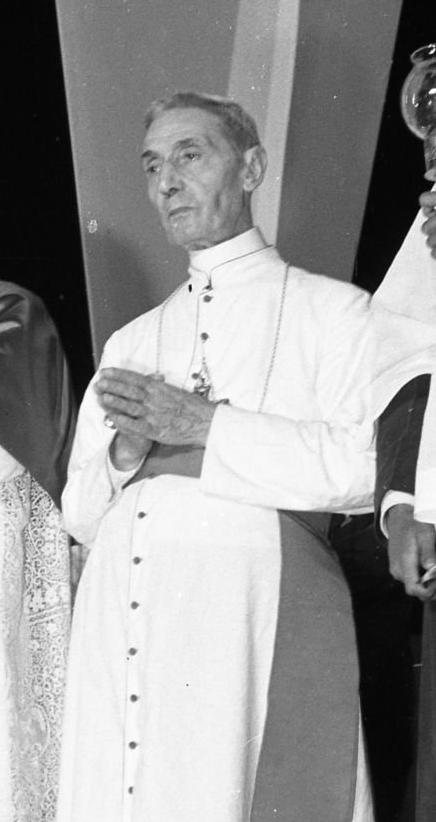
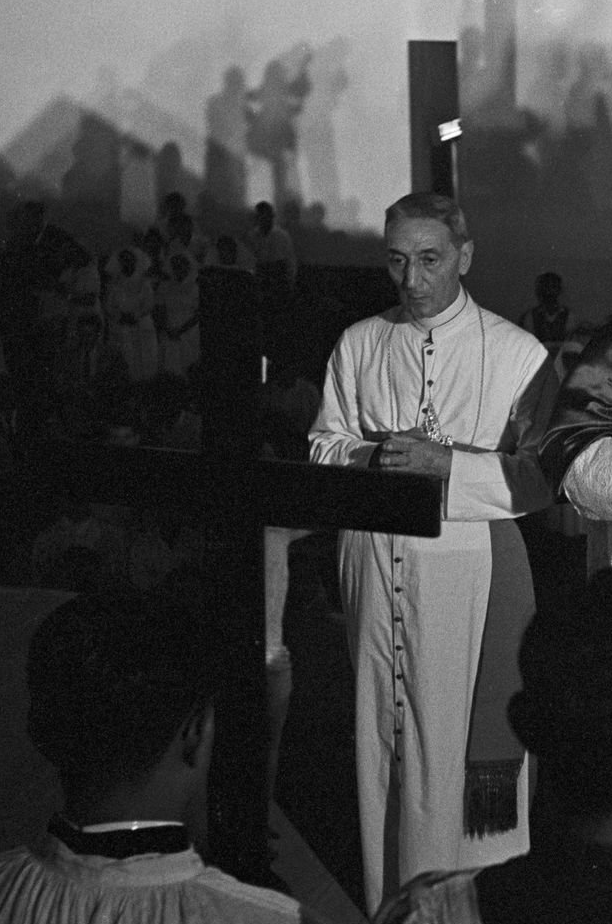
Source: Getty Images.
As the first Master of Papal Ceremonies in history, he prepared and supervised the episcopal consecration in the Greek Rite (Liturgy of St. John Chrysostom) celebrated by Pope John XXIII in the Sistine Chapel, when Gabriel Acacio Coussa O. S. B. A. (later Cardinal) received the episcopal dignity.
Enrico Dante’s greatness is demonstrated primarily by his work in the archives of the Prefecture of Papal Ceremonies, which he reorganized, rearranged, and even personally compiled a two-part (and several-volume) catalog, which is still in use by archivists and researchers today. This work consumed nearly ten years of his life and remains an invaluable resource for all those interested in archives.
MORE: Archiwum Prefektury Ceremonii Papieskich i Diaria caeremoniarum – niezbadany skarbiec historii liturgii, Rzymu i papiestwa (wraz z transkrypcją i tłumaczeniem rękopisu kard. Enrico Dantego Ai miei carissimi Colleghi Cerimonieri Pontifici), [in:] Scripturae Lumen. Biblia i jej oddziaływanie, vol. 11: Kościół Chrystusa, Wydawnictwo BIBLOS, Tarnów 2021, p. 443-458.
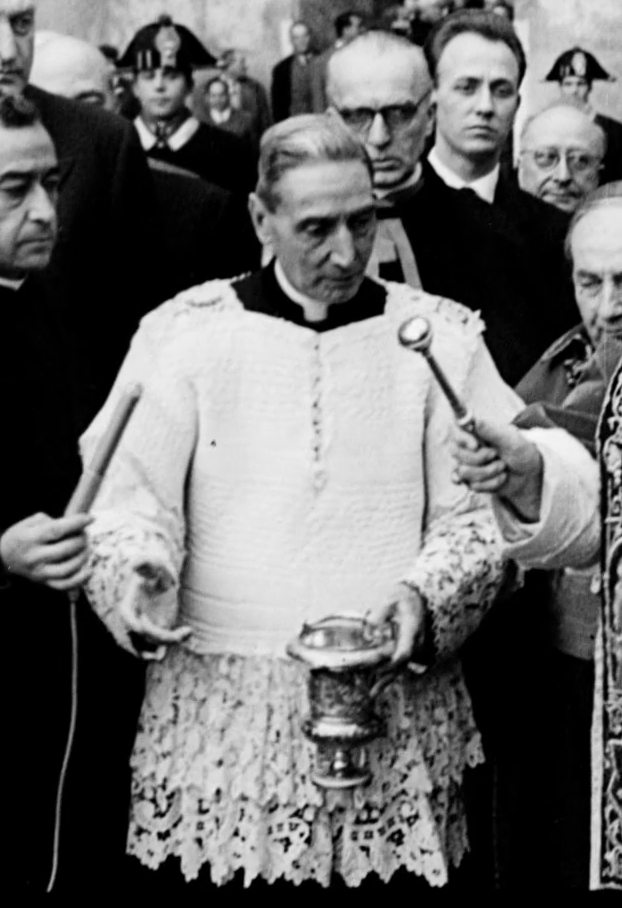
One should not forget the numerous Roman religious events, such as the International Eucharistic Congress (1922), the commemoration of the Council of Ephesus (1931), and the Corpus Christi processions with Pius XII, John XXIII, and Paul VI, all of which Enrico Dante promoted and organized. He was also involved (as master of ceremonies) in many other events attended by cardinals — sometimes not strictly liturgical — taking place throughout Italy.
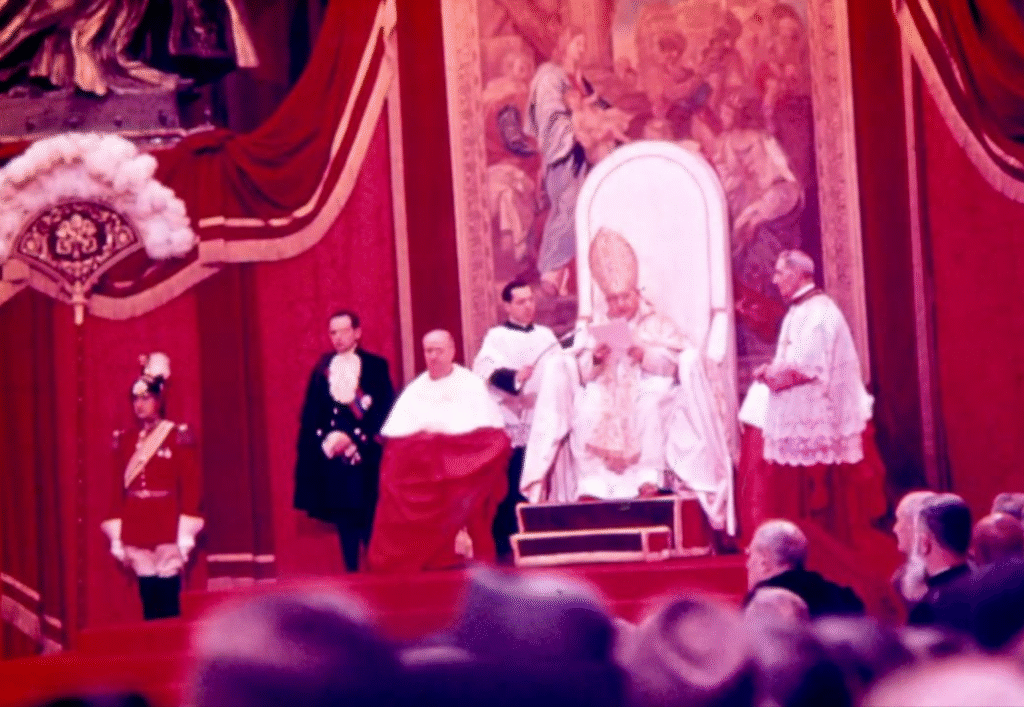
As a member and later secretary of the Sacred Congregation of Rites, he undertook numerous cases concerning the beatification and canonization of saints (causae Beatificationis et Canonizationis Sanctorum) with great dedication, diligence, exemplary conduct, and magnanimity. He participated in this not only as a leader (dirigente), but also as Prefect of Apostolic Ceremonies.
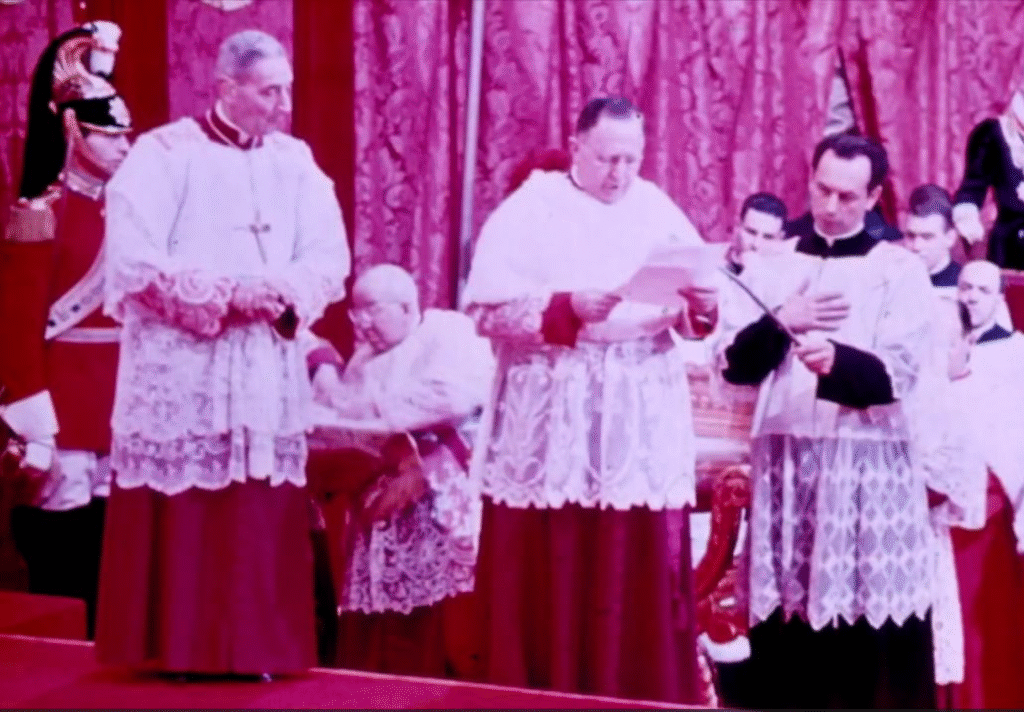
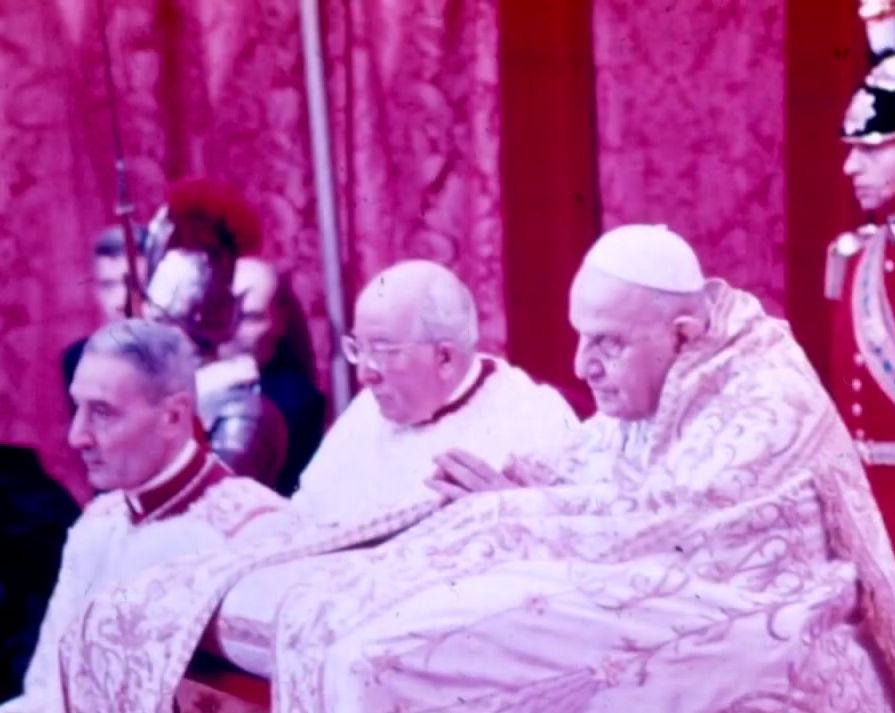
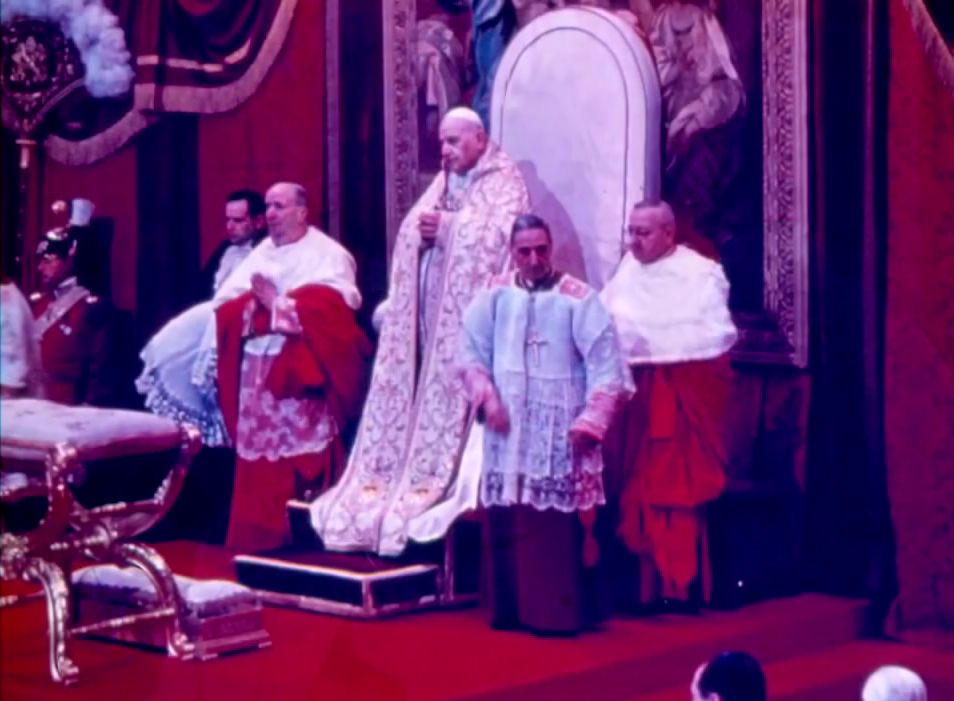
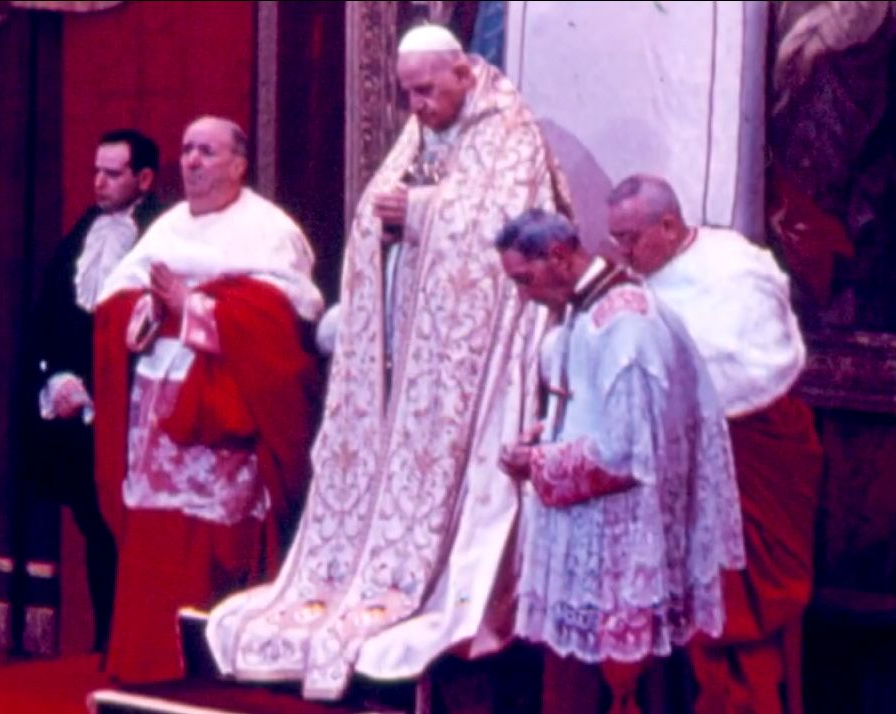
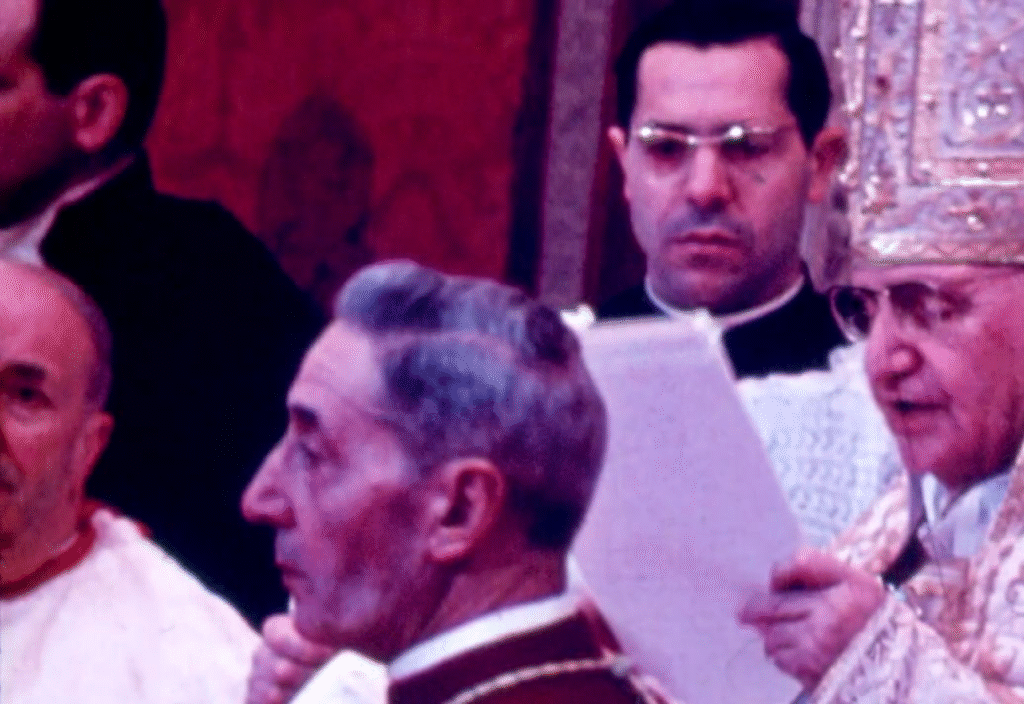
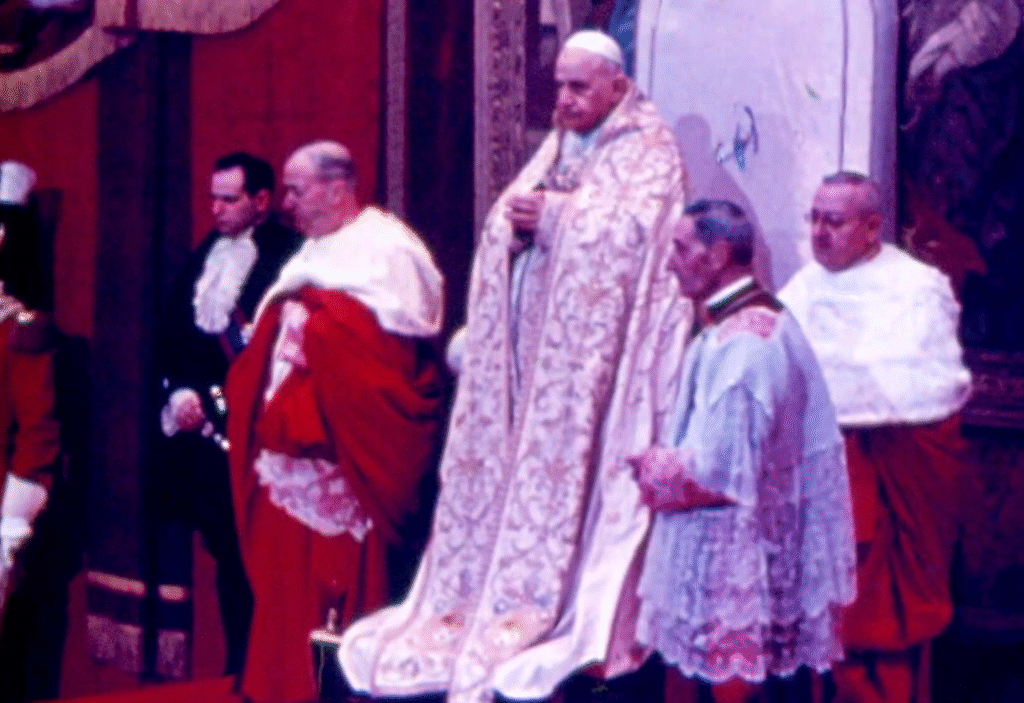
Source: Pallotti TV.
Similarly, as one of the employees of the Sacred Congregation of Rites, Dante participated in: the reforms of Holy Week carried out during the pontificate of Pius XII; the work of the preparatory commissions for the Council, as well as in the conciliar commissions (on liturgy); in the editing of the conciliar constitution De Sacra Liturgia; later – and during the Council itself – in the introduction of reforms, of which he was, from the very beginning, neither an enthusiast, nor a promoter, nor, even less, a supporter (similar conclusions suggest themselves when analyzing Enrico Dante’s various statements and actions); he remained faithful until the end of his life not only to the Roman school of liturgy, but also to the Roman school of theology, law, customs, and ecclesiastical discipline.
Source: Archivio Luce.
It should not be forgotten that Enrico Dante was a devoted promoter of the memory of the nascent Church, especially as one of the oldest members of the Collegium cultorum Martyrum, of which he later became the patron. Already as a Roman prelate, together with Mons. Ermanno Bonazzi and Mons. Carlo Respighi, he revived the idea of the Stations of Lent (dating back to the most primitive Roman papal liturgy, which fell into disuse during the Avignon exile and unfortunately did not revive after the pope’s return to Rome).
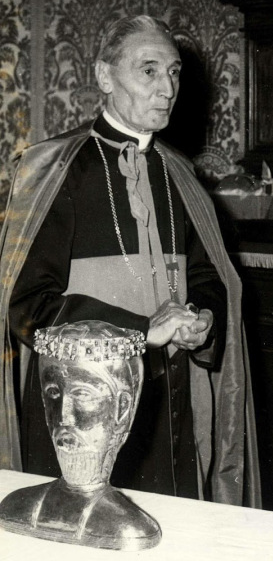
Dante’s erudition and knowledge have also been preserved in the form of entries he edited over many years for the monumental Enciclopedia Cattolica, published successively in the Vatican between 1948 and 1954 in twelve extensive volumes. All of the articles by the Prefect of the Apostolic Ceremonies concerned the worship of God. Here are some of the encyclopedia entries: volume one (1948) – abacus (abaco), humeral veil (amitto), ampoule (ampolla – no bibliography), ring (anello – in collaboration with Giulio Battelli and Guglielmo Matthiae), antimension; volume two (1949) – aspersion (aspersione), boursa (borsa, [liturgical] footwear (calzari); volume three (1949) – camauro (no bibliography), alb (camice), ceremony (cerimonia), cingulum (cingolo); volume five (1950) – falda, fanon (fanone – no bibliography), formale (no bibliography).
V. AWARDS, DISTINCTIONS, AND NOMINATIONS
To supplement what has already been said, we list (in chronological order) some of the awards, decorations (distinctions) and letters of congratulations that Enrico Dante received during his priestly life. All documents mentioned or quoted come from the ACP, box 0255. Of course, they represent only a small part of what can be found in the archives themselves – Enrico Dante’s biography is still awaiting, but also deserves, a detailed scholarly study.
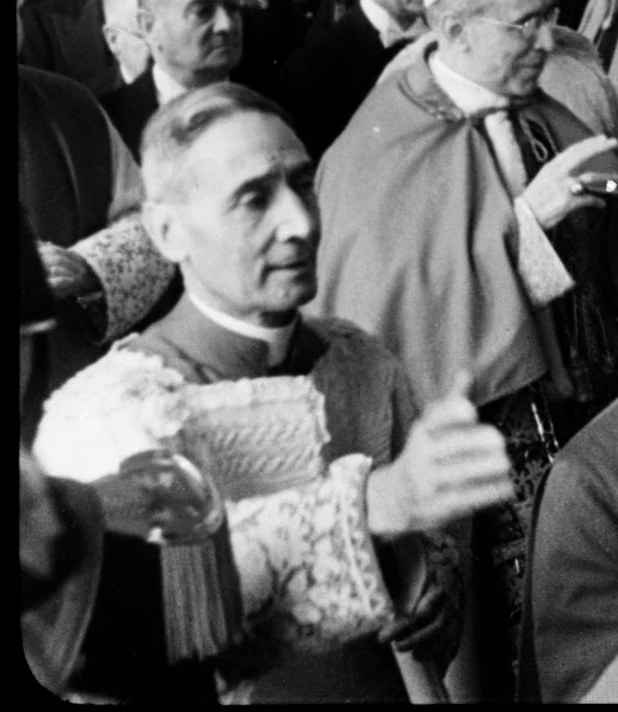
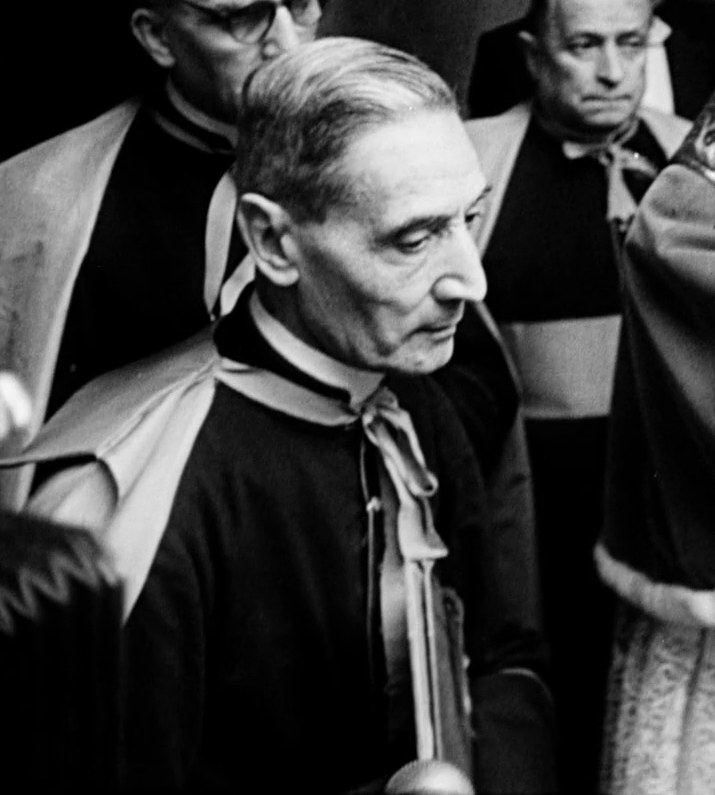
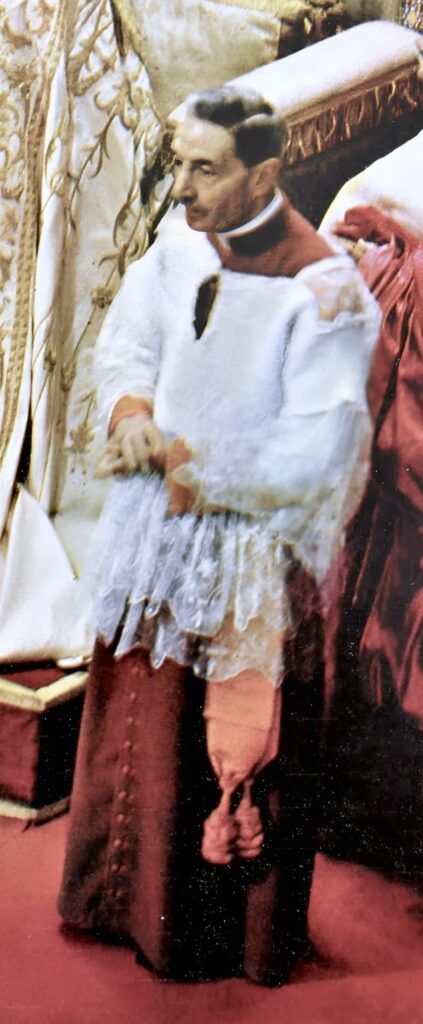
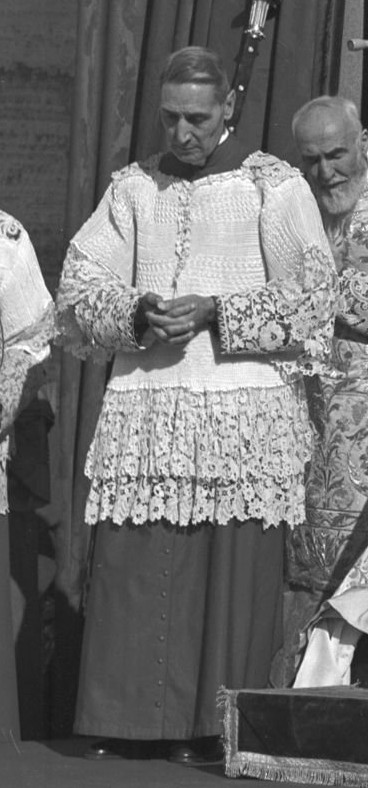
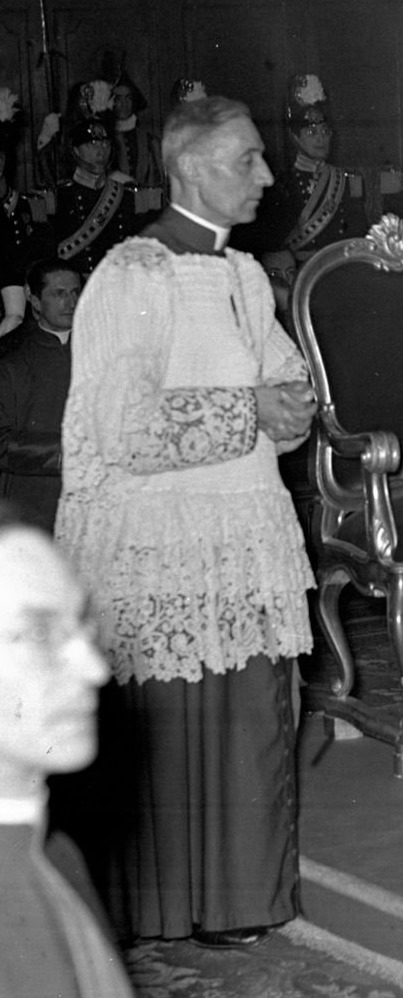
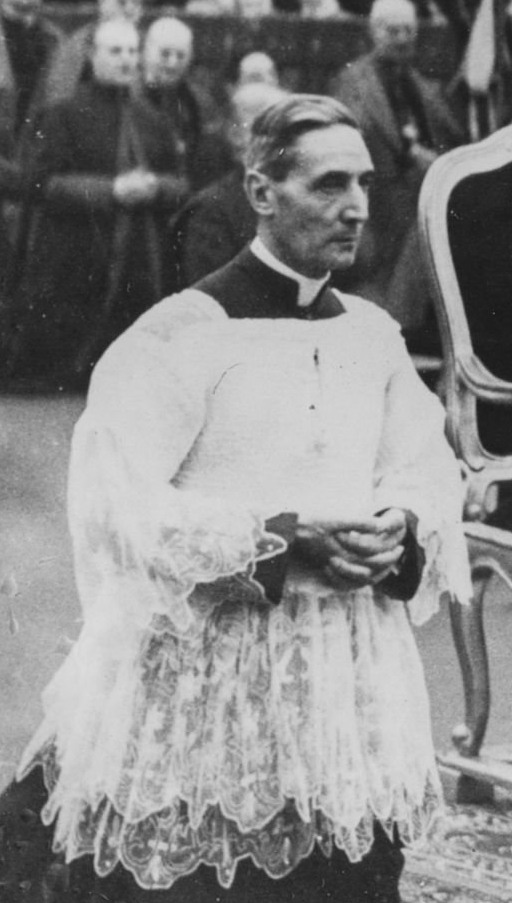
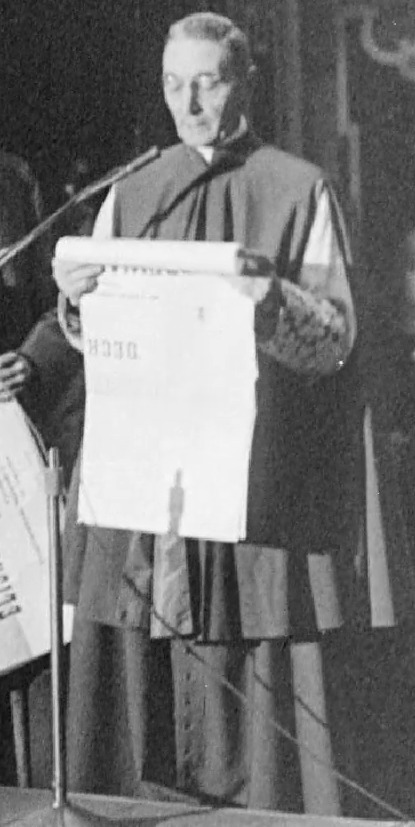
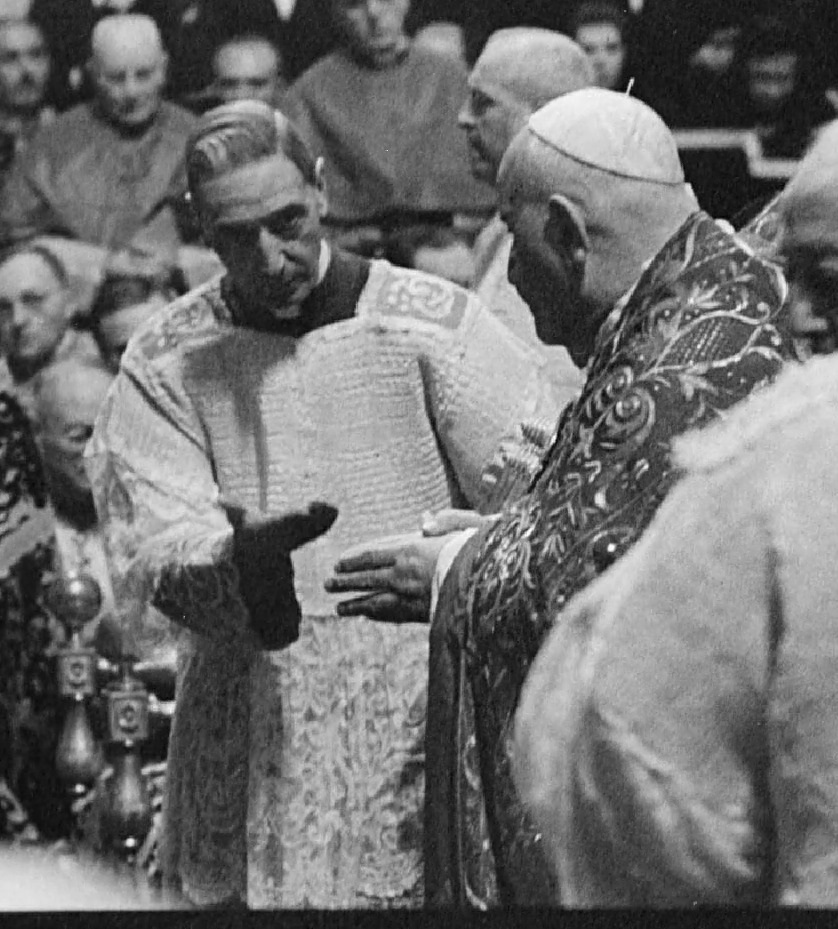
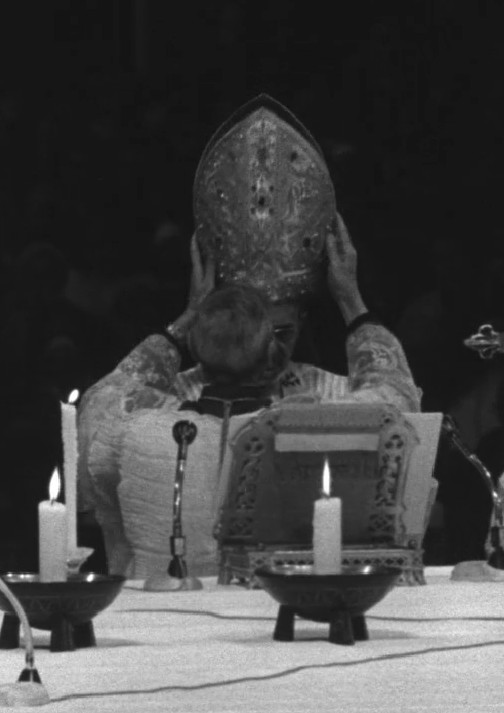
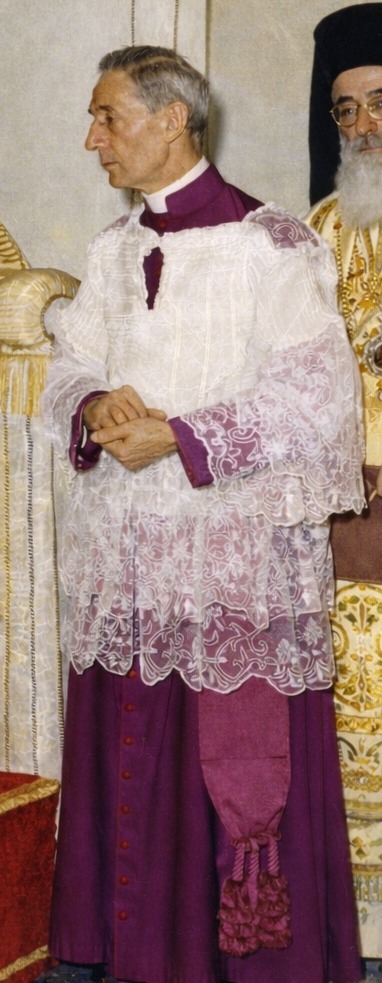
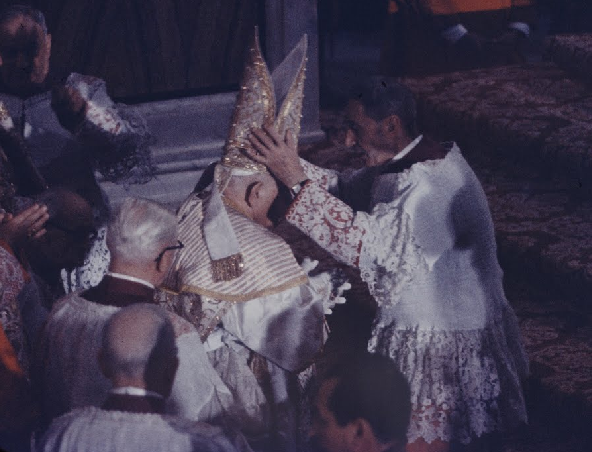
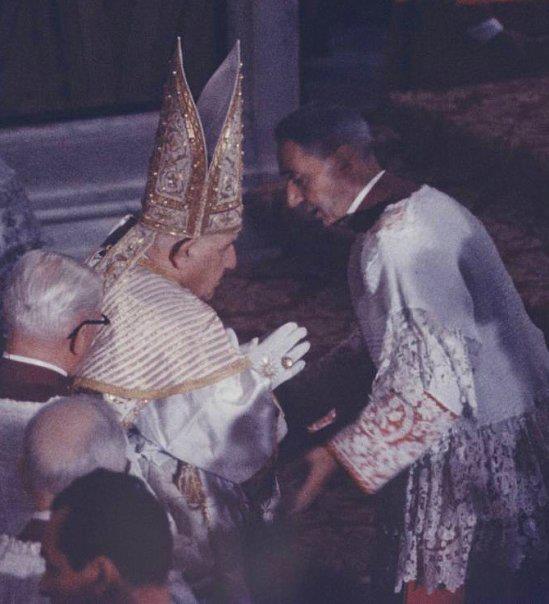
On November 7, 1910, the young priest Dante received a letter of congratulations for his participation in the Academia Liturgica Romana “Custodite Caeremonias Domini” (“Roman Liturgical Academy Guard the Ceremonies of the Lord”) signed by the president of the Academy (Petrus Respighi) and its moderator (Carolus Respighi – then Master of Apostolic Ceremonies). It is worth mentioning the importance of this academy. It was founded by Pope Benedict XIV and attached to the house of the Priests of the Congregation of the Mission (popularly known as “Lazarists”), publishers of the famous Ephemerides liturgicae. Although in the Annuario Pontificio this academy was included among the “Pontifical Academies” (still mentioned in the 1993 edition, it disappeared completely in the 2000 edition), as such it was not entitled to the title of Pontifical Academy. It was always headed by the Cardinal Vicar. It is worth mentioning that Enrico Dante served as a censor, a position entrusted to two members of the Academy for a period of four years. On July 1, 1925, Dante was replaced in the Academy by Léon Gromier, a French priest and expert on Roman liturgy. The Academy also included such liturgists as G.-B. Menghini, P. Hanssens, J. Brinktrine, and C. Callewaert.
February 2, 1912, was the day Dante joined the Pia unione di S. Paolo Apostolo fra i sacerdoti del clero secolare di Roma (“Pious Union of St. Paul the Apostle for Priests of the Secular Clergy of Rome”). Confirmation of his membership in the union dates from February 3.
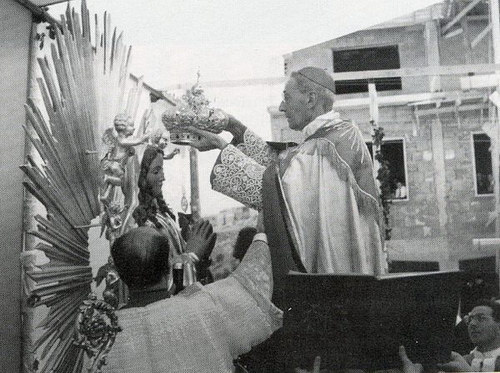
Source: luciana.one
On November 22, 1913, Enrico Dante was appointed Socio d’onore (honorary member) of the Societa Sportiva pro Roma, an organization of Roman athletes.
Another document contains an entry concerning Dante’s membership in the Ven. Arciconfraternita della Adorazione Notturna al Santissimo Sacramento (“Venerable Archconfraternity of Night Adoration of the Blessed Sacrament”). Dante joined the archconfraternity on January 7, 1914, as an esercente (literally, “performer”).
Six years later, he was appointed by the Vicariate of Rome as ecclesiastical assistant (Assistente Ecclesiastico) to the Circolo S. Pietro organization and the diocesan federation Giovendi Cattolica Italiana in Roma (“Catholic Youth of Italy in Rome”) on March 8, 1920, and August 24, 1920, respectively.
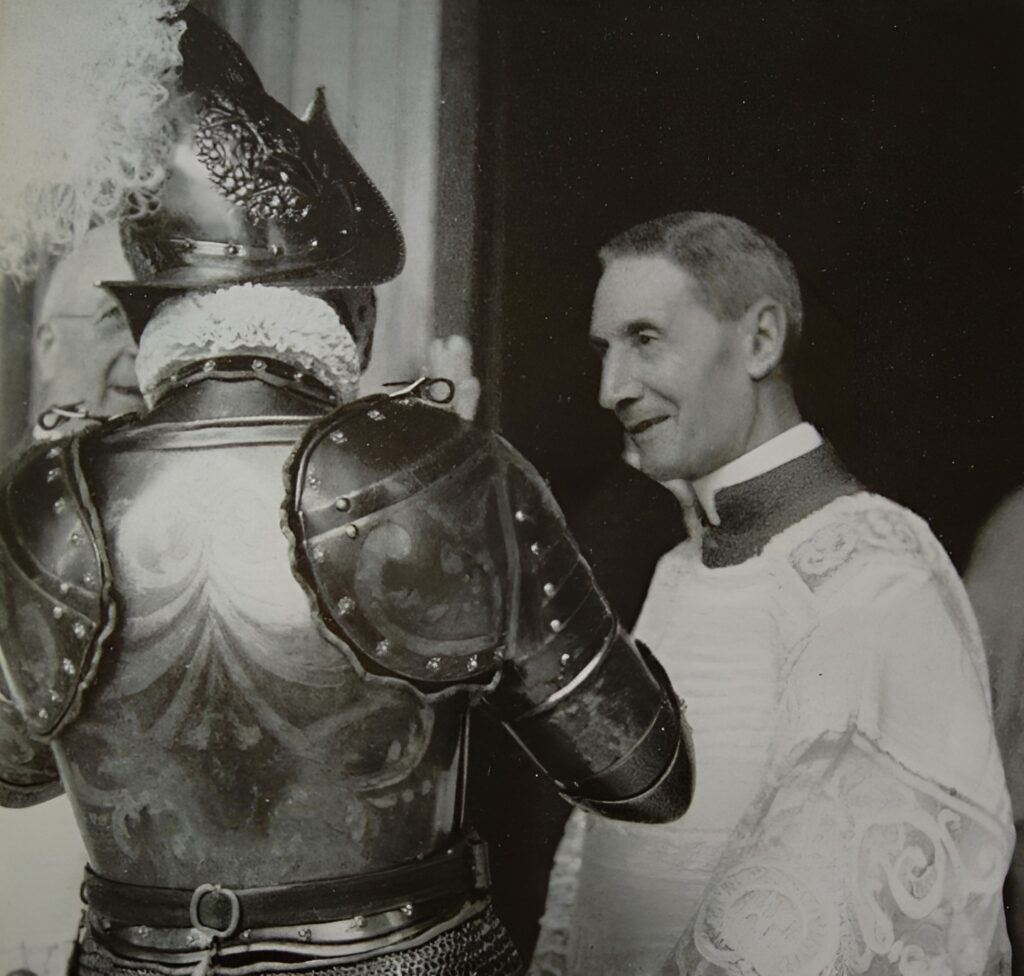
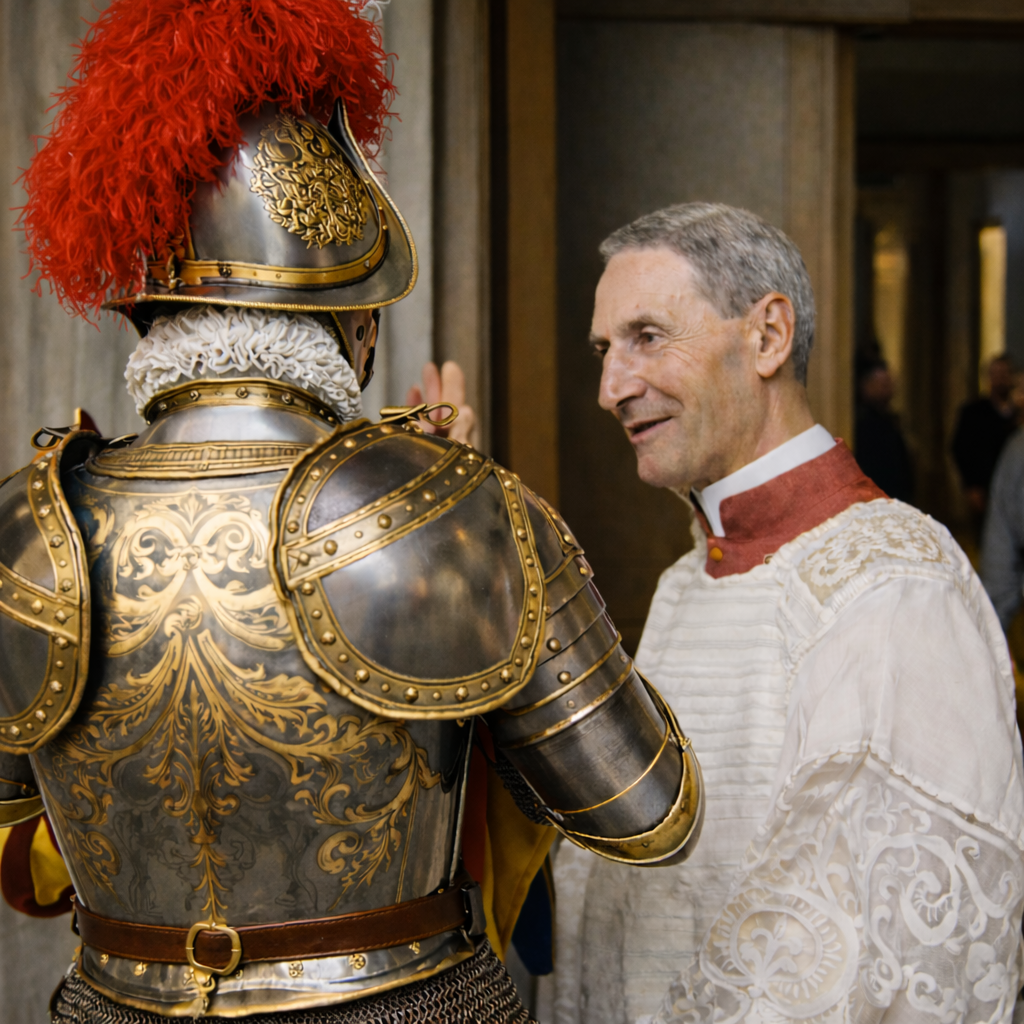
(colorization and sharpening of the photo performed with the help of AI).
Appointment as a member of the Roman Academy of St. Thomas Aquinas – April 17, 1923.
On May 31, 1932, Enrico Dante also joined the Archconfraternity of St. Anthony in Padua (full name: Arciconfraternita del Taumaturgo s. Antonio eretta nella sua Basilica in Padova).
The Apostolic Penitentiary appointed Monsignor Dante Poenitentiarius Sancti Iubilaei in the Roman church of S. Cuore del Suffragio al Lungotevere Prati – decree of March 20, 1933, signed personally by the Grand Penitentiary (Penitenciere Maggiore), Cardinal Lorenzo Lauri. The document was accompanied by the motu proprio “Indicto a nobis” published on January 30, 1933. The ACP contains many more documents from the Apostolic Penitentiary addressed to Dante, which testifies to his commitment – despite his many functions – to pastoral ministry in the churches of Rome.
On February 20, 1934, the papal master of ceremonies received a diploma from the Pontificia Accademia Romana della Immacolata Concezione di Maria Vergine (Pontifical Roman Academy of the Immaculate Conception of the Virgin Mary), founded in 1835. The document was accompanied by the rules and regulations and a list of the Academy’s members.
Two years later, Dante became Cappellano Conventuale ad honorem del Sovrano Militare Ordine di Malta (“Conventual Chaplain ad honorem of the Sovereign Military Order of Malta”) based in Rome. The decree (n. 124/7) was signed by the Grand Master of the Order himself.
In the same year, he was appointed Deputato dell’Almo Collegio Capranica for economic affairs (May 20, 1936) by the Sacred Congregation for Seminaries and Universities (protocol number: 604/36/4).
In 1937, Victor Emmanuel III, as Grand Master, appointed the devout curialist Commendatore of the Order of Saints Maurice and Lazarus (decree of April 5, 1937, signed by the secretary). In 1940, the same Victor Emmanuel III, per grazia di Dio e per volontà della nazione re d 'Italia Imperatore d’Etiopia Generale and at the same time Grand Master of the Order della Corona d’Italia, appointed Dante (by letter dated March 4) as Grande Ufficiale of the same order (Italian Crown) – on this occasion, Dante also received congratulations from the then Sostituto of the Secretariat of State, Mons. Giovanni Battista Montini (document dated June 24, 1941, number 38549).
ha il piacere di rimettere all’Ill.mo e Rev.mo Mons. Enrico Dante, Maestro delle Cerimonie Pontificie, l’unito diploma di Grande Ufficiale dell’Ordine della Corona d’Italia fatto per venire alla Segretaria di Stato di S. S. dalla R. Ambasciata d’Italia presso la Santa Sede (con inserto).

Text of Montini's letter addressed to Enrico Dante
The year 1947 brought with it not only his appointment as Prefect of the College of Papal Masters of Ceremonies, but also his appointment – by the will of the Holy Father himself – as a member of the Heraldic Commission at the Papal Court (decree no. 165706 from the Secretariat of State dated October 28).
La Santità di Nostro Signore Si è benignamente degnata di annoverare fra i componenti la Commissione Araldica per la Corte Pontificia Ill.mo Rev.mo Monsignore ENRICO DANTE. Tanto si partecipa al medesimo Monsignor Dante, per sua opportuna intelligenza e norma.

Text of Enrico Dante's nomination to the Vatican Heraldic Commission at the Papal Court
In 1952, Dante was inducted into another great Order. This time, it was a nomination as Commendator cum Nomismate Ordinis S. Sepulchri Hierosolymitani from the Grand Master. The document is dated January 10 and signed by Cardinal Canali (it includes, among other things, the rules and regulations and the texts of the ceremony).
The President of Portugal (República Portuguesa), who was the Grand Master of the Portuguese Order (Grão-Mestre das Ordens Portuguesas), elevated Dante to the rank of Grande-Oficial da Ordem de Renemerencia (decree of January 20, 1954), as he had previously belonged to this order as a Cavaleiro since May 21, 1932.
In the last years of his life, Dante became a member with the rights of Grand’Ufficiale of another order, this time the Ordine’ Al Merito della Repubblica Italiana. The appointment came from Il Capo del Cerimoniale Diplomatico della Repubblica and was dated May 7, 1963 (n. 7/bis-59-102).
Cardinal Dante also belonged to the Congregation operating in Almo Collegio Capranicensi, where he was canonically erected under the invocation of the Immaculate Conception of the Blessed Virgin Mary (the decree contains the appointment in Sodalem, but does not include the date or any designation).
VI. AT THE END OF LIFE
The last Holy Mass presided over by Cardinal Dante, in the evening of December 31, 1966, in the Basilica of San Silvestro a Priscilla, became a kind of eulogy delivered by a Damascene Carmelite in honor of the advocates of the faith – the saints. The Carmelite expressed his certainty that they form a crown around God’s throne: Martyribus pateat quod regia caeli respicit interior, sequitur si praemia Christi. These words beautifully illustrate the apostolate of the priest and Roman cardinal who did such wonderful things for the praise and worship of the saints.
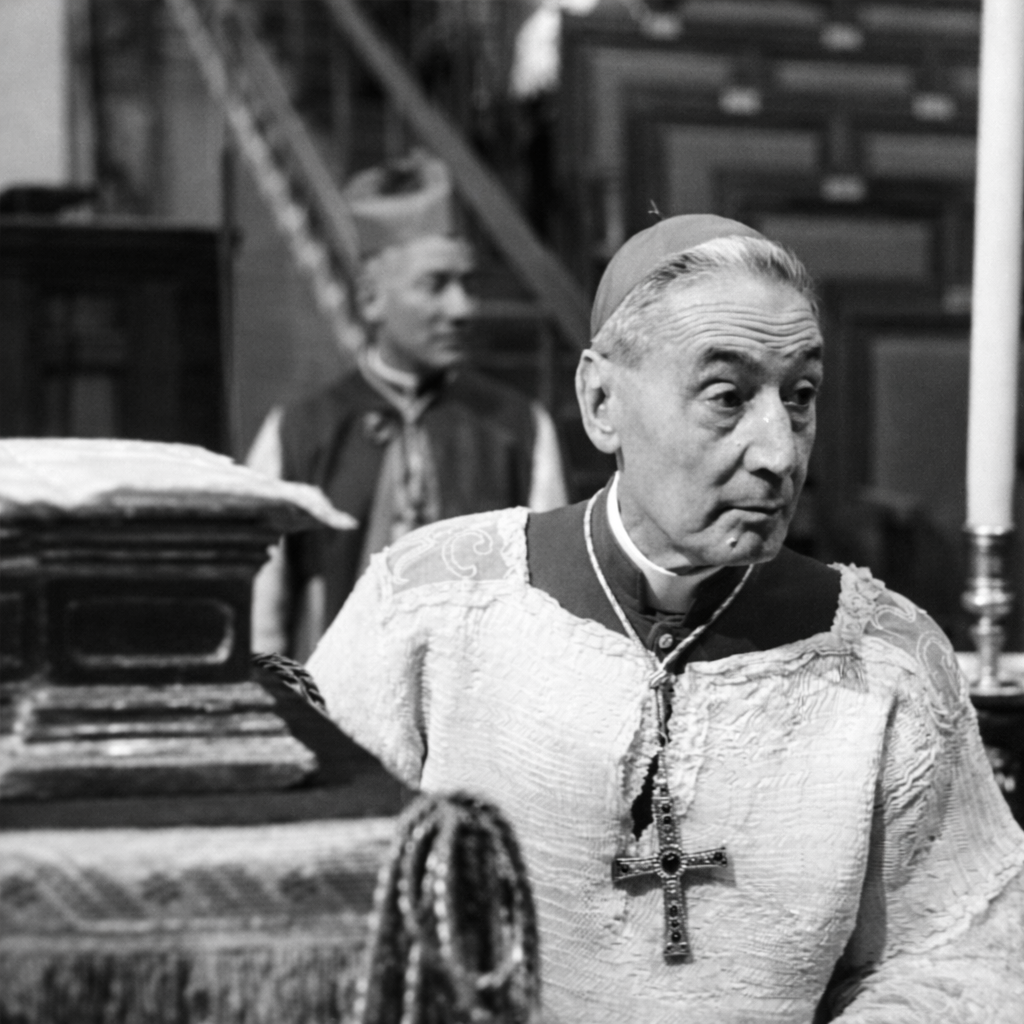
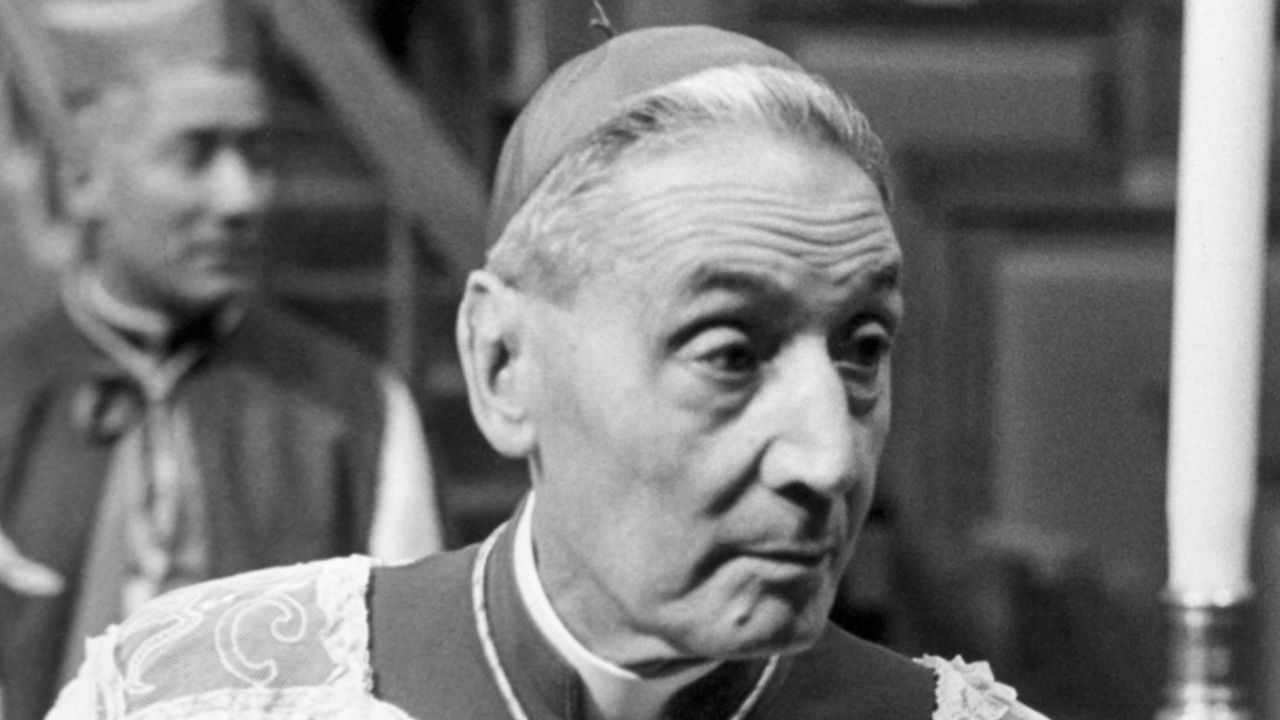
Source: Getty Images.
Shortly before the cardinal’s death, news of his serious and deteriorating health caused concern among many. It evoked sincere grief and sadness, but also feelings of love, respect, and kindness from the multitude of people for whom Enrico Dante was a model of authentic Romanitas, generosity, and dedication to the service of the Church. The diagnosis was cancer in a very advanced stage.
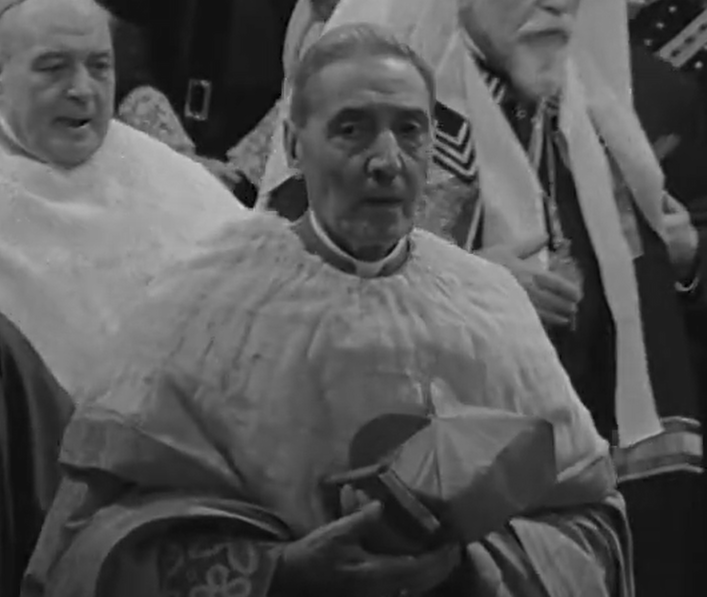
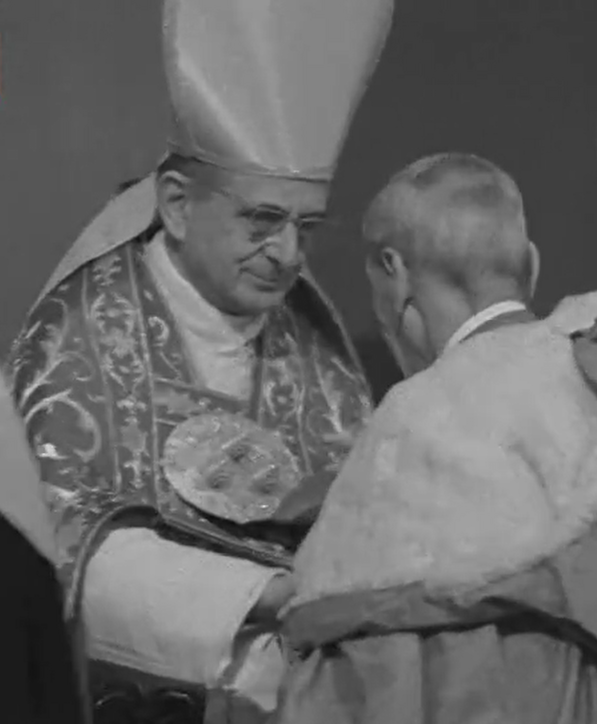
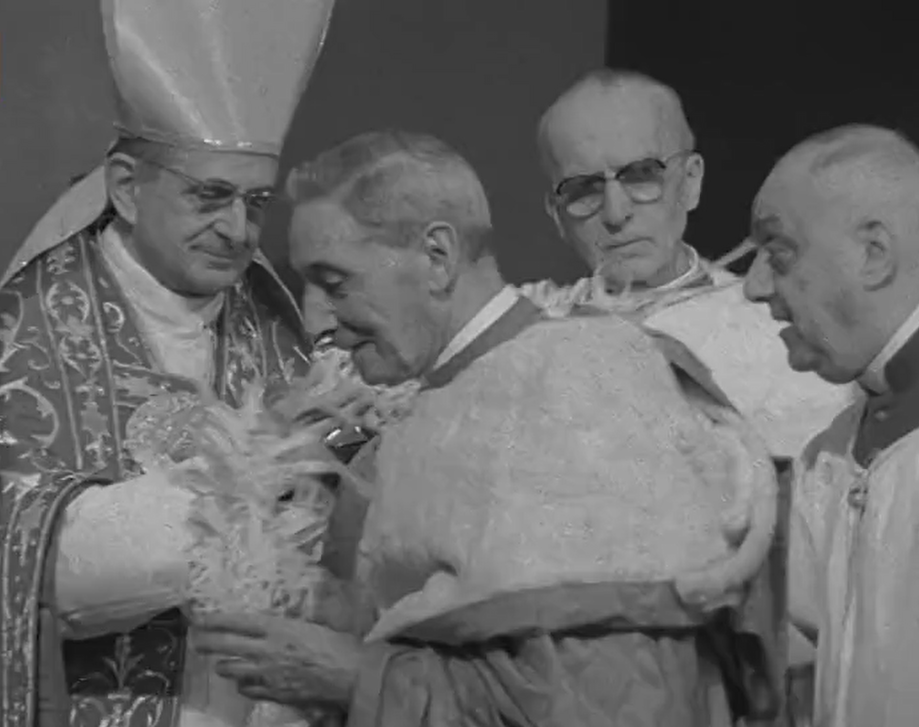
Source: INA.
Pope Paul VI visited the dying man at the Moscati clinic on April 6, 1967. A few days later, on April 24, the cardinal died in the early morning. That same morning, the Pope celebrated Mass for Dante’s soul, surrounding his loved ones with prayer and sending official condolences to his sister, assuring her of his sympathy and pain at the loss of such a great personality as her brother. Similarly, Cardinal Secretary of State G. A. Cicognani shared his feelings of grief and sympathy with the family of the deceased cardinal.
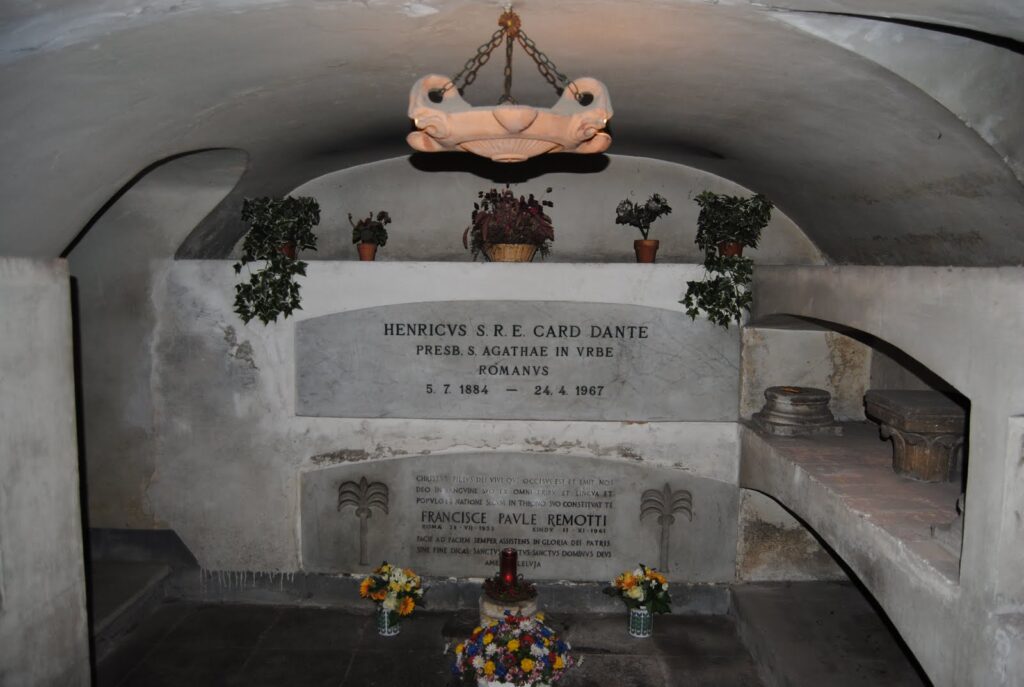
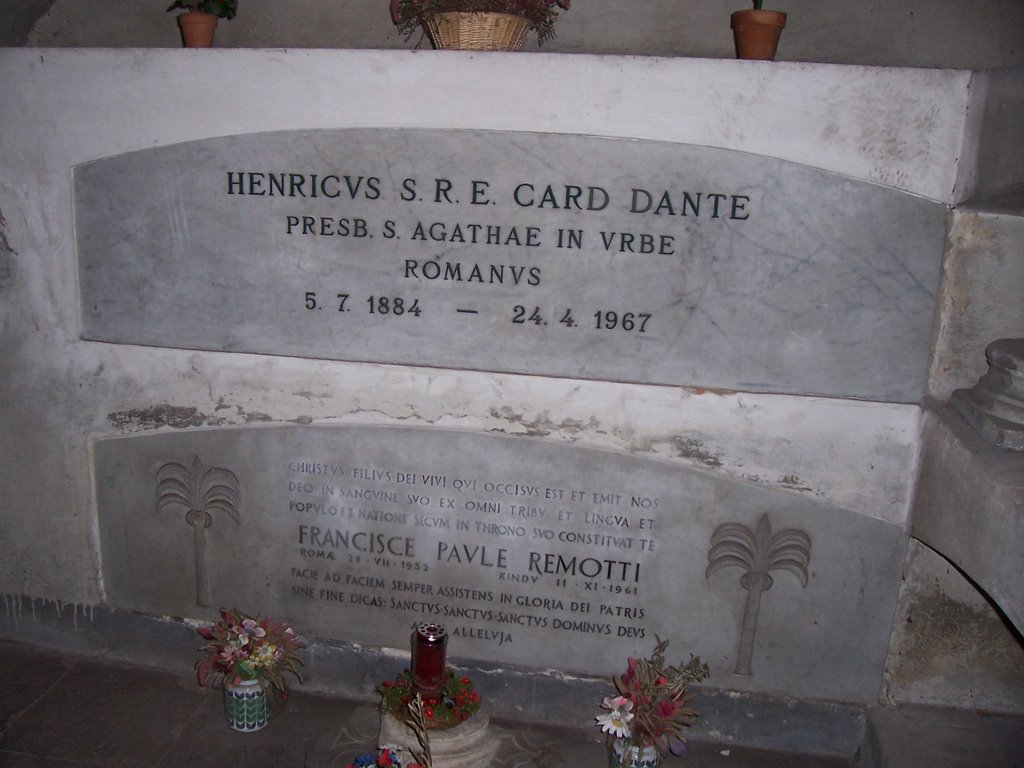
Source: John Sonnen
Cardinal Dante’s body, dressed in purple pontifical vestments, was laid out in the chapel on the fifth floor of the clinic. Cardinals Tisserant, Testa, Beran, Antoniutti, and Heard, among others, kept vigil and prayed over the deceased. A Mass was also celebrated for the soul of the deceased in his chapel by the cardinal who held the authority and duties of sostituto of the Secretariat of State. Many other priests were also allowed to celebrate the Holy Sacrifice at the body of the deceased, including Monsignors Cochetti, Balzanelii, La Boa, Grisan, Father De Lattre, and Father Tarcisio. Visiting Dante’s earthly remains, the following also prayed for his soul: the ambassadors of Italy, Ireland, and the Dominican Republic; Monsignors Felici and Antonelli, as well as Frutaz and Aluffi; high-ranking representatives of the Order of Malta; Enrico Galeazzi, special delegate of the Pontifical Commission for the Vatican; members of the Sacred Congregation of Rites; the college of papal ceremonialists; and numerous authorities and faithful, as well as members of Cardinal Dante’s ecclesiastical family — all united in Christian solidarity and sorrow at the death of such a great and good man, especially one so devoted to the Church, as Enrico Dante.
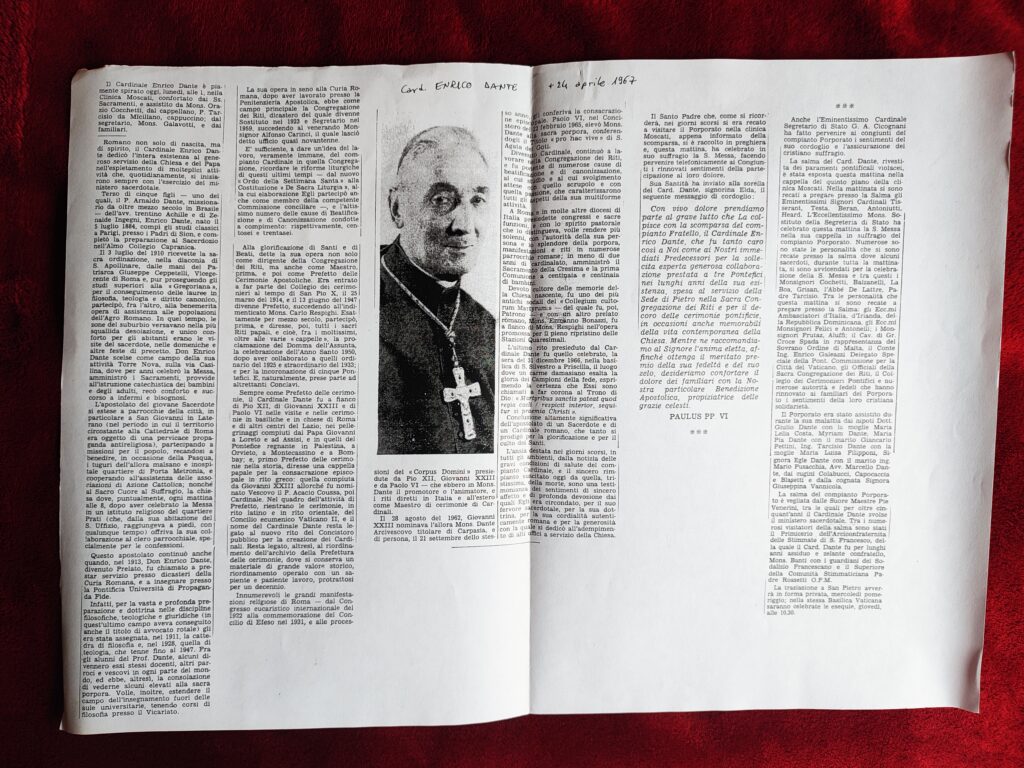
Source: private archive.
During his illness, he was accompanied by Dr. Giulio Dante and his wife Maria Lelia Costa, as well as Myriam Dante, Maria Pia Dante and her husband Giancarilo Pettini, engineer Tarcisio Dante and his wife Maria Luisa Filipponi, Egle Dante with her husband, engineer Mario Fusacchi, and lawyer Marcello Dante. His cousins Colabucci, Capocaccia, and Blasetti, as well as his friend Giuseppina Vannicola, were also present.
After his death, Sister Maestre Pie Venerini, to whom Cardinal Dante had ministered for fifty years, kept vigil at his bedside. Among the other vigil keepers were the primicerius of the Archconfraternity of St. Francis of Assisi, of which Dante had been a devoted and zealous member for many years, Monsignor Banti and the guards of the Franciscan Sodality, and the Superior of the Comunità Stimmaticiana, Padre Rossetti O.F.M.
The transfer of the body to St. Peter’s Basilica took place on the Wednesday following the day on which Dante passed away; it was a private ceremony, held in the afternoon. On Thursday morning (April 27), at 10:30 a.m., the funeral liturgy began.
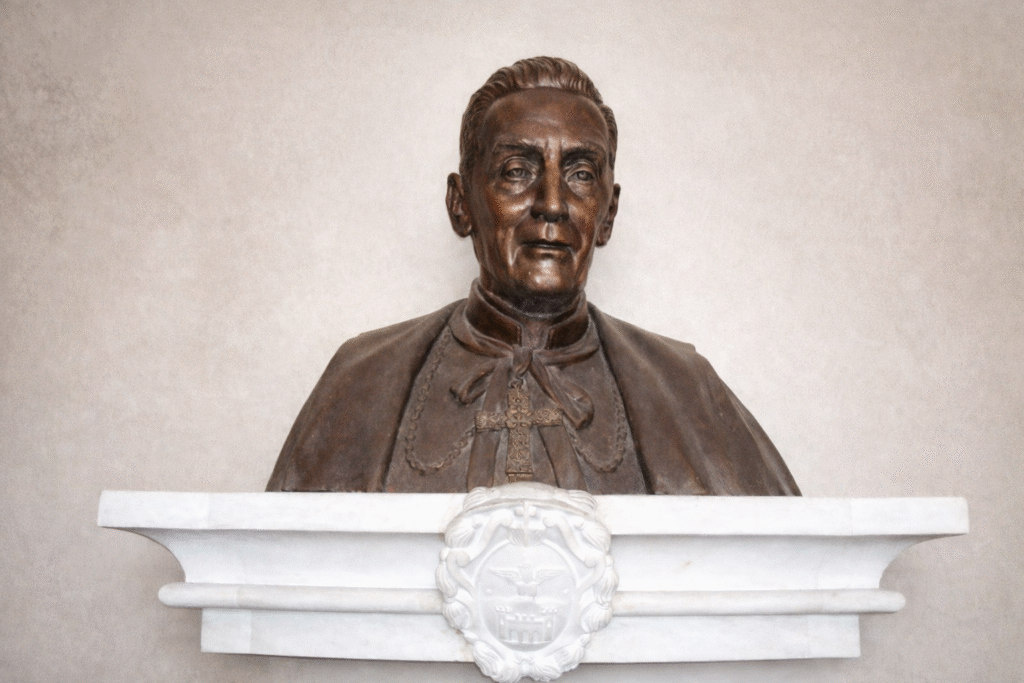
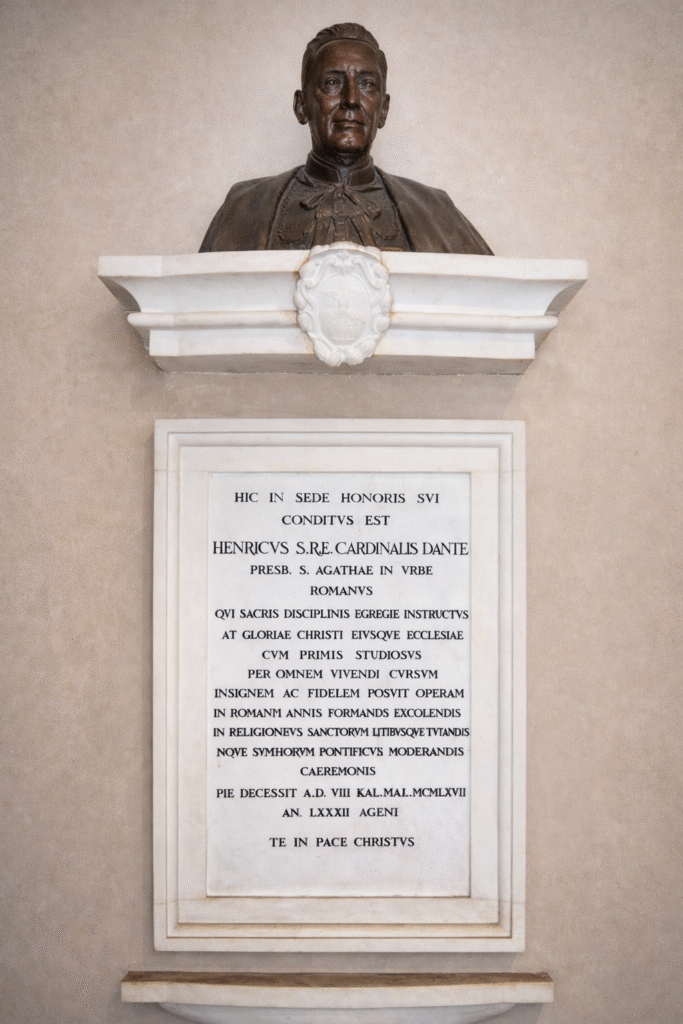
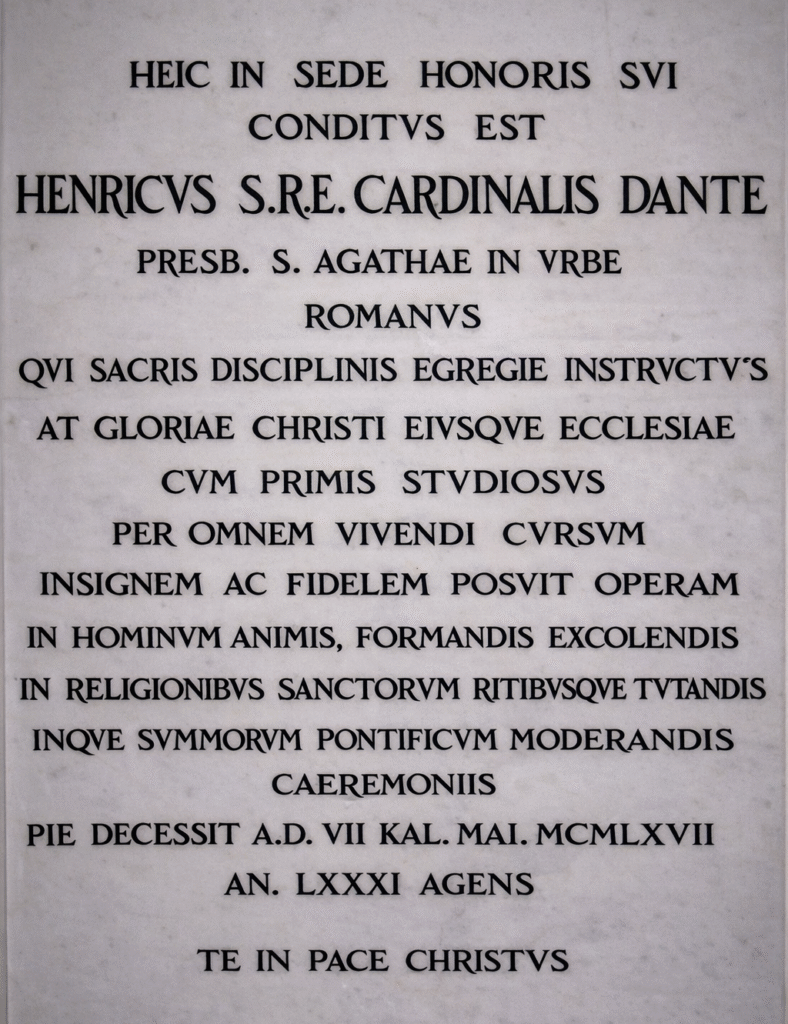
Source: John Sonnen
The ACP contains an interesting document (box 071, file 79) which provides detailed information about the expenses and costs associated with the burial. From the preserved invoices (from Prima Impresa Transporti Funebri Piacenti fondata nel 1876), we learn, among other things, that the total cost of transporting the body was 466,100 L. Another invoice, issued by Pontificia Cereria Constantino Pisoni S. R. L. casa fondata nel 1803 on April 29, 1967, covers the amount of 83,188 L, including the cost of: eight candles for the display of the body; six candles for the reception of the body and two candles for the acolytes, as well as ten candles each for the canons, heirs, and clergy; six altar candles for the funeral service, as well as one hundred candles for the catafalque, one for the celebrant, thirty for the cardinals, and four torches for the canon of the Holy Mass and four for the quadratura (this is the colloquial name for a special choir constructed in papal chapels for cardinals, bishops, and prelates of the Roman Curia).
Cardinal Enrico Dante was buried in his titular church in Rome, where he rests to this day. His final resting place is located there, next to which a bust and a commemorative plaque have been placed, on which we read:
HEIC IN SEDE HONORIS SVI
CONDITVS EST
HENRICVS S.R E. CARDINALIS DANTE
PRESB. S. AGATHAE IN VRBE
ROMANVS
QVI SACRIS DISCIPLINIS EGREGIE INSTRVCTVS
AC GLORIAE CHRISTI EIVSQVE ECCLESIAE
CVM PRIMIS STVDIOSVS
PER OMNEM VIVENDI CVRSVM
INSIGNEM AC FIDELEM POSVIT OPERAM
IN HOMINVM ANIMIS FORMANDIS EXCOLENDIS
IN RELLIGIONIBVS SANCTORVM RITIBVSQVE TVTANDIS
INQVE SVMMORVM PONTIFICV MODERANDIS
CAEREMONIIS
PIE DECESSIT A.D. VIII CAL. MAI. A. MCMLXVIII
AN. LXXXII AGENS
TE IN PACE CHRISTVS
Source: John Sonnen