

Based on: Udział Enrico kard. Dantego w reformach liturgicznych XX wieku. Przyczynek do zagadnienia, „Resovia Sacra”, r. XXIII (2016), p. 159-175. There you will find detailed literature.
The Acts of the Second Vatican Council remain the main source of knowledge about this event and the subject of extensive and ongoing research. However, they are insufficient to provide a comprehensive account of the processes, attitudes, and circumstances that accompanied the deliberations of the Council Fathers. For their proper interpretation, one must also take into account the events preceding the Council, as well as the attempts made to implement its decisions. It is also reasonable to analyze the statements and actions of individual persons, as well as the publication of their diaries, memoirs, or notes. From this perspective, we provide a preliminary description of the participation in the 20th-century liturgical reforms of Cardinal Enrico Dante, long-time Master of Papal Ceremonies and Father of the Second Vatican Council.
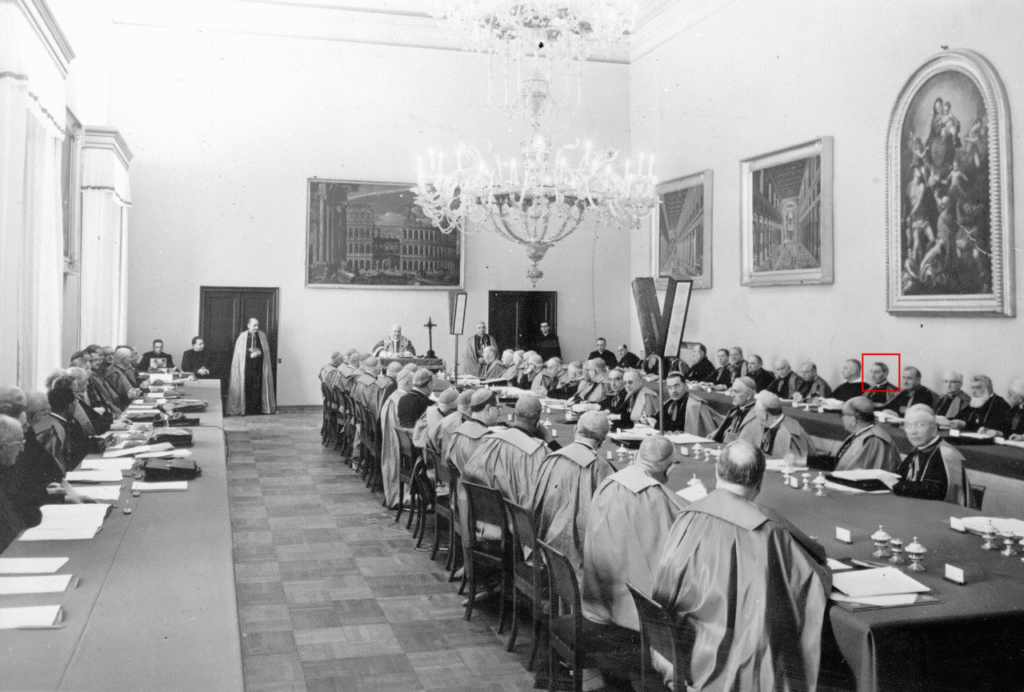
Source: Dicastero per il Culto Divino e la Disciplina dei Sacramenti
As a member of the Sacred Congregation of Rites, Dante actively participated in the preparatory commissions for the Council and in the council’s liturgy commissions. He was also involved in drafting the conciliar constitution De Sacra Liturgia. Later, as well as during the Council, he played an important role in introducing reforms – his signature appears under many decrees in the liturgical books as secretary of the Vatican liturgical dicastery.
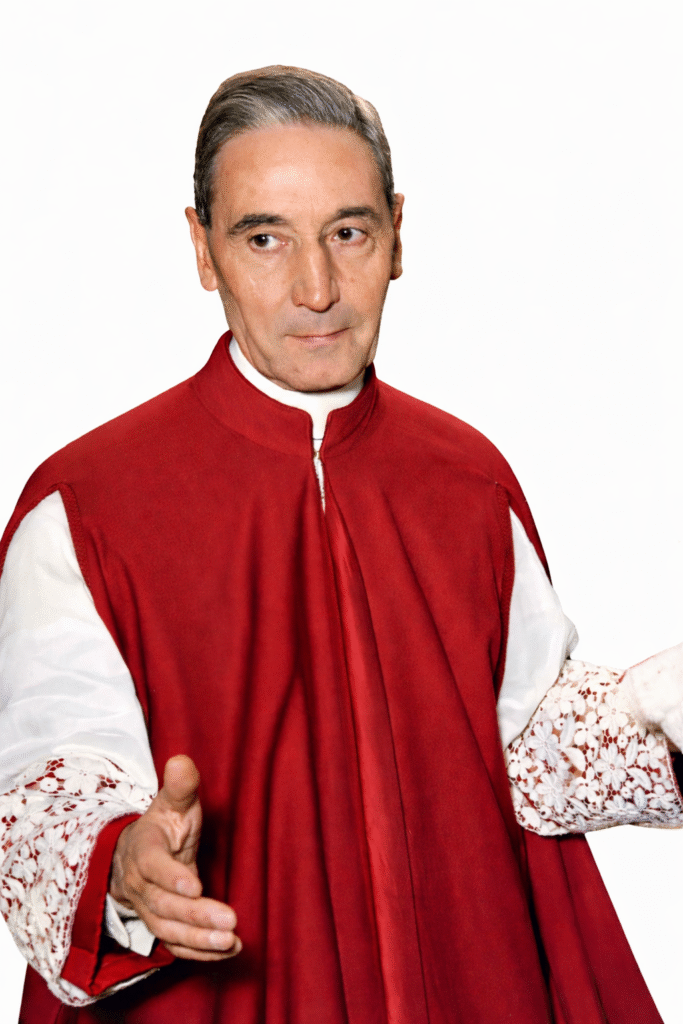
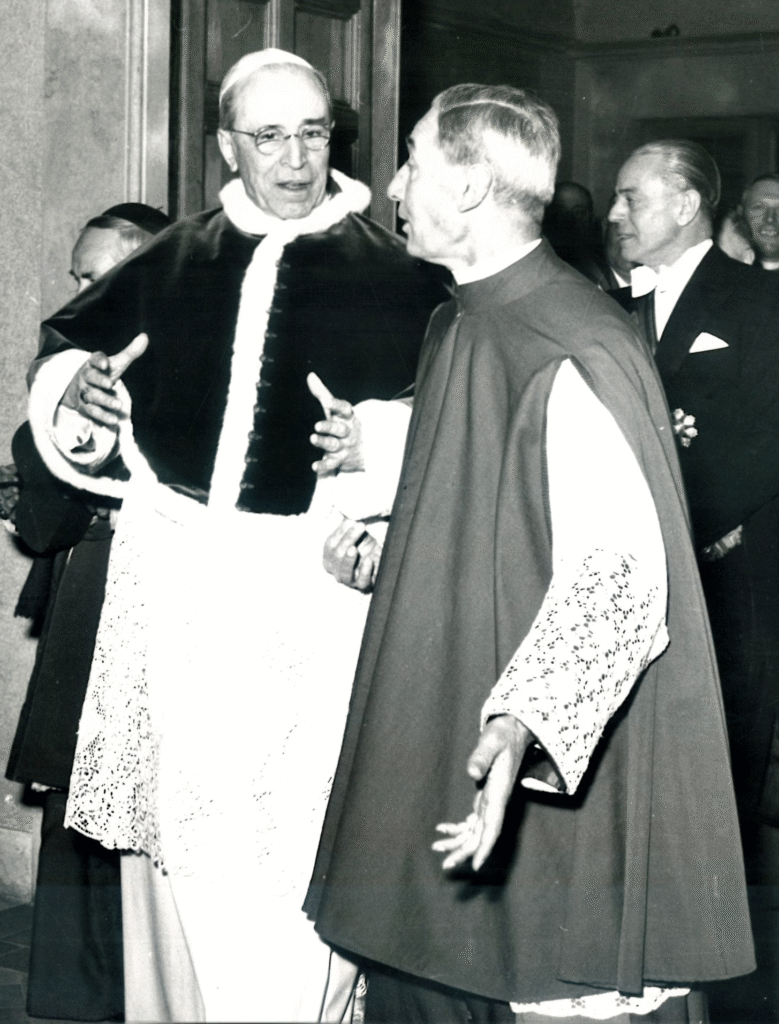
Source: Almo Collegio Capranica
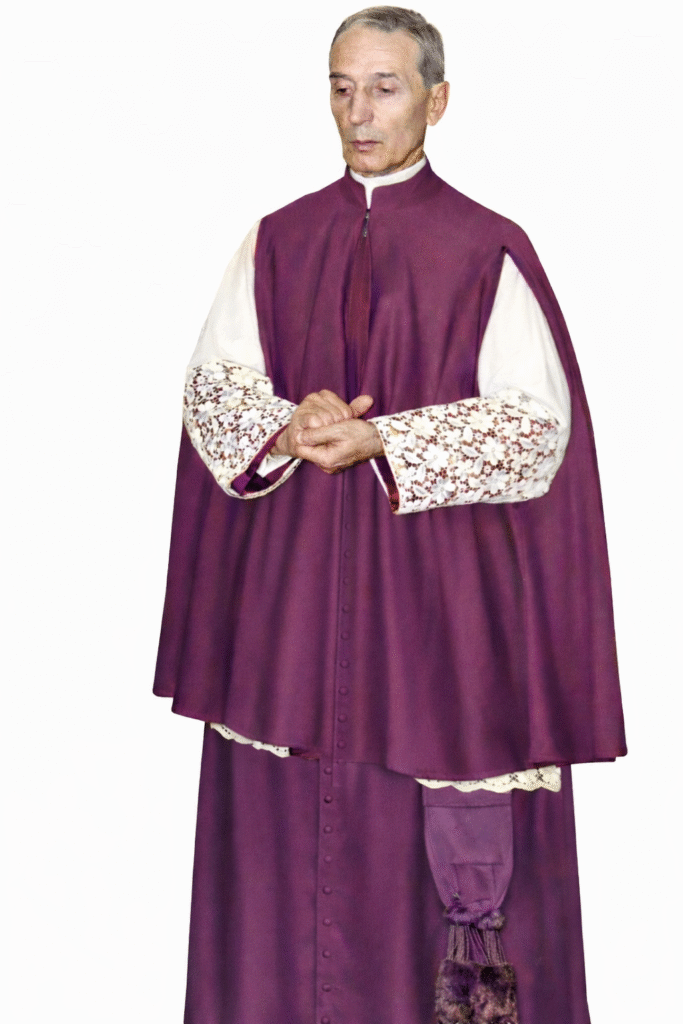
Enrico Dante, who was associated for decades with the “liturgical” dicasteries of the Holy See (the aforementioned Sacred Congregation of Rites, but also the Sacred Congregation of Ceremonies and the College of Papal Masters of Ceremonies), as a priest, later bishop, and finally cardinal, was at the very center of events related to liturgical reforms between 1948 and 1975. These reforms gained the most momentum under the auspices of the Second Vatican Council, hence attention should be focused on the years from 1963 until the death of Cardinal Enrico Dante.
Was Cardinal Enrico Dante an enemy of liturgical reform en bloc? According to statements by the Papal Master of Ceremonies, his beliefs should be classified as conservative and moderate, aimed primarily at reviving the faith of the faithful participating in the liturgy. After the publication of the conciliar constitution Sacrosanctum Concilium on the sacred liturgy, Mons. Dante became known more as a defender of the Church’s liturgical traditions and customs and the identity of the Roman liturgy than as a protagonist of far-reaching reformist tendencies. However, it cannot be said that, as a faithful son of the Church, he rejected liturgical reform a priori and per principium.
I. COMMISSIONS AND ORGANISMS OF THE ROMAN CURIA
Enrico Dante’s membership in the Sacred Congregation of Rites and the Sacred Congregation of Ceremonies allowed him to participate ex officio in plans, projects, and work on liturgical reform as early as 1948, when Pope Pius XII established a “secret” Commission for Liturgical Reform (May 28). The Roman prelate became a member of the commission and from the very beginning participated in the work, which was led by Father Annibale Bugnini. In 1951, as sostituto of the Sacred Congregation of Rites, Dante was included in the so-called Commisio Piana (established in 1948 and dissolved in 1960).
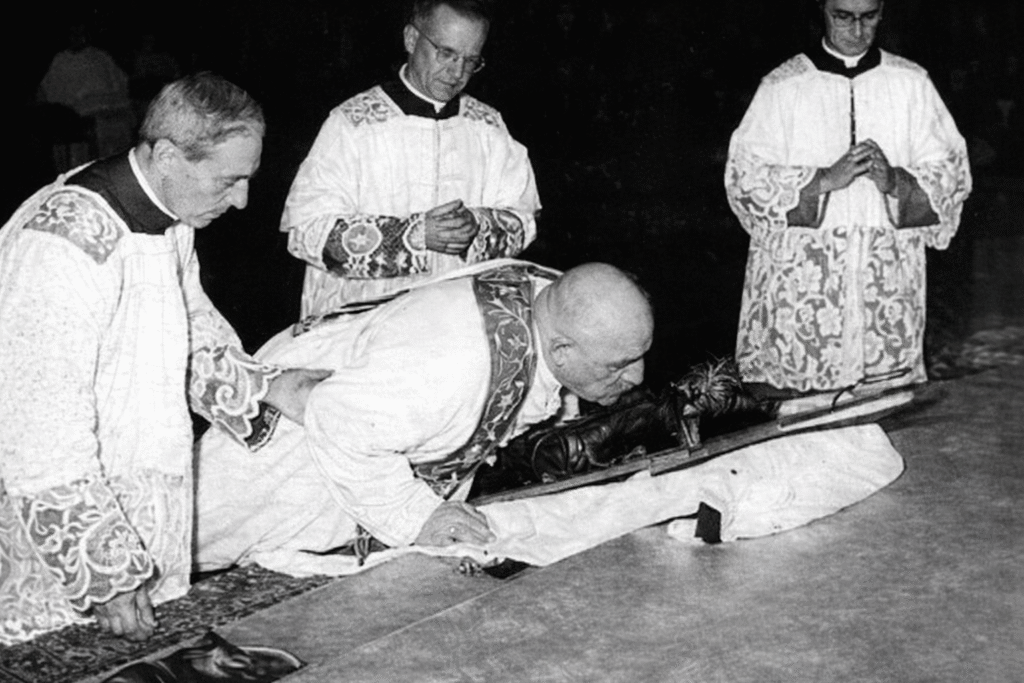
Original source unknown.
As undersecretary of the Sacred Congregation of Rites, Dante participated in the intensive work of the preparatory commission for the Second Vatican Council — five meetings were held between May 1959 and April 1960. In addition to him, the commission included the secretaries of six other Vatican Congregations. The commission’s main tasks included preparing the documents necessary to organize the initial work of the upcoming council, setting out the main themes for the deliberations on the proposed issues, and appointing the appropriate bodies to take responsibility for the detailed preparations.
The first task of the Council was to establish conciliar commissions. During the third plenary session, on October 20, 1962, the Fathers elected sixteen members of the liturgical commission, who were joined by eight other persons appointed by the Pope. A little later, the Pope, deciding to include representatives of the Vatican secretariats of the liturgical congregations in the commission, decided that Archbishop Enrico Dante (then secretary) would represent the Sacred Congregation of Rites. He officially joined the commission on October 29. After the proclamation of the conciliar Constitution on the Liturgy Sacrosanctum Concilium, Dante participated in the work of the Council for the Implementation of the Constitution on the Sacred Liturgy (Consilium ad exsequendam Constitutionem de Sacra Liturgia), established on January 29, 1964, by Pope Paul VI by virtue of the motu proprio Sacram Liturgiam. The Council existed until 1969, when the Congregation for Divine Worship was established (unexpectedly abolished in 1975 by Pope Paul VI himself).
II. STATEMENTS, COMMENTS, AND INTERVENTIONS
The Master of Papal Ceremonies made his presence felt especially in the debates that began at the last council and continued immediately after its conclusion in connection with the implementation of the provisions of the conciliar constitution on the liturgy. In order to place Enrico Dante’s actions in their overall context, it is necessary to refer to two facts. The first is the Roman priest’s active involvement in pastoral ministry, which allowed him to see the need for certain liturgical adaptations. Secondly, it is impossible not to refer to the well-intentioned aims and momentum given to the liturgical movement’s undertakings — its leading representatives sought to bring about profound liturgical changes in the life of the Church as quickly as possible. The most frequently cited example from before the Second Vatican Council is the reform of Holy Week carried out during the pontificate of Pope Pius XII, in which Dante was also indirectly involved.
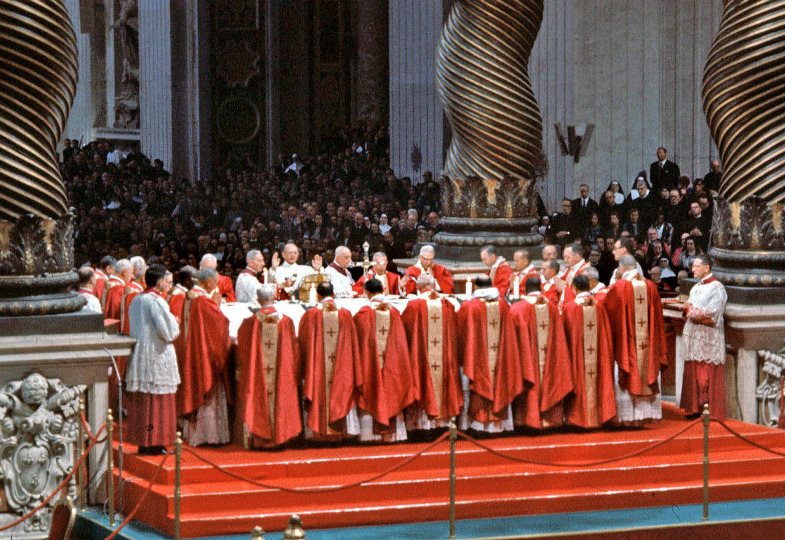
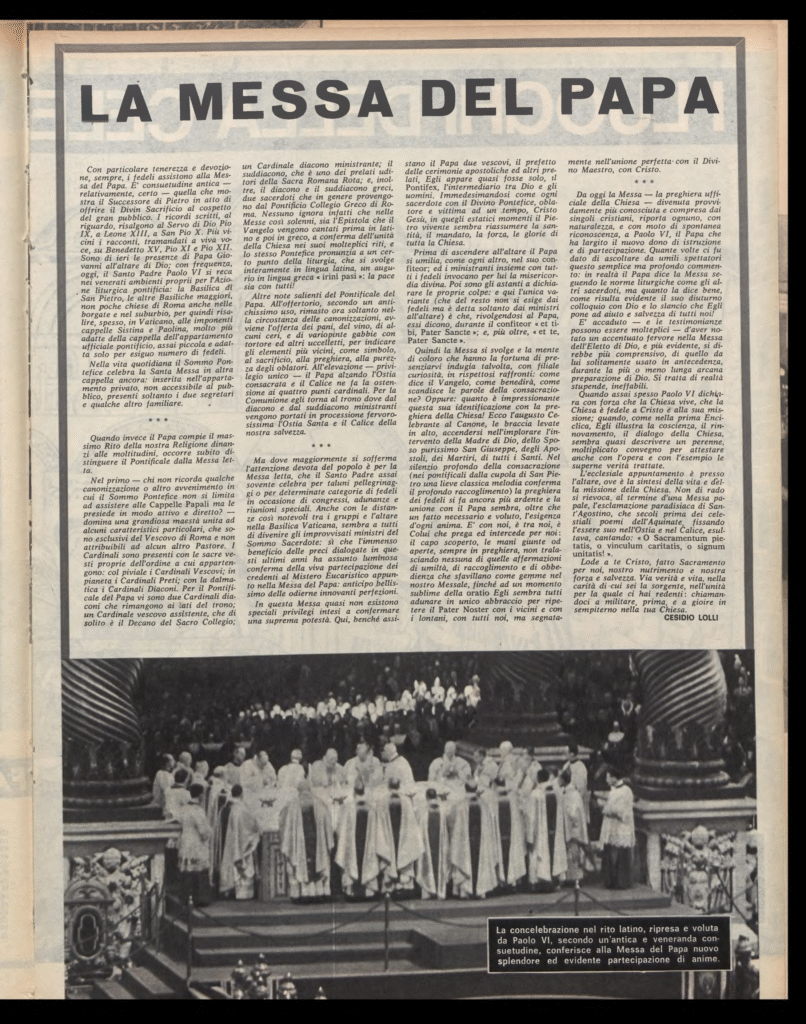
Source: KNA(Bild) / OR
Among the many liturgical topics discussed in the council hall and at meetings of the relevant liturgical commissions, in which Enrico Dante also participated, it is necessary to refer to the issues that were most important from the point of view of the reform itself and/or the discussions in which he was most actively involved. Therefore, topics such as the Blessed Sacrament of the Eucharist, the lectionary, reliquaries, or individual feasts from the liturgical calendar, occasional Masses or those celebrated in privileged places, such as shrines and basilicas, are omitted here.
1. LATIN AS THE LANGUAGE OF THE LITURGY
In his statements, Enrico Dante most often referred to far-reaching visions of changes in liturgical rites. This was the case in the discussion on the first four chapters of the constitution on the liturgy, where the issue of Latin was the focus of the debate on the form of the rite of divine worship (during the first session of the Council in 1962). The progressive scheme was opposed by Vaganozzi (Apostolic Delegate to the United States) and Enrico Dante, who, according to de Lubac’s notes, “demolished” the scheme in his twelve-point speech. A year later, during the 23rd meeting of the conciliar liturgical commission (April 25, 1963), he lamented the hostility towards Latin and proposed that the use of Latin and national languages in the Mass be precisely defined. Later, he agreed (along with Cardinal Bea) with Albareda’s speech, which placed great emphasis on the moral value of a single language in the official worship of the Church. He also noted that the precedent of abandoning Latin in solemn rites could cause great harm to the faithful and to the preservation of the unity of worship. He was in favor of allowing national languages in the renewal of baptismal vows, but strongly opposed their introduction in readings. Dante agreed, however, that if national languages were to be introduced into the reading of the Passion during Holy Week, this should also be done consistently in relation to other readings.
Lingua adhibenda in ritu romano in integra Missa et Officio divino sit lingua latina. Vernaculae linguae unice adhibendae sunt in cathechesi et sermone ad populum ("The language adopted in the Roman rite for all the rites of the Mass and the Office should be Latin" – Mons. Enrico Dante, October 22, 1962, quoted from: E. Cattaneo, Culto cristiano in occidente. Note storiche, Roma 1984, p. 567.
2. HOLY COMMUNION UNDER BOTH KINDS
The issue of Holy Communion under both forms (and concelebration) was also raised during the first session of the Second Vatican Council (1962) and was hotly debated long after the council closed. During the debate on the liturgy, Monsignor Enrico Dante, in a short speech on the manner of receiving Holy Communion, caused considerable confusion among the assembly. He reminded them that Holy Communion under both forms was a privilege granted by Pope Pius XII in 1956, and that the practice of receiving Communion under both forms was not universal. Enrico Dante, in a short speech on the manner of receiving Holy Communion, caused considerable confusion among the assembly when he reminded them that Holy Communion under both kinds should be absolutely rejected: firstly, because of Tradition and for reasons that had led to the abandonment of this practice for many centuries, if only because of the inherent danger that arises in this form of administering the sacrament; secondly, for hygienic reasons. Dante opted for the removal of the entire article on Holy Communion under both forms, as he believed that the solution of drinking the Blood of Christ from a single vessel was contrary to reason; other solutions did not satisfy him either.
3. CONCELEBRATION
Enrico Dante claims that concelebration is unacceptable, especially in private Masses (Missa privata); while in Masses concelebrated with a bishop, which could take place in certain special and justified cases, if they were allowed, the decision on the number of concelebrants with the bishop should be reserved only for the Holy See itself. According to Bugnini, the problem of concelebration was resolved at the meetings of the Consilium held on July 3 and October 1, 1964, when the president of the Council was authorized to grant indults ad experimentum until the definitive establishment of the rite of concelebration. In view of this, Mons. Enrico Dante reacted strongly, speaking of “disorder, confusion, and abuse” and pointing out that too many different rites of concelebration were being practiced. However, his actions were met with little response. Ultimately, the Consilium — ignoring, among other things, the criticism of the Master of Papal Ceremonies — prepared a scheme for the rite of concelebration for the third session of the Council in accordance with the Council’s original intentions.
For Dante, the starting point for creating any concelebration project should be the following principles: exclusion from concelebration of everyone except bishops and priests in the ordination ceremony; Holy Communion directly from the chalice; bination on specified occasions (Holy Thursday, Easter, Christmas, All Saints’ Day, diocesan synod); obligation for all concelebrants to wear all the prescribed liturgical vestments.
Pope wants to put an end to all the confusion and disorder going on just now and wants the rite to be based on the rite in the Pontifical – Mons. Enrico Dante, quoted from: Annibale Bugnini, The Reform of the Liturgy 1948-1975, Collegeville, Minnesota 1990, s. 128, p. 11.
Bugnini, however, claimed that Dante’s remarks were not based on any arguments, but merely on subjective emotions. He even ironically wrote in his work on the reform of the liturgy that Monsignor Dante finally ended his rubrical remarks and quietly accepted further discussion (in light of Bugnini’s argument, his remark seems equally unfounded in terms of substance). Bugnini further claimed that Dante forgot that the Roman Pontifical (then referring to John XXIII’s 1962 edition) contains no description of the rite of concelebration. This is, of course, untrue, as the authors of the Pontifical provide detailed instructions for concelebration of ordained persons with a bishop in the order of priestly ordination and episcopal consecration.
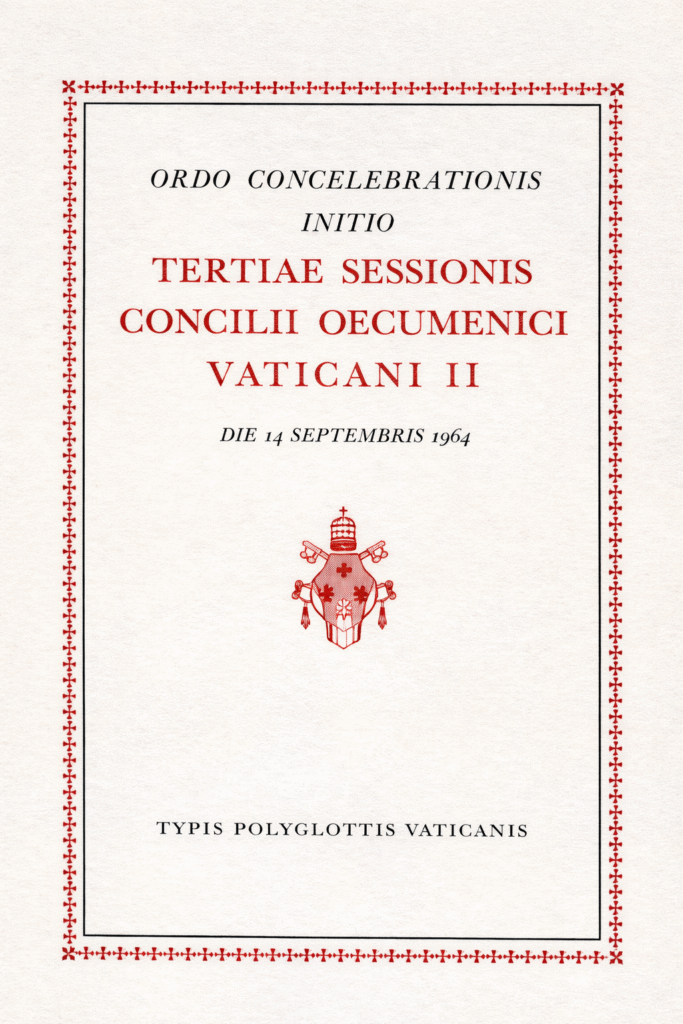
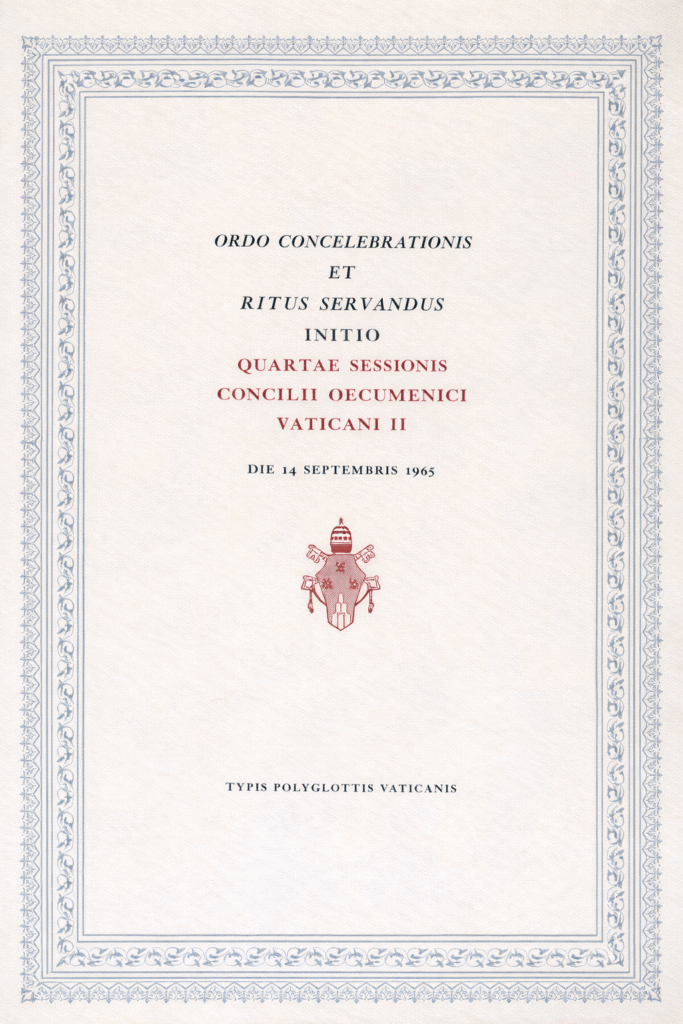
At one of the earlier meetings, the Prefect of the College of Papal Masters of Ceremonies noted that there was no point in creating a „concelebration ceremonial” since the bishops’ own form of participation (assistance) in the Solemn Mass had been developed; on the other hand, he did not see the justification for forcing the clergy in the choir to recite all the prayers while remaining in the stalls.
4. SACRAMENT OF CONFIRMATION
Mons. Enrico Dante opposed the administration of this sacrament during Mass — infra Missam — primarily for historical reasons. However, the pastoral argument and the tendency to place all sacraments and sacramentals infra Missam prevailed, despite reports of opposing views rooted in historical research submitted by Dante to the liturgical subcommittee.
5. CONSECRATION OF CHURCHES
According to the Master of Papal Ceremonies, the consecration should not have begun in the afternoon, despite the permission already granted to ordinaries by the Holy Office in 1957 (regarding Article 2 of the conciliar schema). Despite Dante’s objection, in which he expressed the opinion that any reference to a bishop permitting a church consecration in the evening for pastoral reasons should be removed, the commission adopted the text in accordance with the Holy Office decree: „quando bonum notabilis partis fidelium id postulet” [„When the good of a significant part of the faithful so requires”].
Dante further believed that the term „possessio” (Article 9 of the schema) seemed inappropriate, as the church had already been taken possession of by the time the bishop laid and consecrated the cornerstone. Therefore, an appropriate distinction should be made in the terms used.
Mons. Enrico Dante also noted that in the Litany of the Saints, St. Agatha follows St. Cecilia, whereas in the ancient text she preceded St. Agnes (Article 14 of the Schema).
Regarding Article 19 of the Schema, Dante believed that the order of the ceremony of sprinkling the altar should be changed, as it should take place before the signs of the cross are made on the altar stone, not after.
As for Article 53 of the scheme, along with the majority of the commission members, he opted for the removal of prayers at the altar steps, as the entire rite of consecration of the church was practically exclusively penitential in nature. The omission of these prayers was considered logical and justified in this case, given the feelings of purification and penance that accompany altar consecration ceremonies and are also expressed in the Confiteor. This was based on the precedent of the reform of the Easter Vigil rites during the pontificate of Pope Pius XII.
Dante also believed that it would be justified to celebrate the Missa Dedicationis on the day of the church’s consecration, noting that this would be an exception – which was accepted by the other participants in the deliberations.
6. BREVIARY PRAYER
In response to the proposal to move the recitation of Matins from Holy Wednesday evening to Holy Thursday morning – as had been the case since the last reform on Holy Saturday – Dante noted that the recitation of Matins, Lauds, and the minor hours, together with the Mass of the Holy Chrism, would be a great burden. Referring to the existing antiphons, Dante also argued that they should all be preserved so as not to lose most of the Gregorian melodies that had been composed.
However, regarding the proposal to introduce a two-week psalter, Dante believed that it would be better to wait until the end of the Council before implementing such a proposal.
Monsignor Enrico Dante expressed his wish that the second Mass on Christmas Day should become a conventual obligation, but this proposal was rejected in order to facilitate the recitation of the breviary hours.
7. GREGORIAN CHANT
As in the discussion of the reform of the Breviary, Dante wanted the existing antiphons to be retained so as not to lose the existing Gregorian melodies.
8. LITURGICAL CALENDAR
Dante, along with Bea and Albareda, argued that the creation of entirely new „ecumenical” feasts should be avoided, if only because Eastern Catholics properly venerate saints whose feasts are present in the calendars of their own rites.
The Master of Papal Ceremonies also opposed the removal of the commemoration of St. Paul on the feast of St. Peter and vice versa.
He postulated a gradation of feasts (Dante had already supported Albareda’s proposal in 1951 – a simplified three-fold division of feasts in the liturgical year): Festa Domini, Festa B. M. V., Festa Sanctorum. Each of these three categories would contain two classes: Festum maius and Festum minus.
9. HOLY WEEK
In addition to his positive opinion of the reading of the Passion of Christ in the vernacular, Monsignor Enrico Dante proposed simplifying the Palm Sunday rites: singing the Hosanna, blessing the palms with one of the existing prayers, distribution of palms, reading of the Gospel, procession, and concluding prayers. In the section on Palm Sunday Mass, a suggestion, also made by Dante, was adopted, that the Last Gospel should not be read not only at sung Masses but at all Masses of that day. Dante also questioned whether the Passion of the Lord according to St. Matthew on Palm Sunday should be transferred to Holy Monday to reduce the burden of Sunday ceremonies. The proposal was accepted, but postponed for practical reasons.
Mi viene in mente la Riforma della Settimana Santa degli anni cinquanta, fatta con una certa fretta sotto un Pio XII ormai affaticato e stanco. Ebbene solo alcuni anni dopo, sotto il pontificato di Giovanni XXIII, il quale checché se ne dica, in liturgia era di un tradizionalismo convinto e commovente, mi arrivò la telefonata di Mons. Dante, cerimoniere del Papa, che mi diceva di preparare il “Vexilla Regis” per l’imminente celebrazione del Venerdì Santo. Interdetto risposi: “ma l’avete abolito”. Mi fu risposto: “il Papa lo vuole”. In poche ore organizzai le ripetizioni di canto e, con gran gioia, cantammo di nuovo, quel che la Chiesa aveva cantato per secoli in quel giorno ("I'm reminded of the Holy Week reform of the 1950s, rushed through under Pius XII, who was already exhausted and tired. Just a few years after its introduction, during the pontificate of John XXIII (whatever one may say about him, he was a convinced and unwavering traditionalist when it came to liturgy), I received a telephone call from Monsignor Enrico Dante, the papal master of ceremonies, who told me that the Vexilla Regis should be prepared for the upcoming Good Friday rites. Perplexed, I replied, "But you've abolished that chant." The reply was, "The Pope wishes it." Within a few hours, I organized chant rehearsals, and once again, with great joy, we sang what the Church had sung for centuries on that day.") – Cardinal Domenico Bartolucci in a statement for Pucci Cipriani and Stefano Carusi.
The Master of PapalCeremonies opposed the idea of allowing the Good Friday Liturgy to be repeated in a single church due to the significant practical problems such a situation would create.
Dante also wished for the positio „De instauratione liturgica Maioris Hebdomadae” to include a clear provision for the singing of the Officium tenebrarum in the morning and for the optional reception of Holy Communion at the Chrism Mass.
Furthermore, regarding the Easter Vigil, Dante and Albareda opposed the idea of priests receiving Holy Communion during the Vigil, given the early morning Mass.
10. SIMPLIFYING THE RUBRICS
Enrico Dante, raising a question about the advisability of simplifying the rubrics, noted that two series of general rubrics already existed for the Breviary and Missal – St. Pius V’s Additiones et Variationes and others of St. Pius X. He questioned whether it was necessary to create a third series. He proposed a possible merger of two or possibly three series to create a single definitive one. Dante’s considerations were received with great interest by all members of the commission, which, however, decided to draft simplified rubrics, leaving the status quo for the time being.
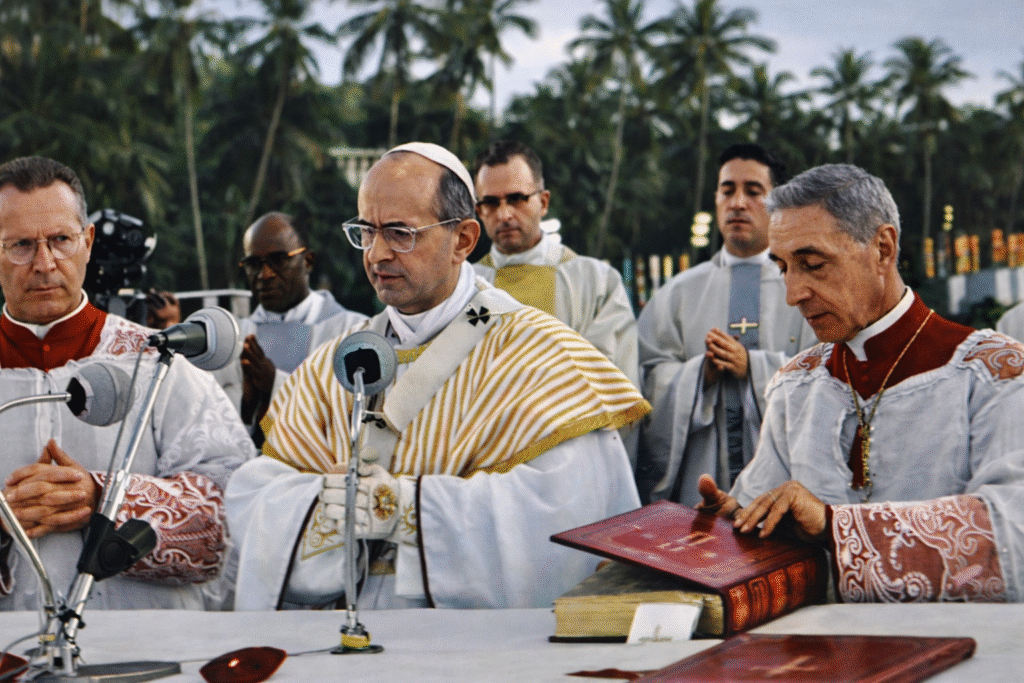
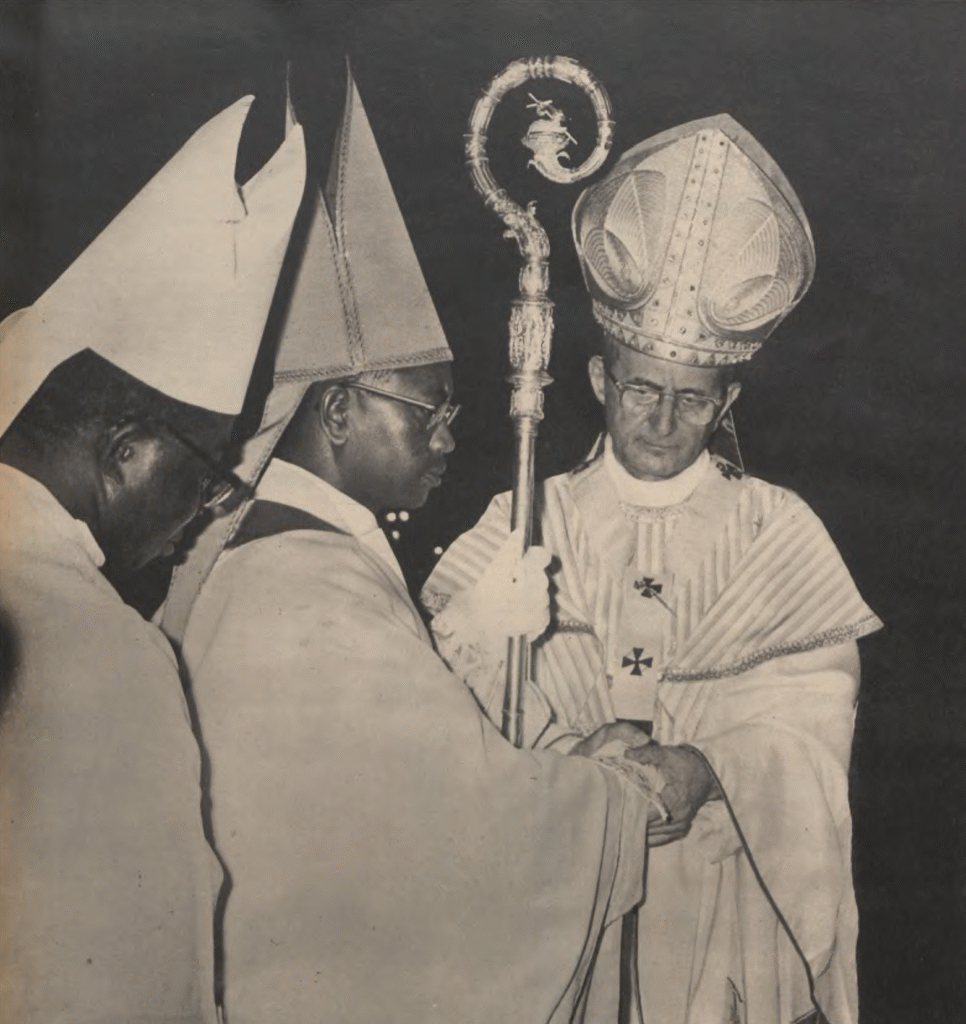
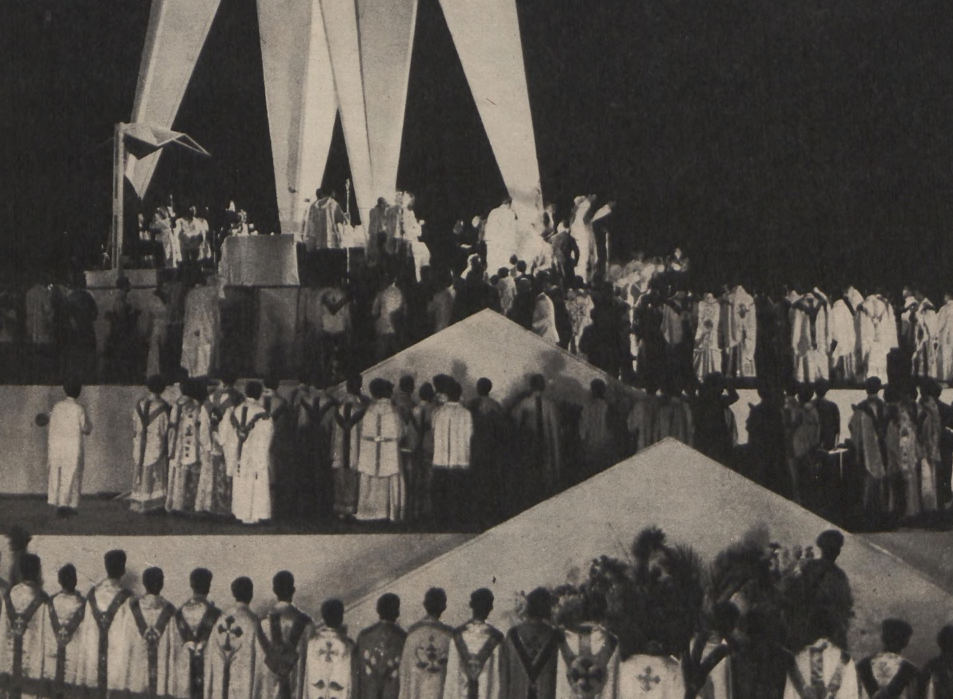
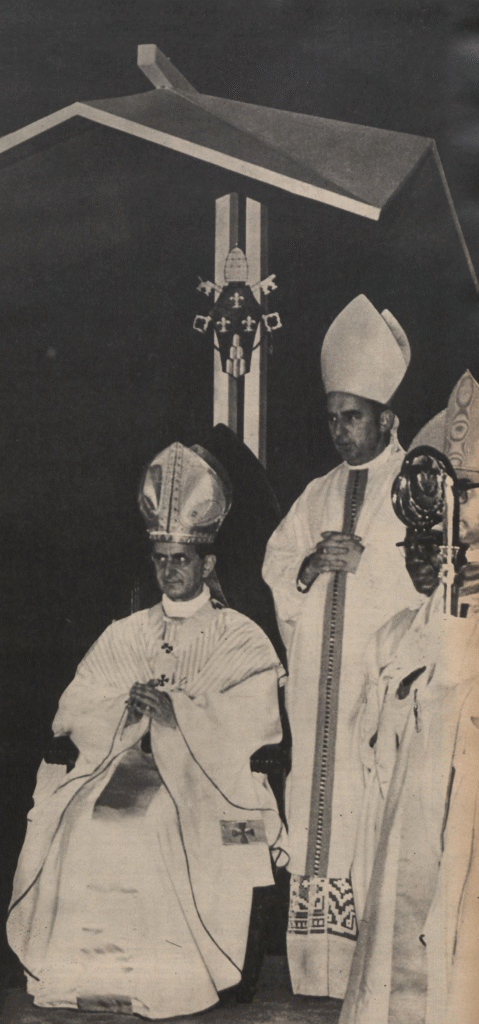
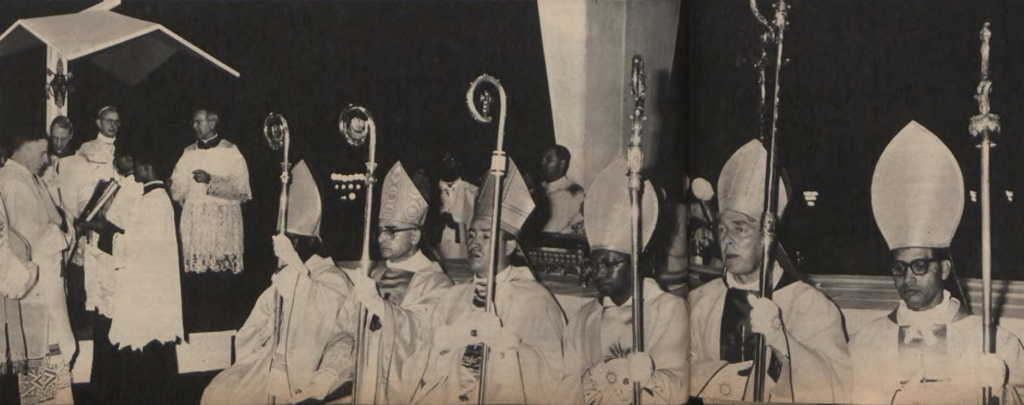
Source: Osservatore Romano della Domenica (December 13, 1964, XXXI/50/1595)
Monsignor Enrico Dante’s response: the commission should first draw up a general plan for such an important undertaking, taking into account subsequent directives to be published, in order to avoid the futility of the present work; secondly, the hierarch noted, fourth-class feasts seem superfluous, so they should be added to the third-class feasts and not simply removed; he argued that removing feasts such as Saint Peter in Chains would result in a radical change of the calendar.
III. CONCLUDING REMARKS
From the selectively quoted statements, discussions and opinions of Cardinal Enrico Dante on individual liturgical topics discussed during the Second Vatican Council, one can discern a decisive trait of liturgical conservatism, which ultimately lost out to the enthusiasm and hopes associated with the introduction of decisive, regular and large-scale reforms – not only liturgical ones, but of the entire Church.
An event that took place in October 1963 is symbolic. At that time, Monsignor Enrico Dante, along with other Council Fathers, most of whom belonged to the Coetus Internationalis Patrum, twice appealed to the Tribunal of the Holy See regarding the criteria determining the Council’s vote. The basis for this decision was the clear violation of the principles of the Council’s Ordo in the vote on Chapter Two of the Constitution on the Liturgy (the chapter devoted to the Most Holy Sacrament of the Eucharist). The appeal remained unanswered, and the so-called Rhine group, leading the deliberations, ultimately managed to seize control of events, setting them on an unfavorable course.
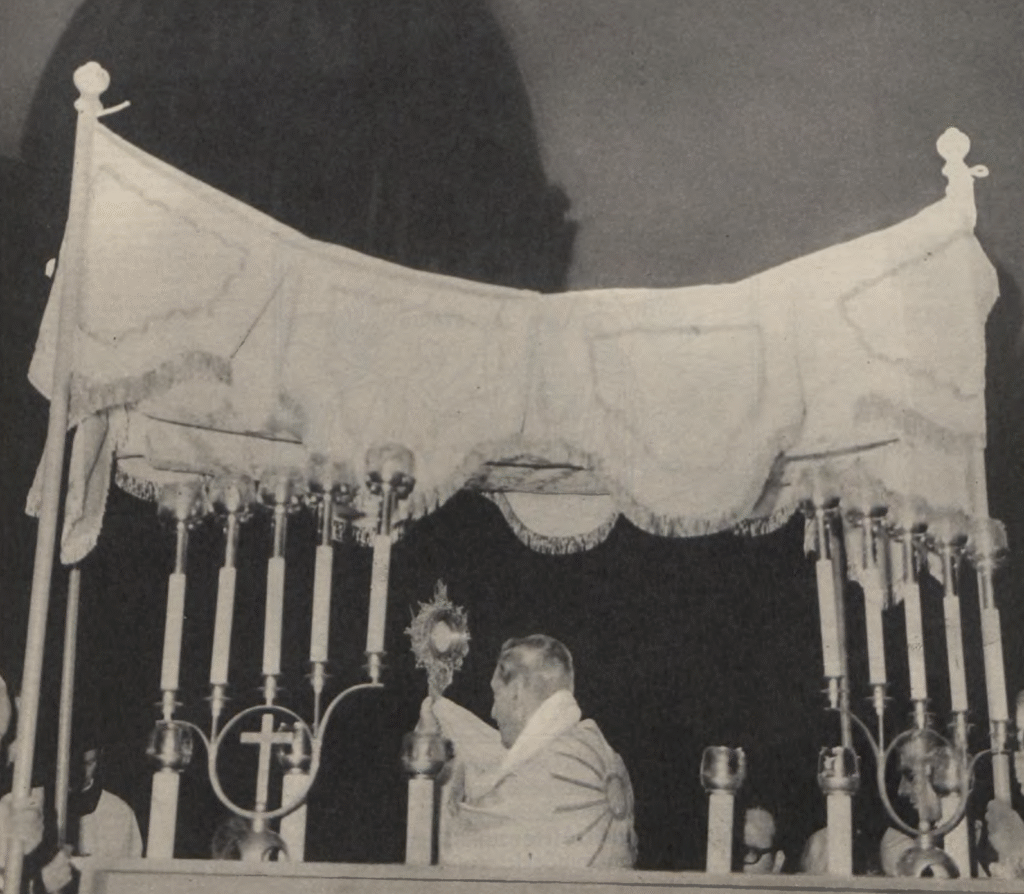
This analysis does not claim to be exhaustive; its continuation would require, among other things, comparative analyses of the views and proposals of Monsignor Enrico Dante and the liturgical books published after the Second Vatican Council. This study encourages in-depth study of the entire course of events that comprised the complex process of liturgical reform in the last century. However, the thoughts and arguments formulated during the discussions held during the Second Vatican Council and the events that occurred before and after it (collected in official records or private diaries or collections) can be invaluable in better understanding the reforms themselves, their assumptions, and the goals of their protagonists.