

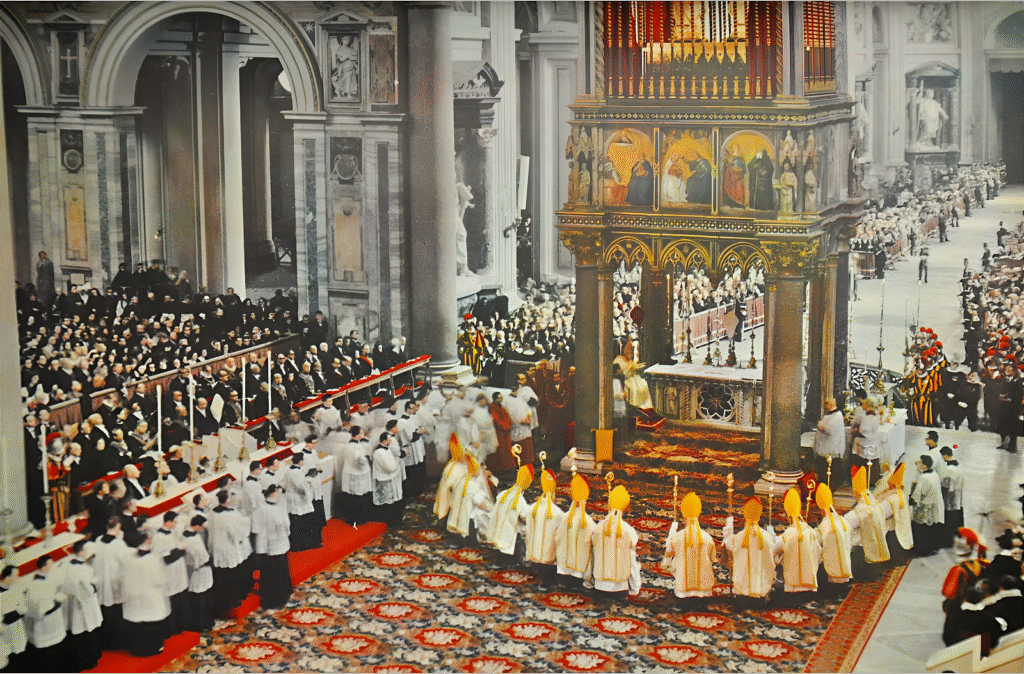
Enrico Dante received his episcopal nomination on August 28, 1962, by decision of Pope John XXIII. He was ordained bishop by the Pope himself in the Basilica of St. John Lateran on September 21, 1962. He was consecrated with Giovanni Battista Scapinelli di Leguigno from Brescia, Cesare Zebra from Castelnuovo Scrivia in Alexandria, Pietro Palazzini from Piobbico in Pesaro, Paul Philippe from Paris, and Beniamino Nardone from Gravina di Puglia in Bari.
The centuries-old tradition granting the Supreme Pontiff the privilege of consecrating bishops alone (i.e., without co-consecrators) did not apply here either, as Dante’s co-consecrators were Archbishops Francesco Carpino and Pietro Parente. According to this same tradition, the Bishop of Rome has the right to confer episcopal consecrations during a low Mass customarily celebrated at the altar of the Chair of St. Peter (while maintaining certain elements of the pontifical liturgy). [1].
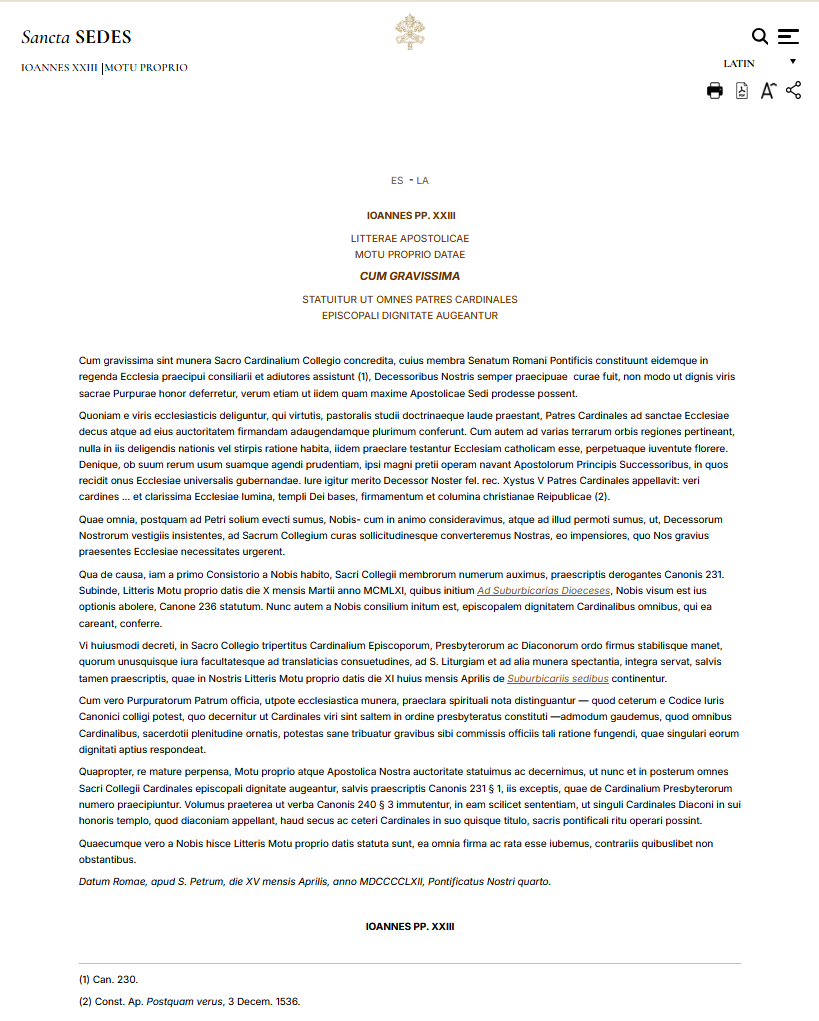
It should also be noted that at that time, a new law established by Pope John XXIII was already in force, stating that every cardinal should be a bishop, and if he is not, he should receive episcopal consecration (motu proprio Cum Gravissima of April 15, 1962). Previously, canon law required cardinals to have at least priestly ordination (before the promulgation of the Code of Canon Law in 1917, any man could formally be appointed a cardinal). The first episcopal consecrations of the new cardinal deacons, who customarily did not have the highest degree of ordination, also took place in the Cathedral of the Bishop of Rome just four days after the publication of the papal motu proprio. Cardinal Albareda, Bacci, Bea, Bracci, Browne, Heard, di Jorio, Jullien, Larraona, Morano, Ottaviani, and Roberti received episcopal consecrations at that time.
In the ACP, in box 0282, in folder 9, we find documents from this ceremony, including: a celebration booklet in French for the diplomatic corps entitled Consecrations Episcopales à Saint Jean de Latran par Sa Sainteté Jean XXIII le 21 septembre 1962 (bilingual text of the rites with short comments); biographies of the cardinals entitled Liste des évêques consacrés par Sa Sainteté le Pape Jean XXIII à Saint Jean de Latran le 21 septembre 1962, where we read that Bishop Dante [2]:
„was born in Rome on July 5, 1884. After completing his secondary studies in Paris with the Fathers of Sion, he entered the Capranica College in Rome and was ordained a priest on July 3, 1910. He received a doctorate in philosophy, theology, and canon law, as well as a rotal lawyer's diploma; he was appointed professor at the Propaganda College, where he taught philosophy until 1930, and then theology until 1947. In 1913, he became a member of the Penitentiary and in 1914 of the College of Papal Masters of Ceremonies. In 1923, he was appointed Substitutum of the Congregation of Rites. In 1947, he became Prefect of the Office of Papal Ceremonies and, on January 5, 1960, Secretary of the Congregation of Rites. On August 19, 1962, he was appointed Titular Archbishop of Carpasia.”.
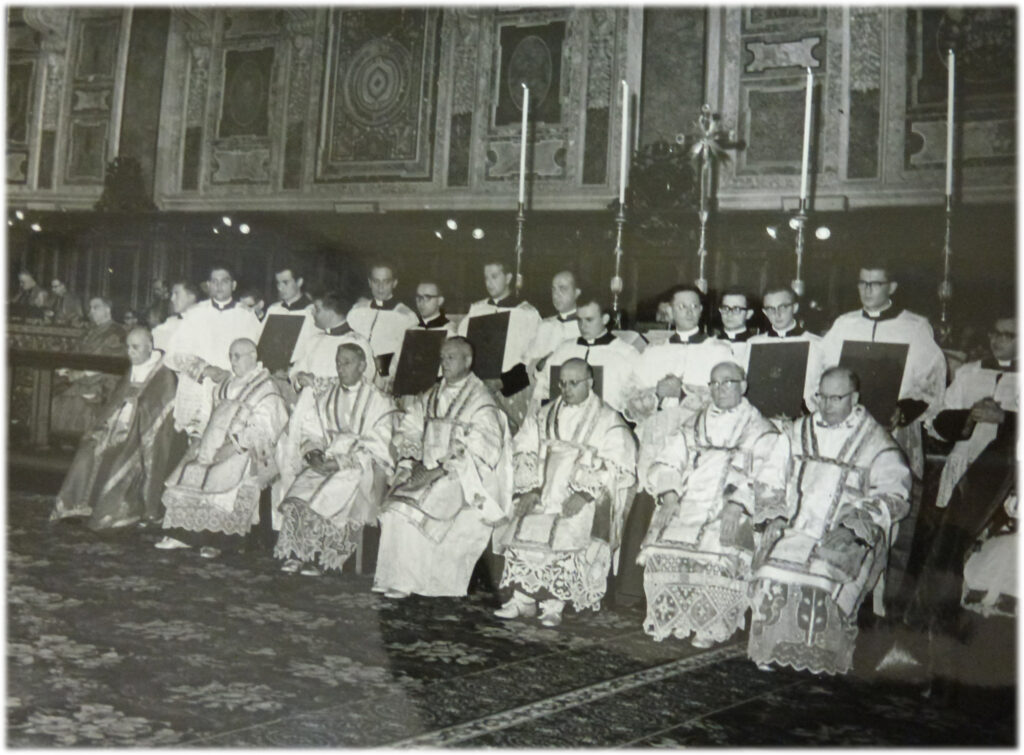
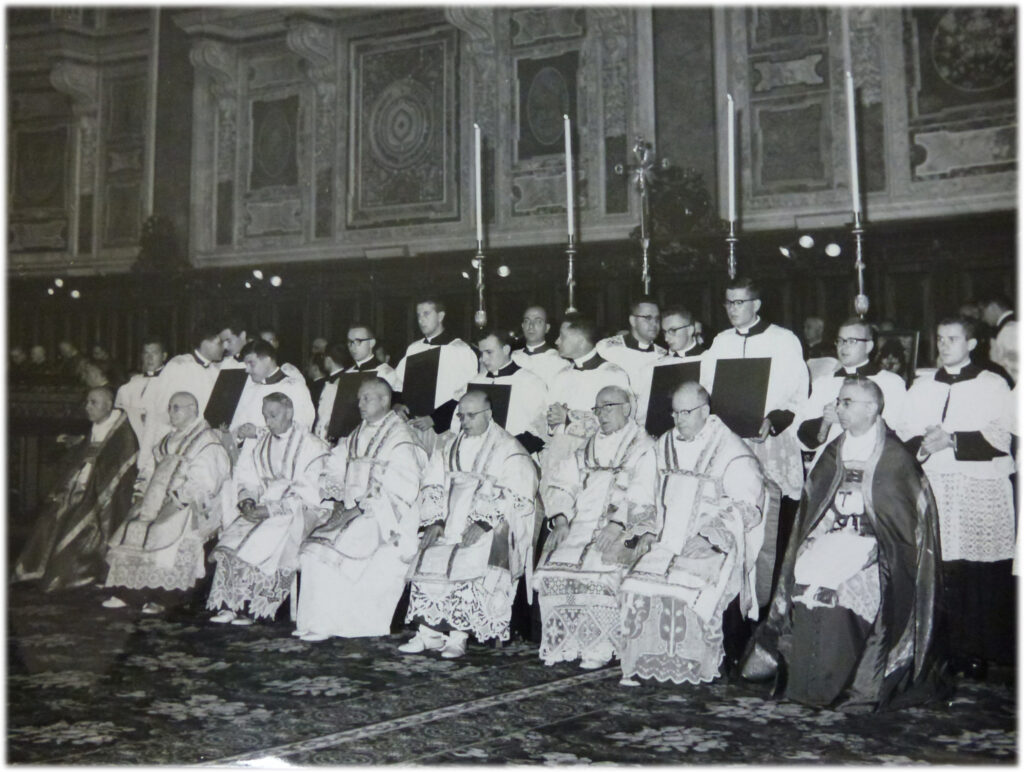
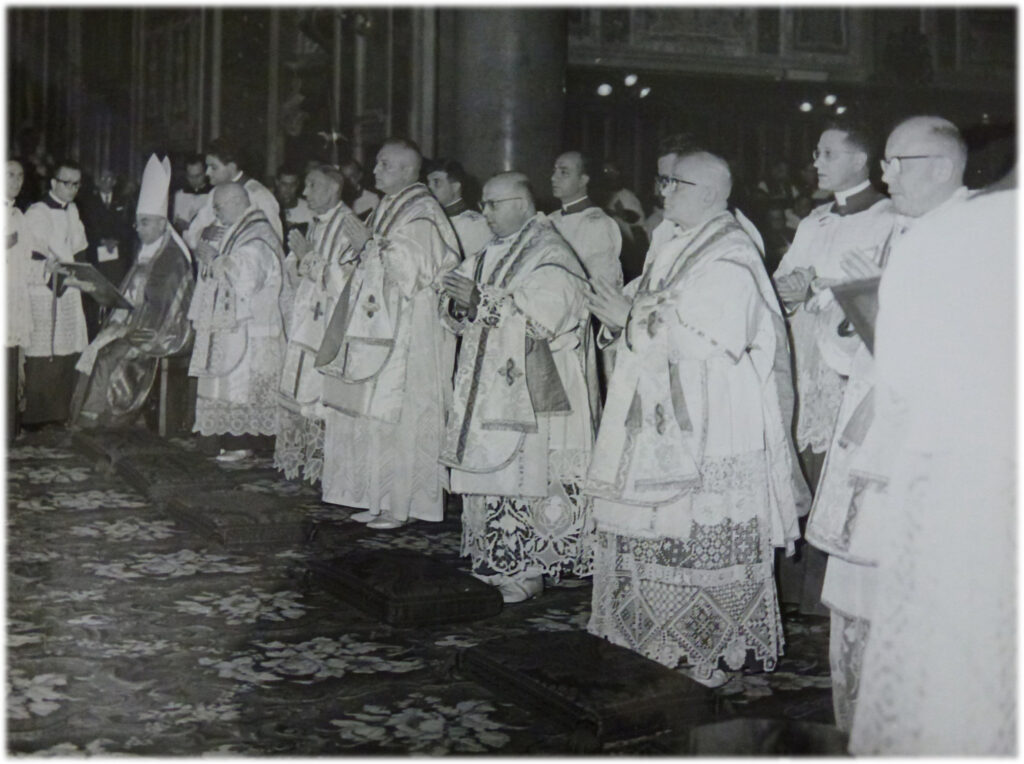
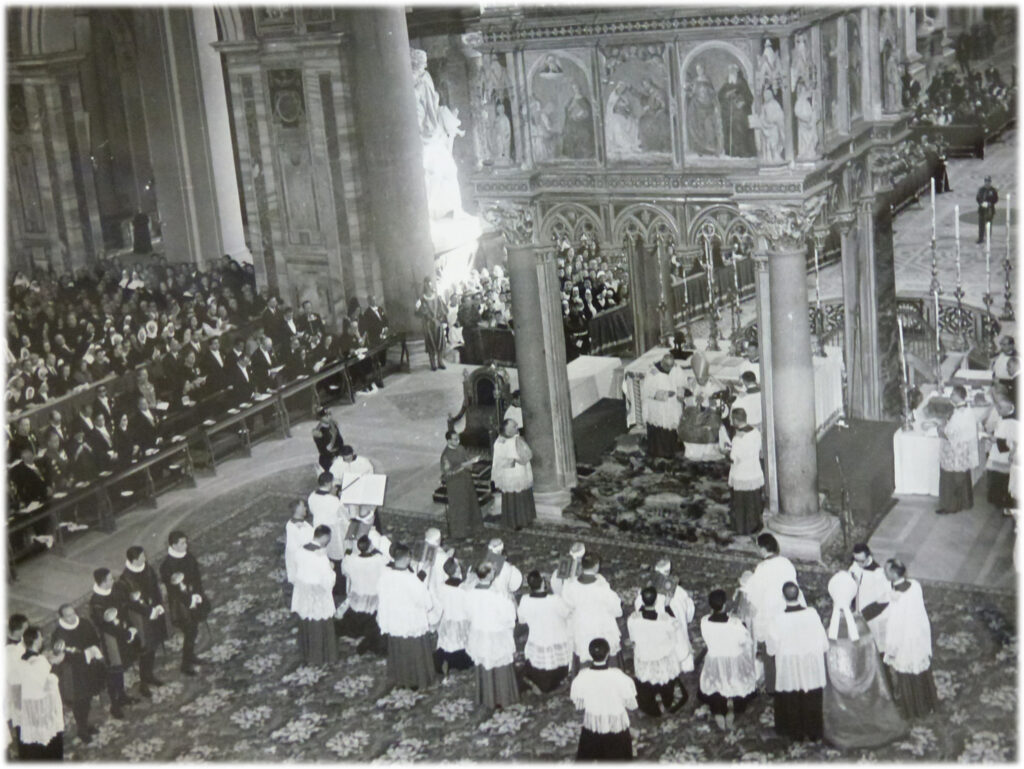
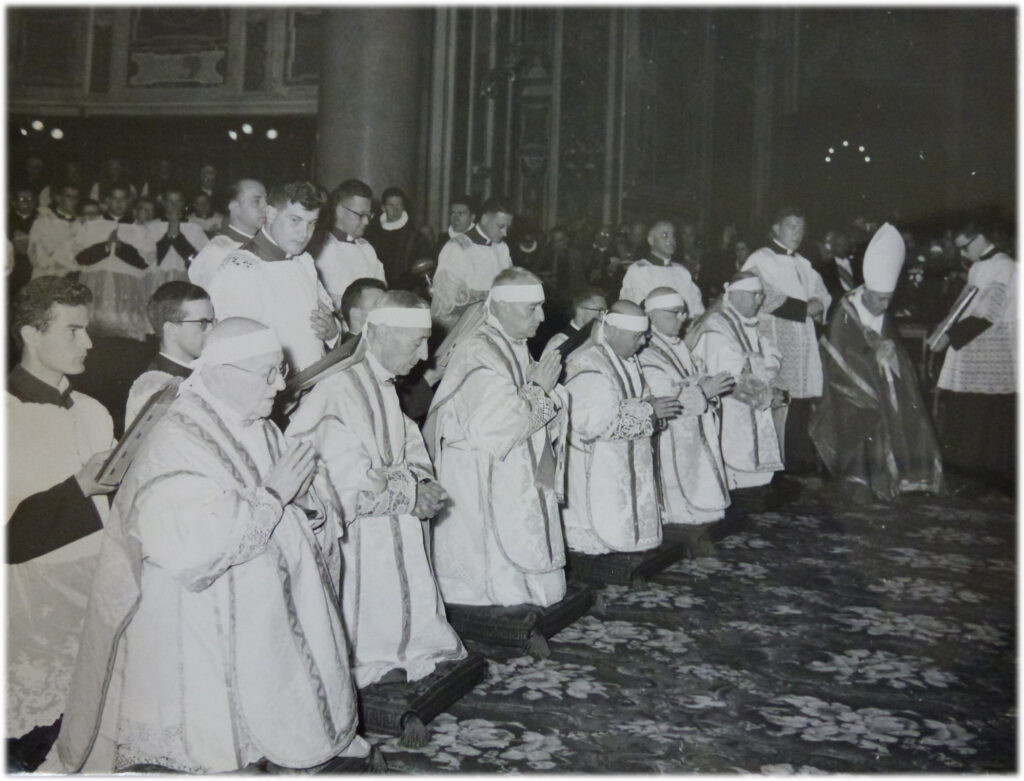
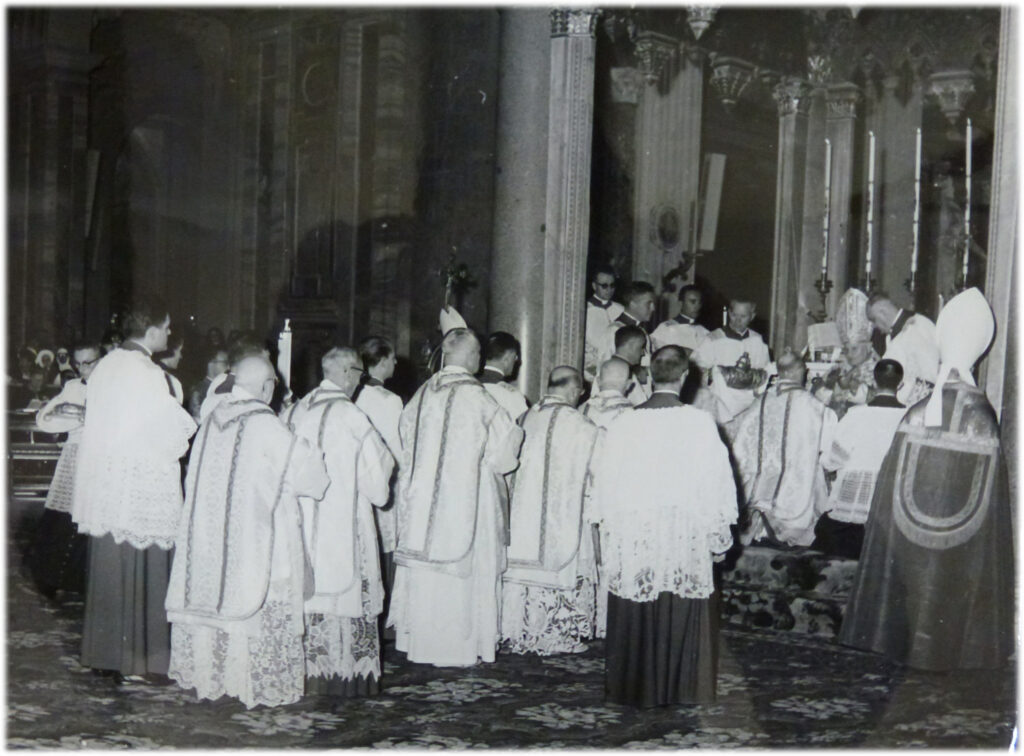
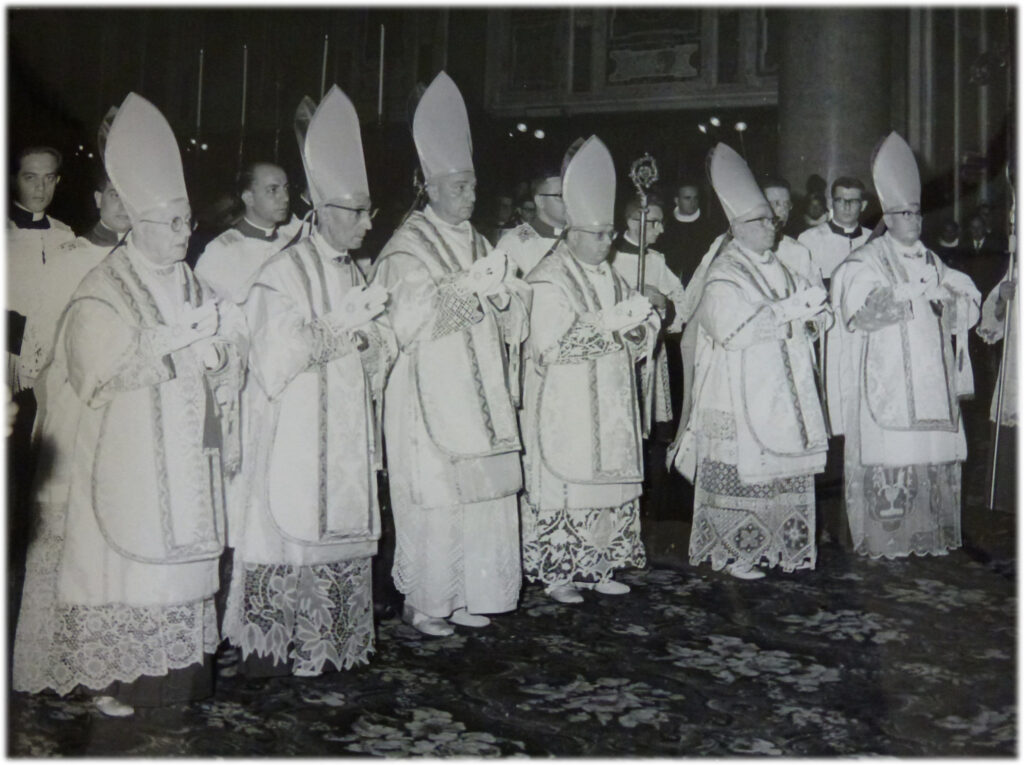
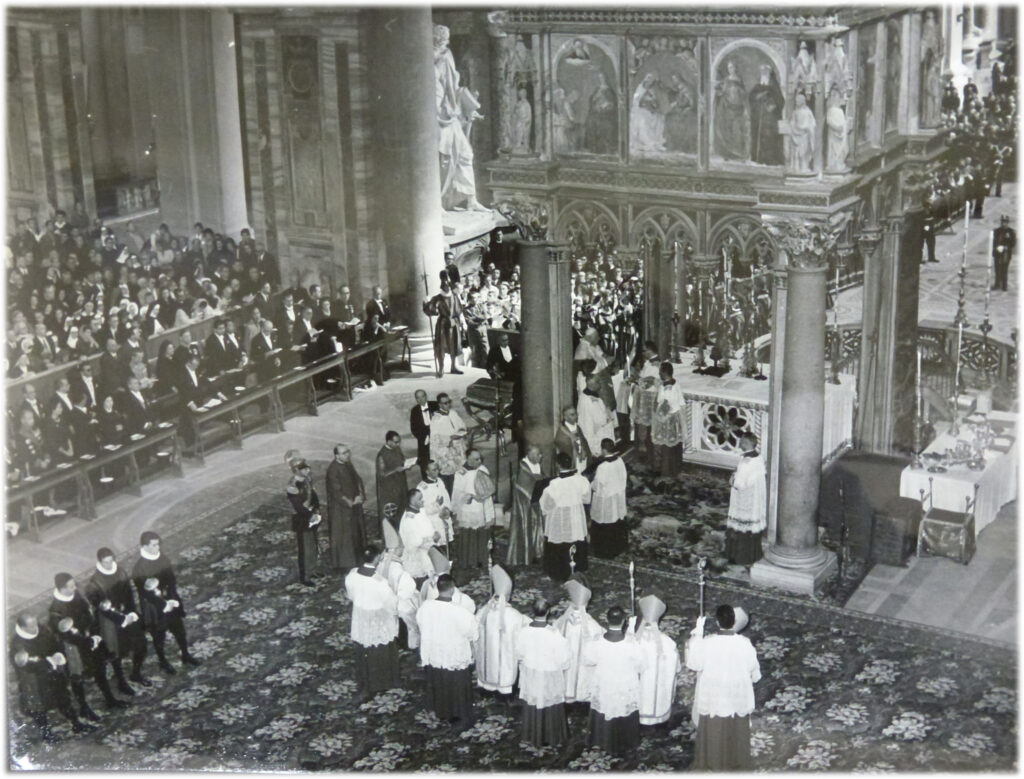
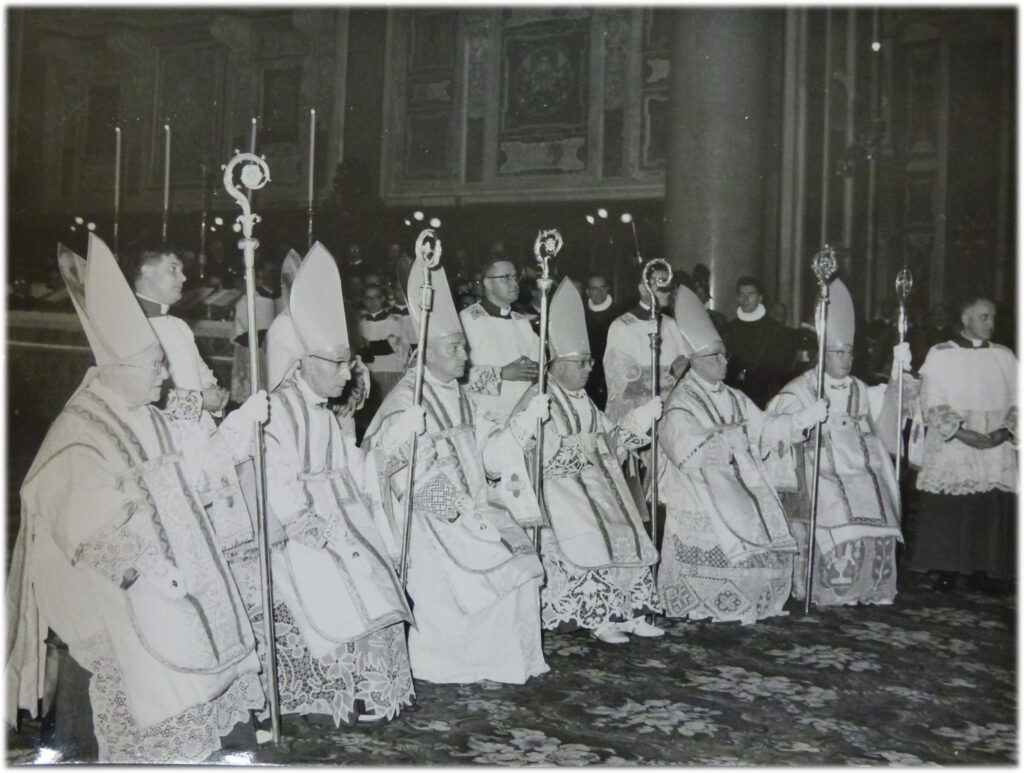
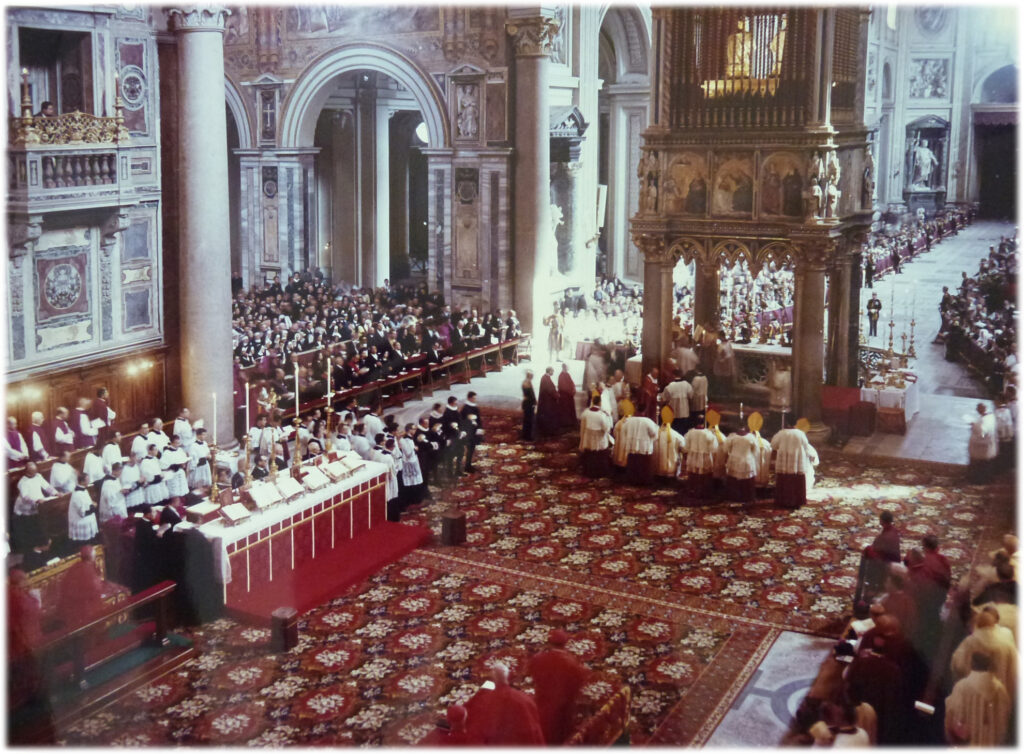
(open photo in new window to enlarge)
(copying or sharing without written permission is prohibited)
EXPLANATIONS FOR PHOTOS:

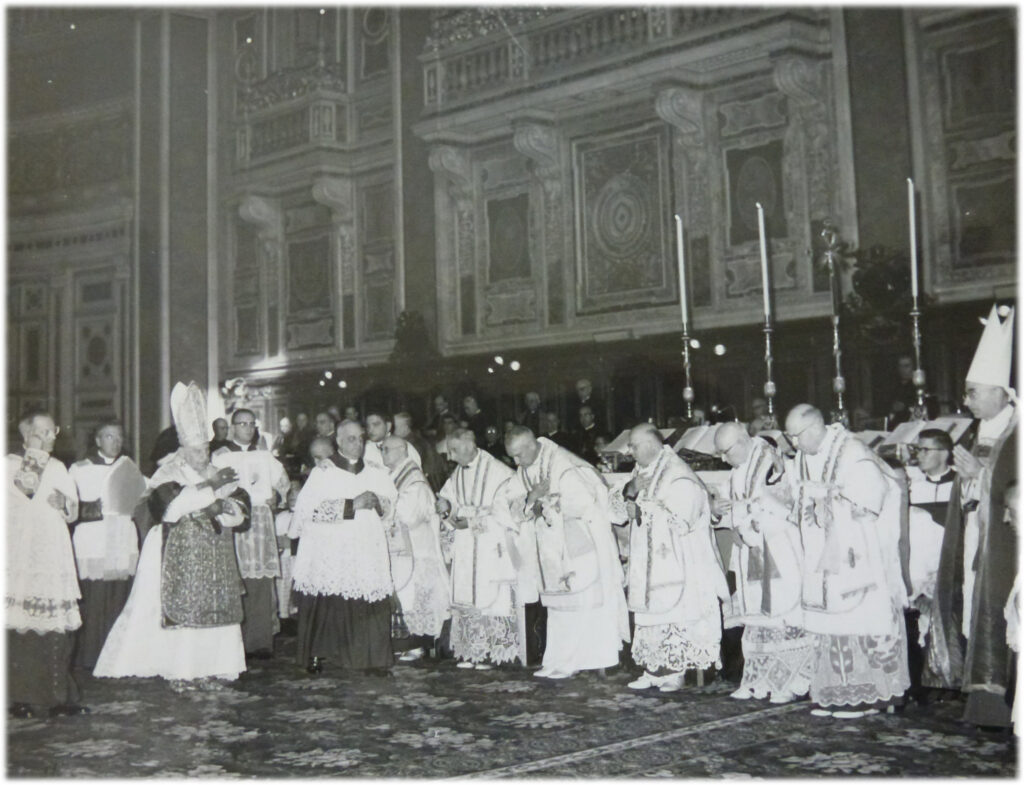
1. The co-consecrators and the episcopi electi (seated on the Gospel side on the scabellum) await the arrival of the Pope (principal consecrator).
2. As above.
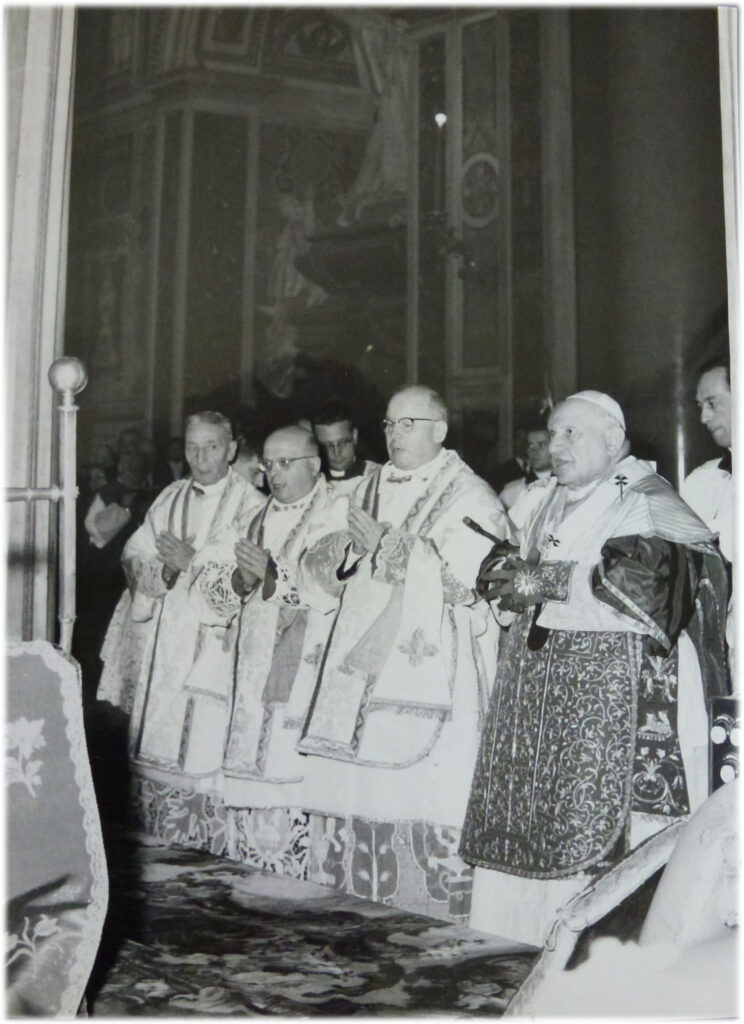
3. Arrival of the Pope (consecrator) at the altar. He is greeted by the co-consecrators (wearing mitres) and the electors standing, who respond to the papal greeting with a profound bow of their heads.
4. Prayers at the foot of the altar. The episcopi electi line up in a line to the right (those more deserving) and left of the Pope to respond to the prayers.
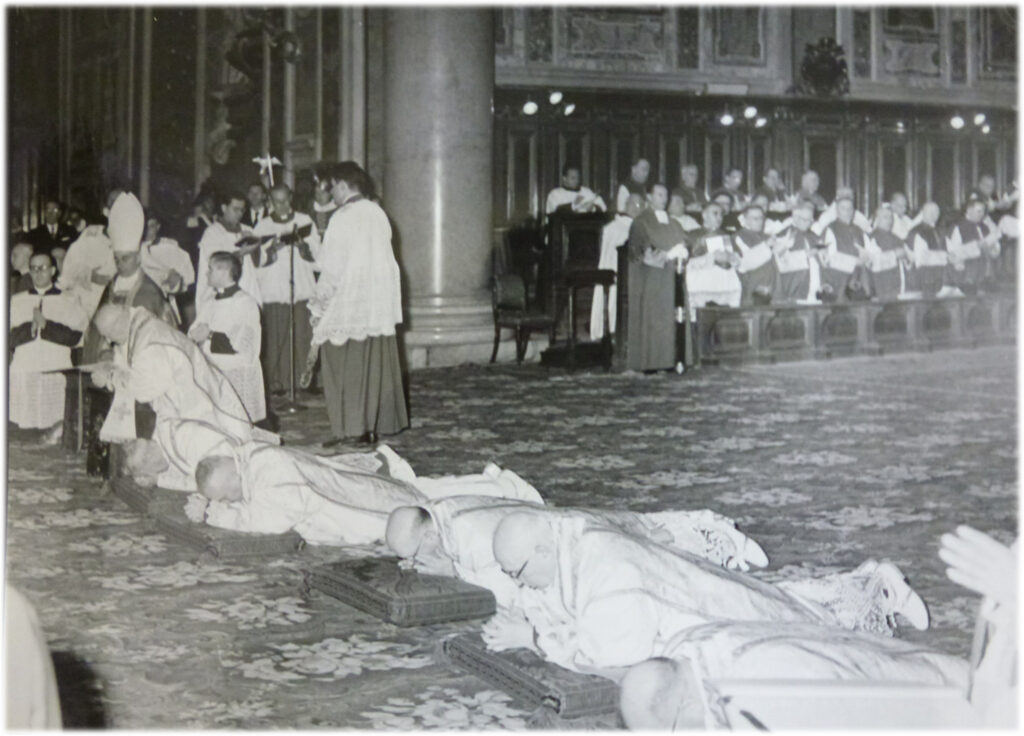
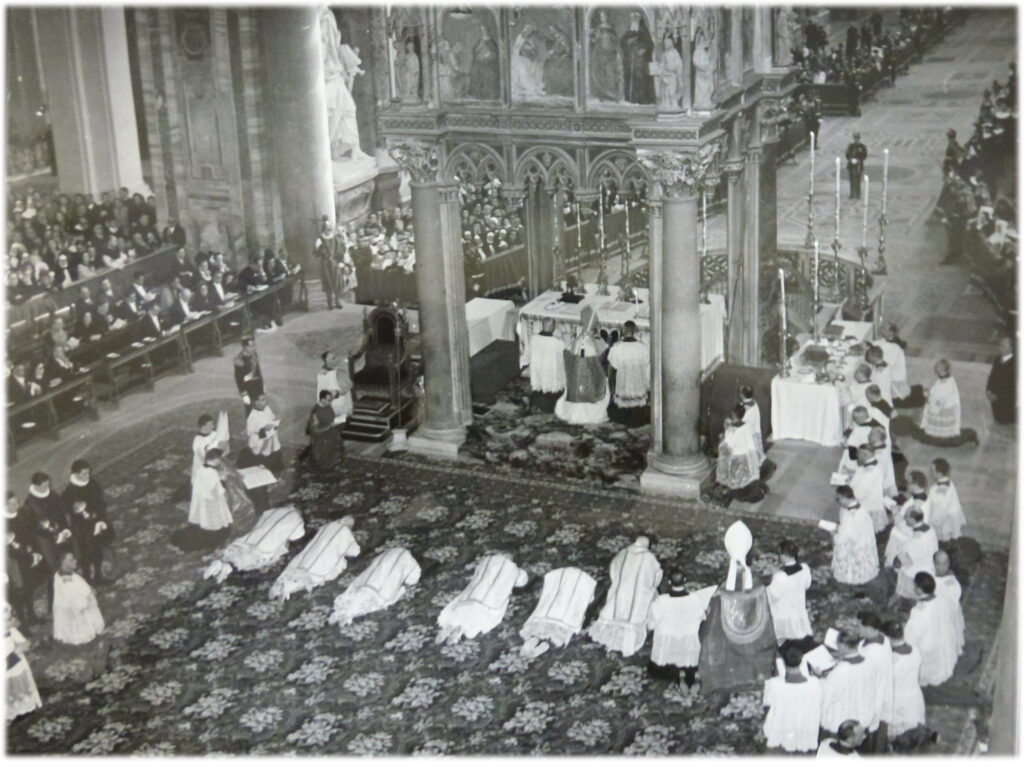
5. Singing of the Litany of the Saints. The episcopi electi prostrate themselves before the altar in order of rank (beginning on the Epistle side), assisted by the co-consecrators (wearing mitres, similar to the Pope at the faldstool on the suppedaneum).
6. Singing of the Litany of the Saints. The Pope, assisted by two Masters of Ceremonies; the sedia gestatoria serving as the papal throne during the ceremony are visible.
7. After the singing of the Litany of the Saints, immediately after the Complementum litaniarum (the pulvinaria are still at the feet of the electors, which should be removed by the acolytes).
8. Consecration ceremonies. After the Pope (with the assistance of the co-consecrators) places the Book of the Gospels (open to the pericope narrating the Ascension of the Lord) on the heads and shoulders of the electors, they kneel before the altar and await the laying on of hands, which is performed singulis singulariter, after which the consecration preface is sung. The heads of the elect are adorned with ribbons (vittae), which are tied by one of the apostolic subdeacons after the first part of the Preface has been sung in a ferial tone (up to the words "caelestis unguenti rore sanctifica" spoken silently by the co-consecrators), just before the anointing of their heads with holy oil.
9. As above. After the anointing of the heads and the singing of the second part of the Preface (the conclusion of which is read submissa voce by the consecrator and co-consecrators), the anointing of the hands takes place.
10. Offertory and Traditio Donorum. After the Pope reads the antiphon at the Offertory, the newly ordained bishops (accompanied by their chaplains) present him with gifts in thanksgiving for their ordination: candles, loaves, and casks. In the case of episcopal consecrations performed by the Pope, the coat of arms of the reigning Bishop of Rome is placed on these gifts.
11. Newly consecrated bishops receive the mitre and gloves (chirothecae), which takes place as part of the enthronement and concluding rites of the ceremony, after the conclusion of Holy Mass and the granting of the indulgence.
12. Ritus inthronizationis. Newly consecrated bishops stand before the altar on faldstools, mitre and crosier in hand. A characteristic of this rite is that the co-consecrators form a single line with the principal consecrator (the Pope) on the Gospel side.
13. Similar to the above (different approach). In episcopal consecrations performed by the Bishop of Rome, the enthronement of the newly consecrated takes place exclusively at the faldstool (the Pope performs it from a small throne placed on the suppedaneum on the Gospel side). 14. Final Rites. The altar of the newly consecrated bishops, where they concelebrated Holy Mass with the Pope, is clearly visible.
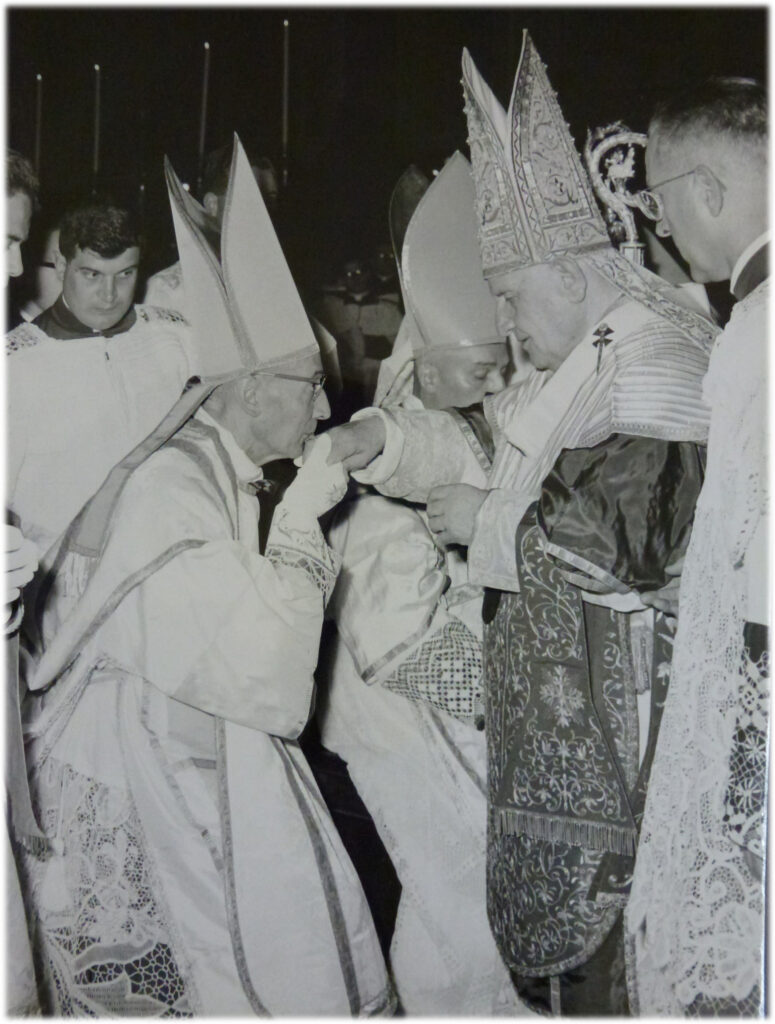
15. Enrico Dante kisses the Pope's hand before receiving the crosier during the Rite of Enthronement (the crosier the consecrator passes from his right hand to the left hand of the newly consecrated bishop).
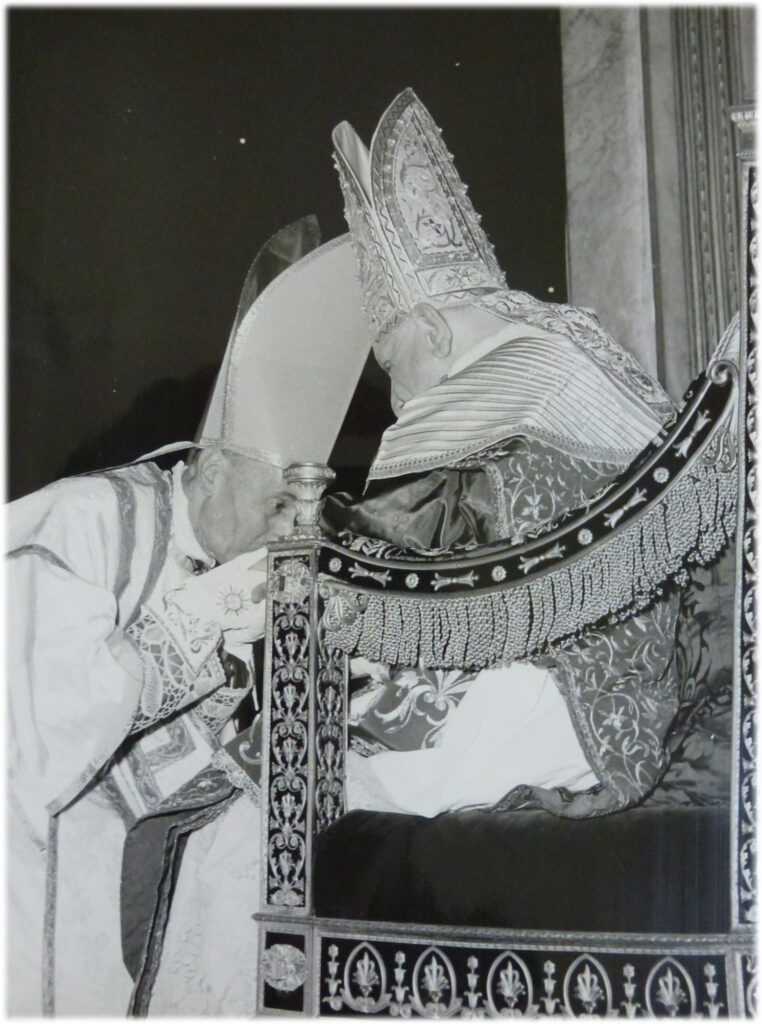
16. Bishop Enrico Dante pays homage to the Pope seated on the sedia gestatoria.
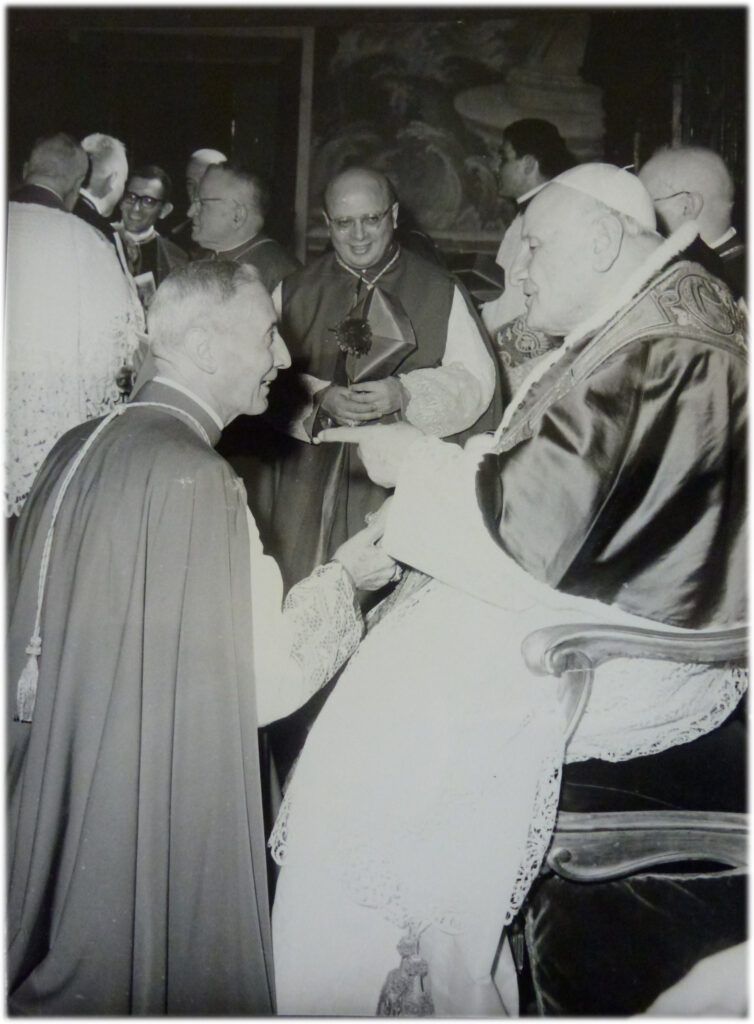
17. After the episcopal consecration ceremony in the halls of the Apostolic Palace, Enrico Dante gives thanks to Pope John XXIII (both, as is customary, in choir dress).
In the line of apostolic succession of Cardinal Dante are (dates of episcopal ordination or death are given in parentheses): Pope John XXIII (Angelo Giuseppe Roncalli, 1965); Giovanni Cardinal Tacci Porcelli (1895), Cardinal-Priest of Santa Maria in Trastevere; Amilcare Cardinal Malagola (1876), Archbishop of Fermo; Filippo Cardinal de Angelis (1826), Archbishop of Fermo; Pietro Francesco Cardinal Galleffi (1819), Cardinal-Bishop of Albano; Alessandro Cardinal Mattei (1777), Cardinal-Bishop of Ostia (e Velletri); Bernardino Cardinal Giraud (1767), Cardinal-Priest of Santissima Trinità al Monte Pincio; Pope Clement XIII (Carlo della Torre Rezzonico, 1743); Pope Benedict XIV (Prospero Lorenzo Lambertini, 1724); Pope Benedict XIII (Pietro Francesco [Vincenzo Maria] Orsini de Gravina, 1675); Cardinal Paluzzo Paluzzi Altieri Degli Albertoni (1666), Camerlengo of the Apostolic Chamber; Ulderico Cardinal Carpegna (†1630), Cardinal-Priest of Santa Maria in Trastevere; Luigi Cardinal Caetani (1622), Cardinal-Priest of Santa Pudenziana; Ludovico Cardinal Ludovisi (1621), Archbishop of Bologna; Archbishop Galeazzo Sanvitale (1604), Archbishop Emeritus of Bari (-Canosa); Girolamo Cardinal Bernerio (1586), Cardinal-Bishop of Albano; Giulio Antonio Cardinal Santorio (†1566), Cardinal-Priest of San Bartolomeo all’Isola; Scipione Cardinal Rebiba (?), Cardinal-Priest of Sant’Anastasia.
FOOTNOTES
[1] The privilege, confirmed already in the 10th century by Ordo Romanus XXXV, was „abandoned” about 200 years later by popes who wanted uniformity of custom, see. J. Nabuco, Ius Pontificalium. Introductio in Cæremoniale episcoporum, Desclée & Socii, Parisiis – Tornaci – Romae – Neo-eboraci 1956, p. 4, n. 7; idem, Pontificalis Romani expisitio iuridico-pratica. Functiones pontificales extraordinariae, Desclée & Socii, Parisiis – Tornaci – Romae – Neo-eboraci 1962, p. 182, n. 211, p. 2; p. 221, n. 16, p. 1; p. 257, p. 1. Currently, the Supreme Pontiff consecrates a bishop using the Roman Pontifical, like all other bishops.
[2] S. E. R. Monseigneur ENRICO DANTE est né à Rome le 5 juillet 1884. Après ses études secondaires à Paris chez les Pères de Sion, il entre au Collège Capranica de Rome, et est ordonné prêtre le 3 juillet 1910. Il obtient le doctorat en philosophie, en théologie, et en droit, ainsi que le diplôme d’avocat rotal, et est nommé professeur au Collège de Propaganda, ou il enseigne la philosophie jusqu’en 1930 et la théologie jusqu’en 1947. En 1913, il entre à la Pénitencerie, et, en 1914, dans le collège des cérémoniaires. En 1923, il est nomme Substitut de la Congrégation des Rites. En 1947, il devient Préfet des cérémonies, et, le 5 janvier 1960, Secrétaire de la Congrégation des Rites. Le 19 aout 1962, il a été nome archevêque titulaire de Carpasia.