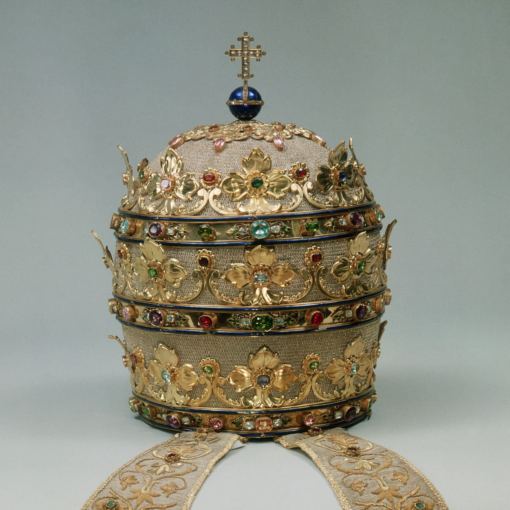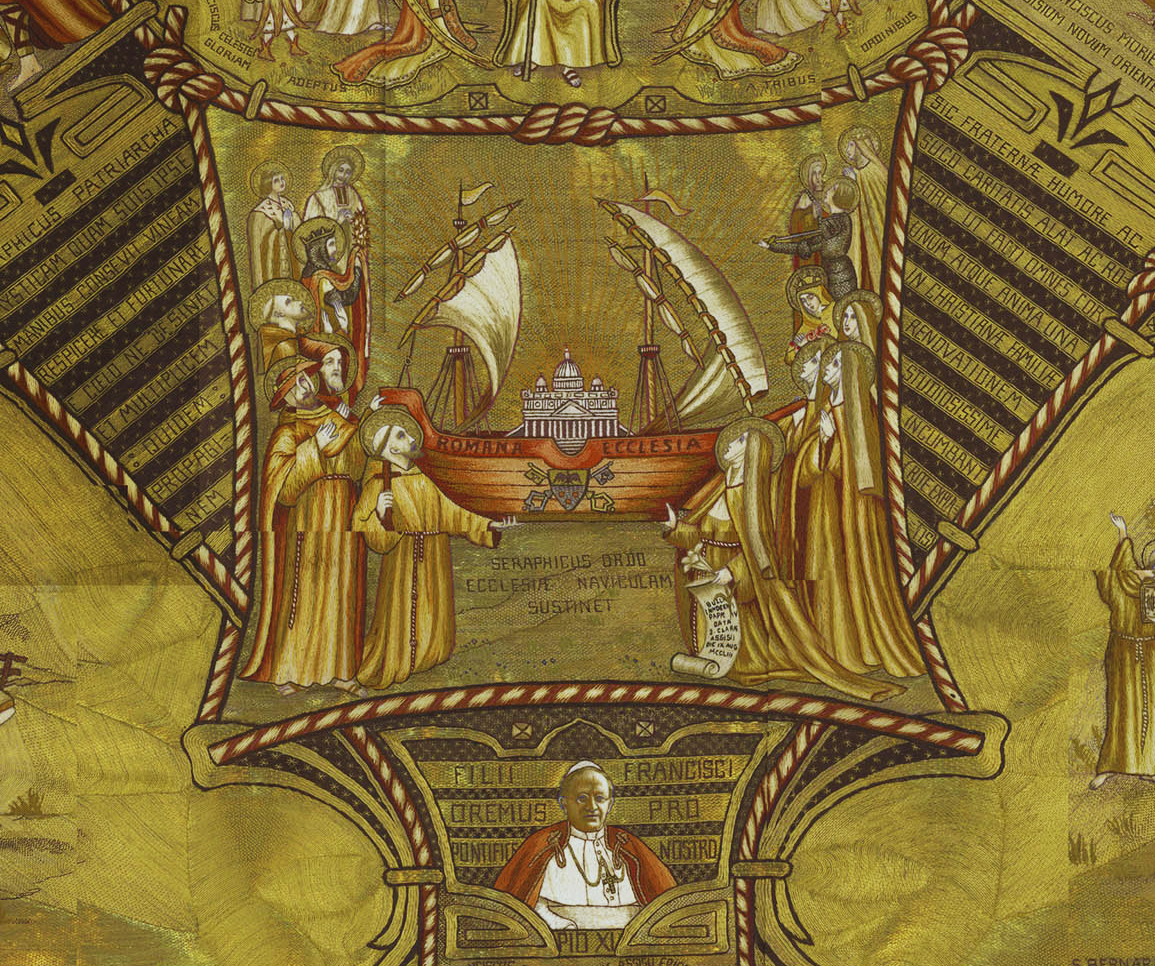
Die 21 ianuarii Anno Domini 2026
Sanctae Agnetis Virginis et Martyris
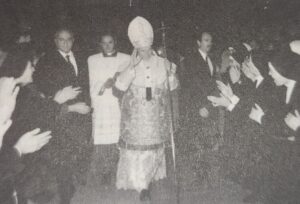
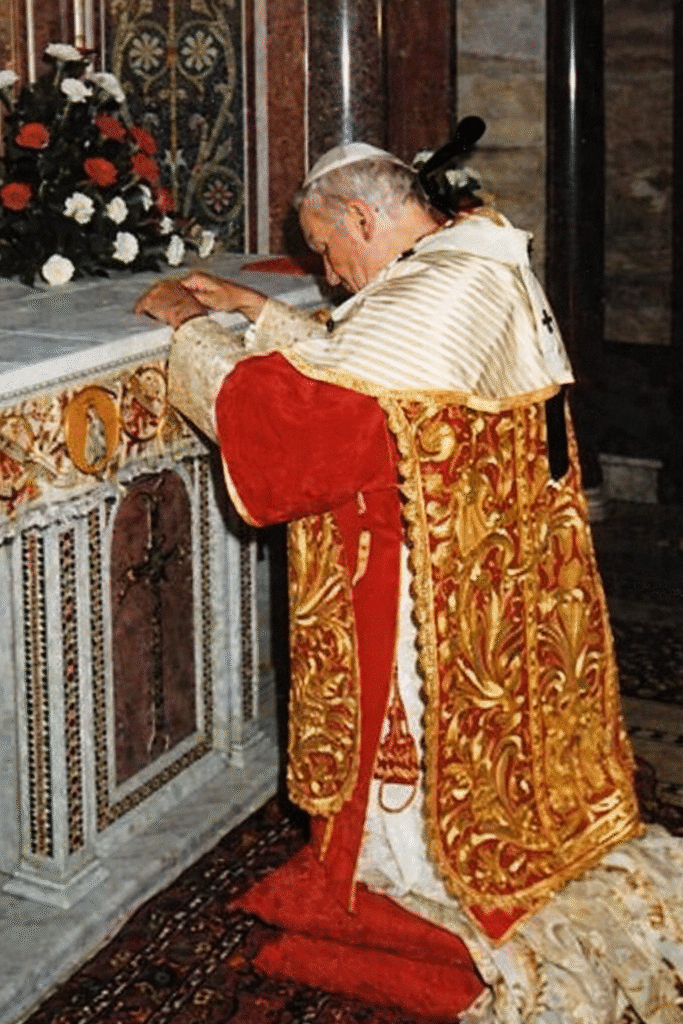
Some of the most iconic photographs from Pope John Paul II’s pontificate, especially in terms of liturgy, are the very few taken during his visit to St. Cecilia’s Basilica on November 22, 1984. This is because the pope wore not only ancient, beautiful, and even magnificent liturgical vestments, but above all a fanon, a vestment reserved for the Bishop of Rome (only the Patriarch of Lisbon has a special apostolic indult allowing him to wear this vestment).
It was the first (six years after his election to the Holy See) and last time that John Paul II wore the papal fanon. It can therefore be said that it was a truly exceptional situation, which remains unexplained to this day, at least as far as official reports are concerned. What really happened that day?
I. PURPOSE AND CONTEXT OF THE PAPAL VISIT
Pope John Paul II arrived at one of the oldest churches in Rome, the Minor Basilica of St. Cecilia – which is also a prestigious titular church of a cardinal, a „house of prayer” for the Benedictine nuns located in the adjacent monastery (it is they who sew the palliums that the Pope presents to new metropolitans), and the rectory church of the parish of St. Chrysogonus – in response to the invitation of its then-rector, Monsignor Antonio Massone, and the then-abbess, Sister Maria Strignano.
The invitation was related, among other things, to the completion of restoration work carried out in the temple, thanks in part to the efforts and assistance of the Italian Ministries of Cultural Heritage and Internal Affairs. It should be noted that restoration and archaeological work in the Basilica of St. Cecilia has been carried out regularly and practically continuously since the beginning of the second half of the 20th century.
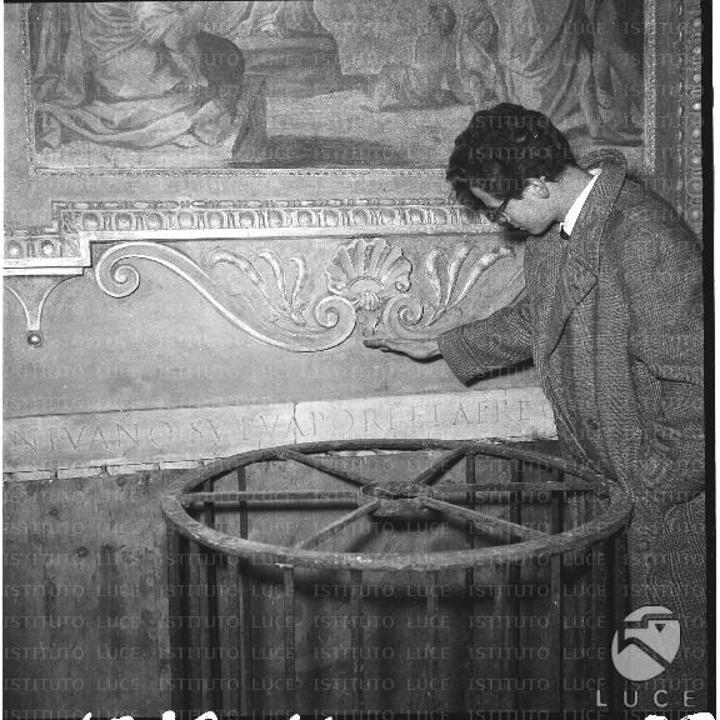
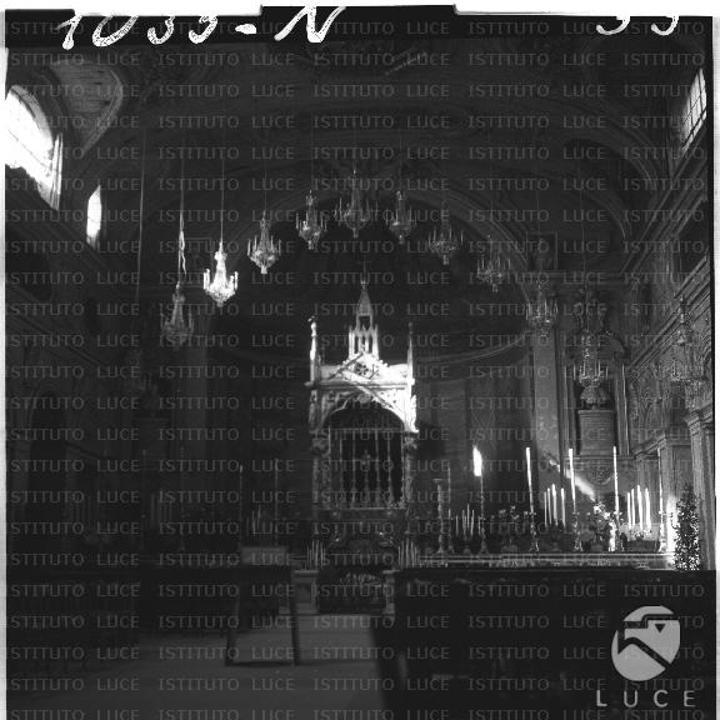
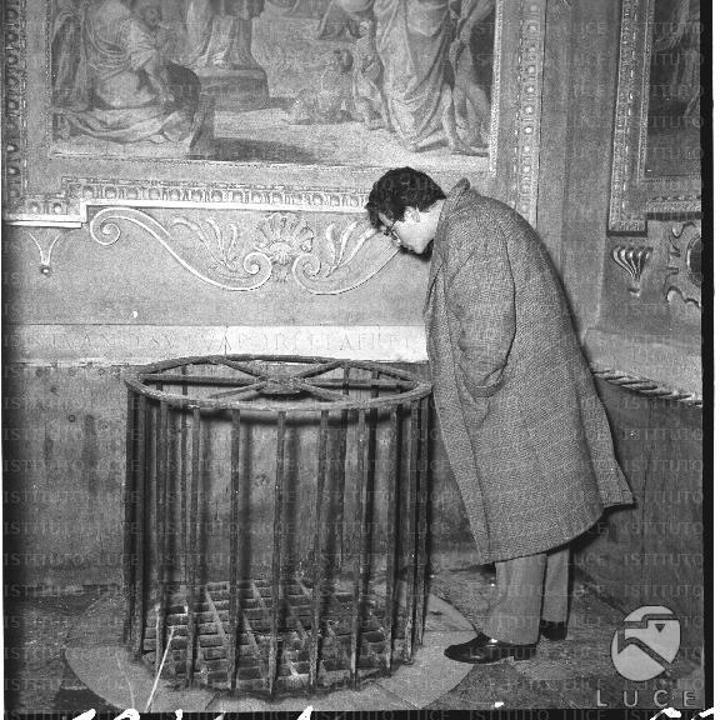
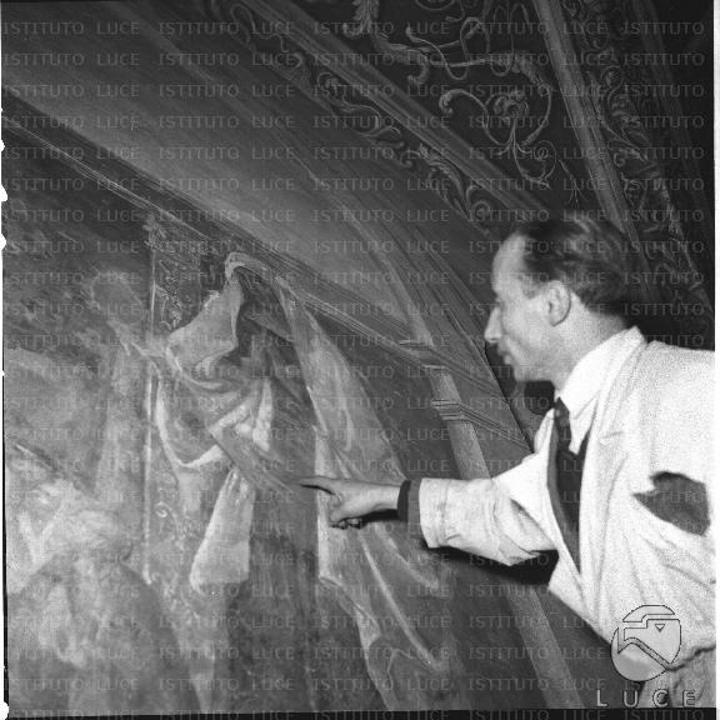
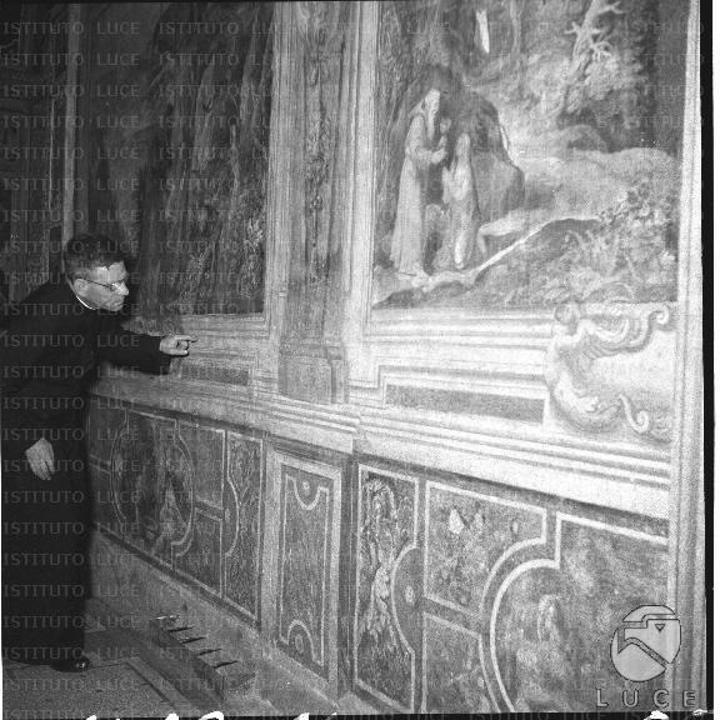
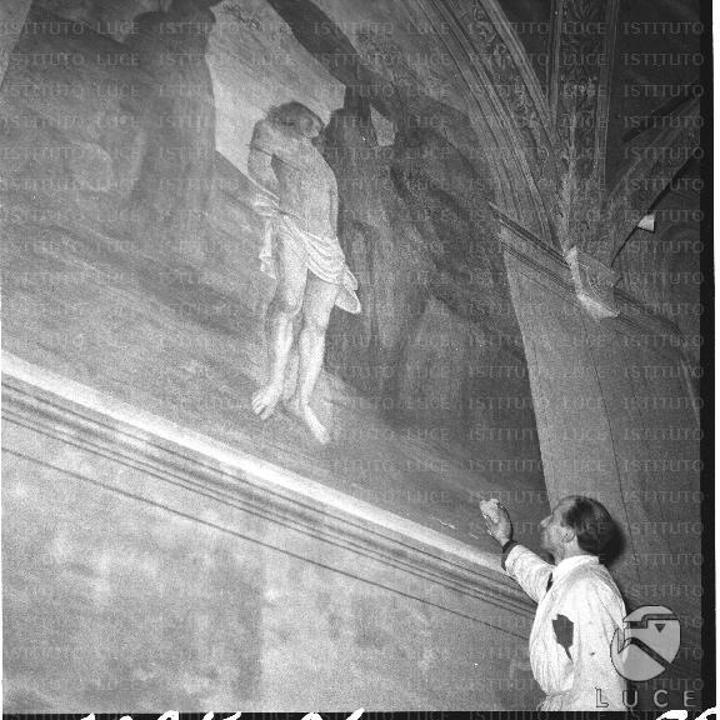
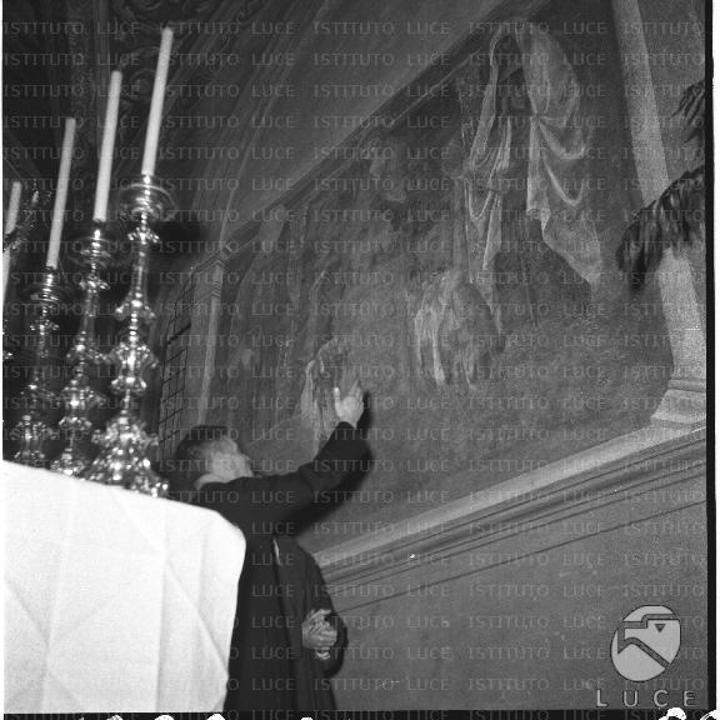
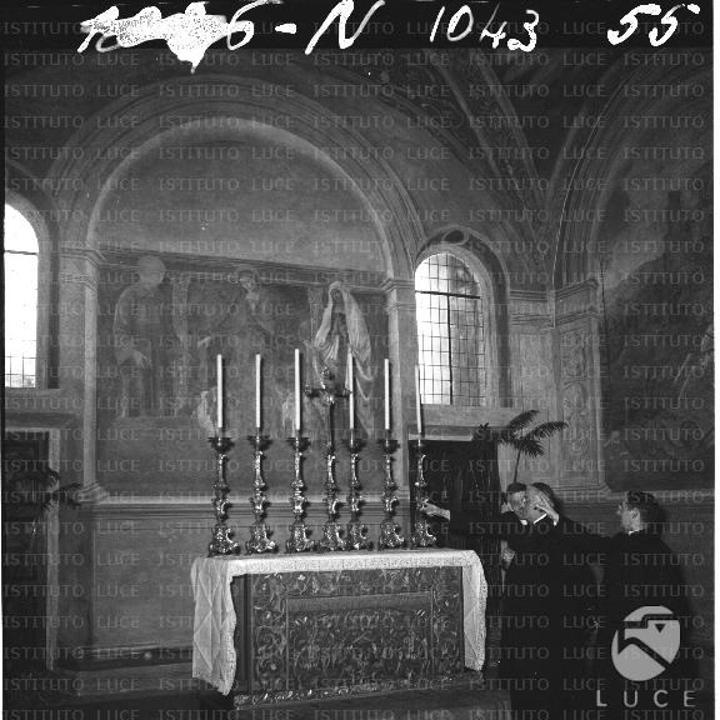
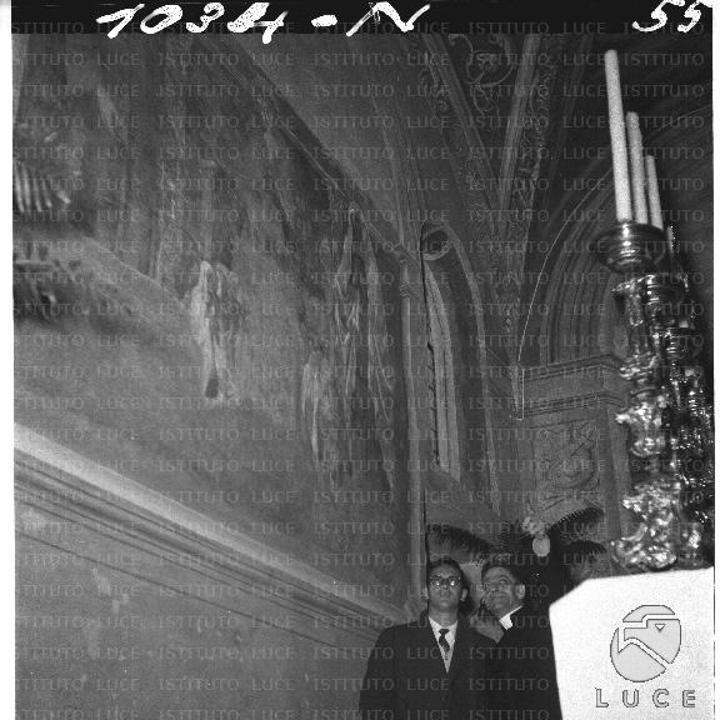
Source: Luce Archivio.
It should also be noted that since the pontificate of Paul VI, popes have made an increased effort to make pastoral visits to Roman churches and parishes, as confirmed by the recent announcement of Pope Leo XIV’s visit during Lent to five Roman parishes representing the five pastoral sectors into which the diocese of Rome is divided.
The Pope visited the basilica on the liturgical feast day of St. Cecilia, November 22. During Mass, Pope John Paul II delivered a wonderful homily in honor of this ancient martyr, whose name is mentioned in the venerable Roman Canon. It is also one of the most beloved feasts for Romans. Excellent concerts are often organized on this day.
II. COURSE OF THE PAPAL VISIT
The basilica was carefully prepared to welcome the Supreme Pontiff. Additional lighting was installed on the facade, and candles were placed between the flower beds in the garden in front of the basilica. The Pope was welcomed in the courtyard. In accordance with protocol, the rector of the temple, Monsignor Antonio Massone, came out to meet him. The event was made even more splendid by musical performances by orchestras from Scandriglia and Guidonia.
In the basilica, John Paul II was already awaited by the faithful, invited guests and dignitaries, including Cardinals Poletti, Antonelli, Baum, Casoria, Ciappi, Righi-Lambertini, Opilio Rossi, as well as the auxiliary bishop of the historic center, Filippo Giannini, 12 archbishops and bishops, including the Substitute of the Secretariat of State, Martínez Somalo, and also bishops D’Aglio, Stickler, Kada, Fagiolo, Noè, Bini, and finally the Secretary of the Vicariate, Monsignor Garalto, and a group of parish priests from Trastevere.
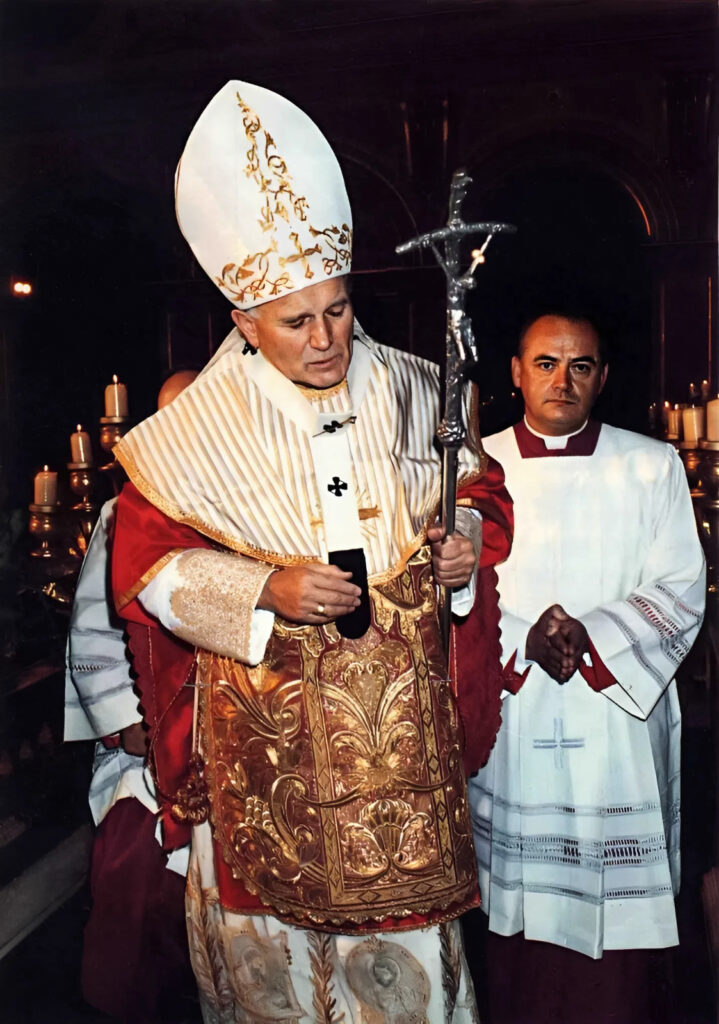
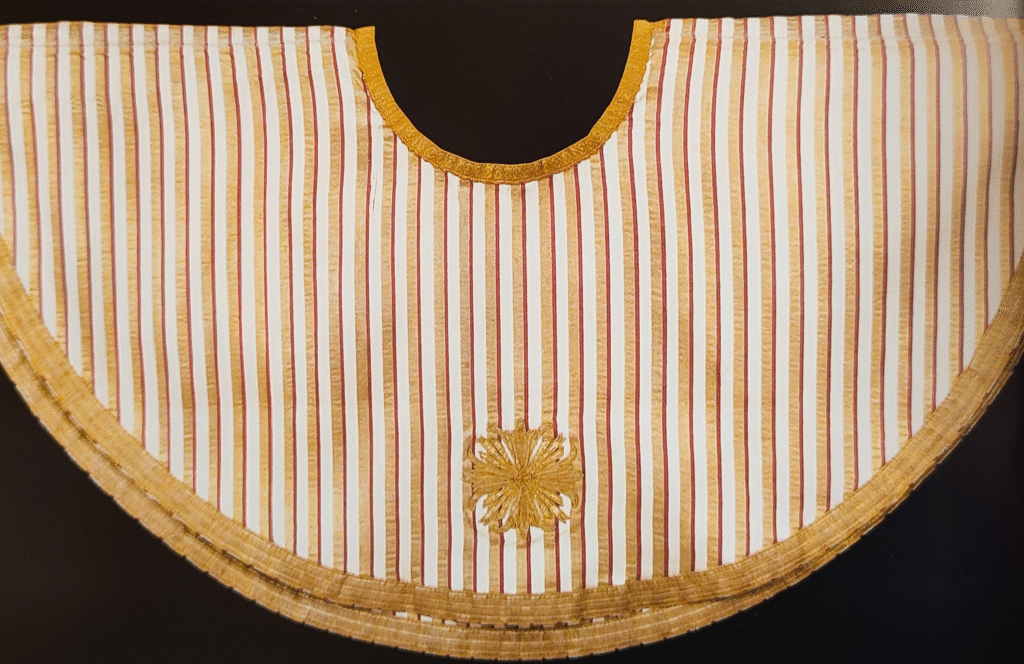
Magnificent liturgical vestments were prepared for the Pope in the sacristy, including the papal fanon, which had not been used since the time of Paul VI. During Mass, Pope John Paul II delivered a meaningful and passionate homily in honor of St. Cecilia. The prayers of the faithful were recited by young people from the parish. The Pope administered Holy Communion to nine Benedictine nuns who participated in the Eucharist from the monastery choir separated by grilles.
During Holy Mass, liturgical music was performed by the Sistine Chapel Choir (polyphony) and alumni of the Pontifical Institute of Sacred Music (Gregorian chant). To this day, as part of the Roman celebrations in honor of St. Cecilia, young boys beginning their service in the Sistine Chapel Choir take a vow of fidelity to the so called cecilian ideas, thus officially beginning their service to God, the Pope, and the Church.
At the end of the liturgy, without removing his pontifical vestments, the Pope, preceded by cardinals and accompanied by the rector of the church and his closest associates, descended into the crypt of the basilica to pay homage to St. Cecilia, pray at her tomb, and visit places associated with her.
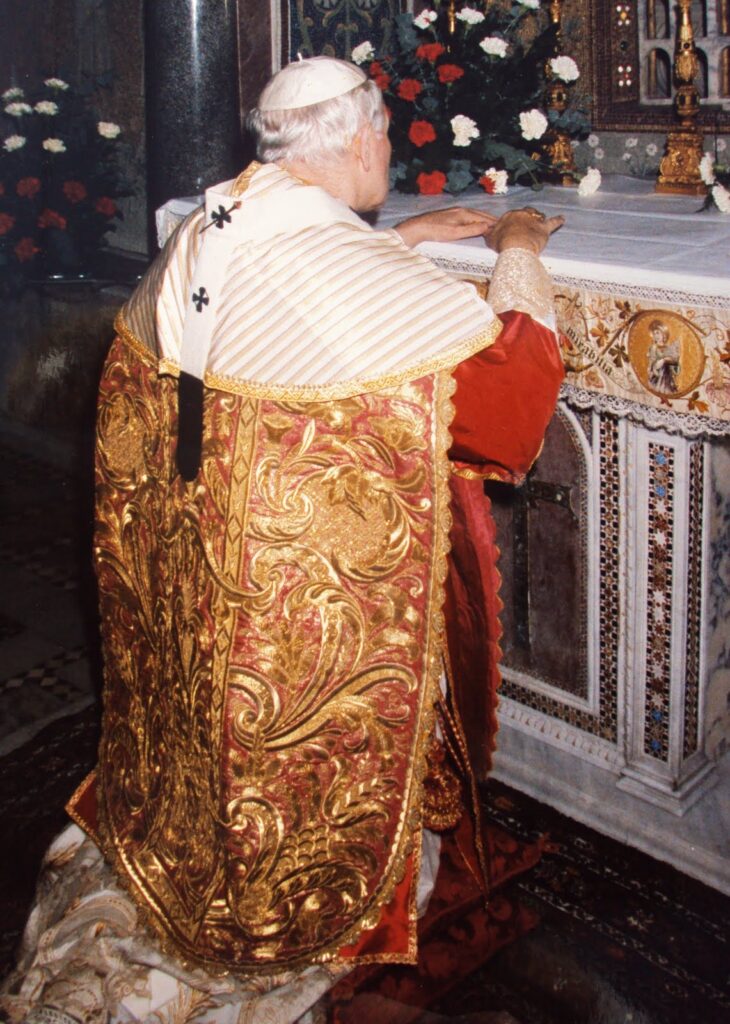
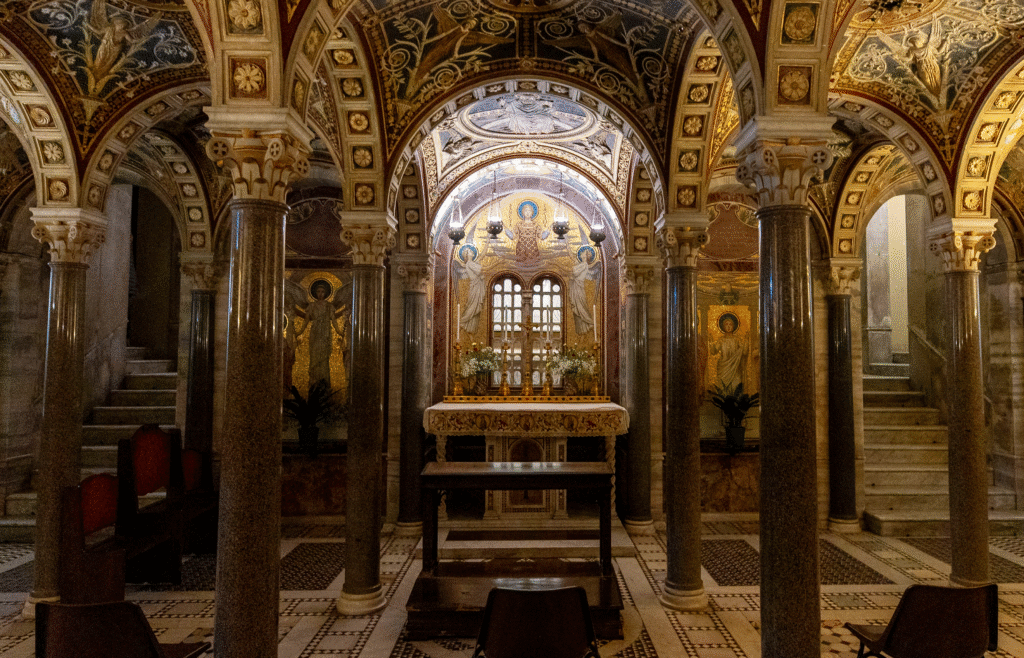
After the celebration, architect Bernardo Meli showed the Pope around the restored areas. John Paul II admired Pietro Cavallini’s opus magnum, a fresco depicting the Last Judgment, painted around 1300 (located on the right wall of the nuns’ choir). Afterwards, in the presence of Cardinal Ugo Poletti and Archbishop Vincenzo Fagiolo, then Secretary of the Congregation for Religious and Secular Institutes, the Holy Father met with the nuns. The Benedictine nuns asked John Paul II to sign a parchment commemorating his visit and to write an entry in the book of distinguished guests of the basilica and monastery. As a sign of gratitude, the sisters presented the Pope with a chalice engraved with Karol Wojtyła’s episcopal motto Totus Tuus, as well as a white chasuble. Finally, the Pope met with representatives of the state authorities, the parents of the nuns, and young people.
III. HOW DID THE PAPAL FANON END UP IN THE SACRISTY?
The papal fanons are kept in the treasury of the Vatican sacristy. The fanon used by John Paul II was taken from the Vatican and prepared in the sacristy of the Basilica of St. Cecilia. However, this was not the idea of the then Master of Papal Ceremonies, Monsignor John Magee (he held this position from February 8, 1982, to February 17, 1987; on March 17, 1987, the Pope ordained him a bishop in St. Peter’s Basilica), who began his ecclesiastical career in the Holy See during the pontificate of Paul VI. Since he had been involved behind the scenes in preparing papal liturgies from that time on (he officially served as secretaries for three successive popes), he had some influence on how the reforms of the papal chapel were carried out. He collaborated with Monsignor Virgilio Noè, his predecessor as Master of Apostolic Ceremonies (since 1970). Monsignor Magee was known for his „technical” style of preparing and conducting papal liturgies, a fact even noted by his successor as Master of Apostolic Ceremonies, Monsignor Piero Marini, who pointed out that under his leadership, the liturgies celebrated by the Bishop of Rome became more adaptive and open to local traditions (especially in connection with the Pope’s numerous pilgrimages). It should be noted that Monsignor Magee, in his service as Papal Master of Ceremonies, never used the ancient liturgical vestments that essentially belonged exclusively to the Pope: the falda, the fanon, the subcinctorium, or the slippers with a cross (with the exception of the historical copes with decorative clasps). So how did it come about that the fanon ended up in the sacristy of the basilica, and John Paul II did not refuse to use it?
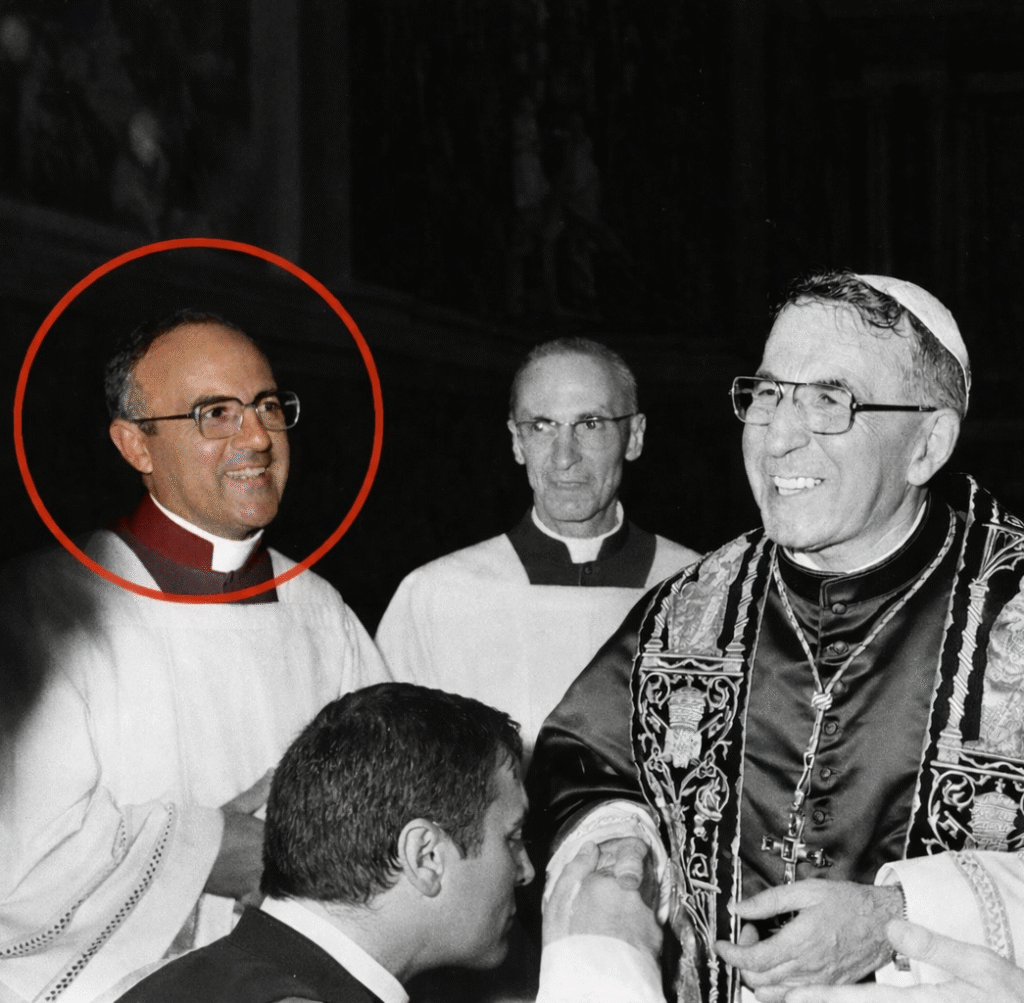
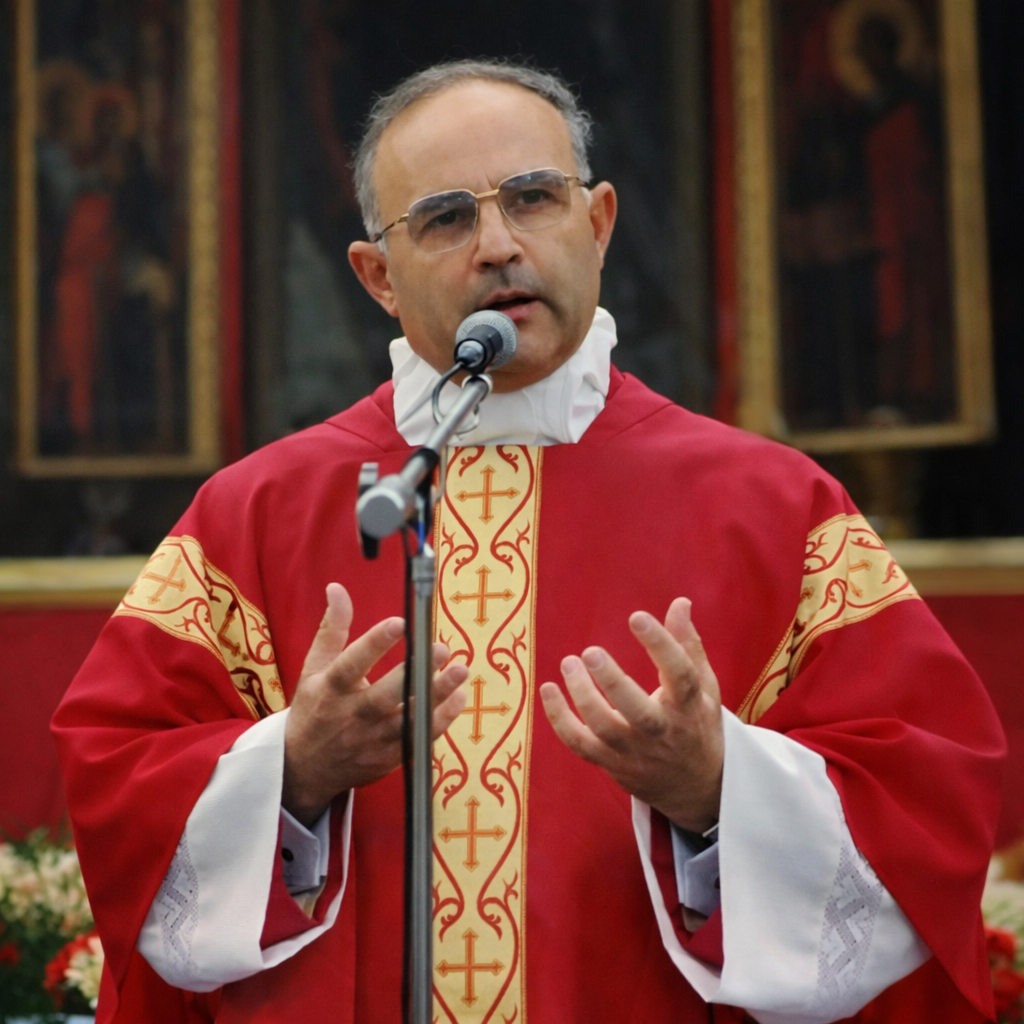
It was the brainchild of Monsignor Antonio Massone, then rector of the church and one of the then papal masters of ceremonies. He began his Vatican career on April 9, 1968, when he was appointed Archivist of the Apostolic Chancery: one of his main responsibilities was editing papal documents in Latin. Monsignor Massone was appointed to the College of Masters of Apostolic Ceremonies on January 17, 1972, by Pope Paul VI and served until 1991. This meant he had direct access to the sacristy and treasury of St. Peter’s Basilica. It is also difficult to imagine that the idea of using the fanon would have been opposed by the then and last Sacristan of the Apostolic Palace (Sacrista del Palazzo Apostolico), Archbishop Petrus Canisius van Lierde O.S.A., who had held his position since January 13, 1951. Monsignor Antonio Massone was appointed Rector of the Basilica of St. Cecilia in Trastevere on February 24, 1978, by Cardinal Ugo Poletti, whose personal secretary he had been from 1973 to 1988. On January 6, 1990, Cardinal Poletti, as Vicar General of the Diocese of Rome, appointed him his delegate for Catholics of the Eastern Churches residing in Rome. During the homily delivered during the funeral Mass of Monsignor Antonio Massone in June 1997, Cardinal Virgilio Noè (Master of Pontifical Ceremonies from 1970 to 1982) emphasized his immense commitment both to the restoration of the basilica and the monastery and – perhaps above all – to improving the quality of the liturgy. Monsignor Massone became known in Rome for revitalizing liturgical life in the basilica and for attracting and engaging young people in the parish, who, during the funeral, thanked him for lifting many of them from their downfall, taking them off the streets and teaching them to love and pray to God. Father Massone died unexpectedly on May 31, 1997, after singing Vespers with the Benedictine nuns in the basilica, to which he had devoted a significant part of his life and work.
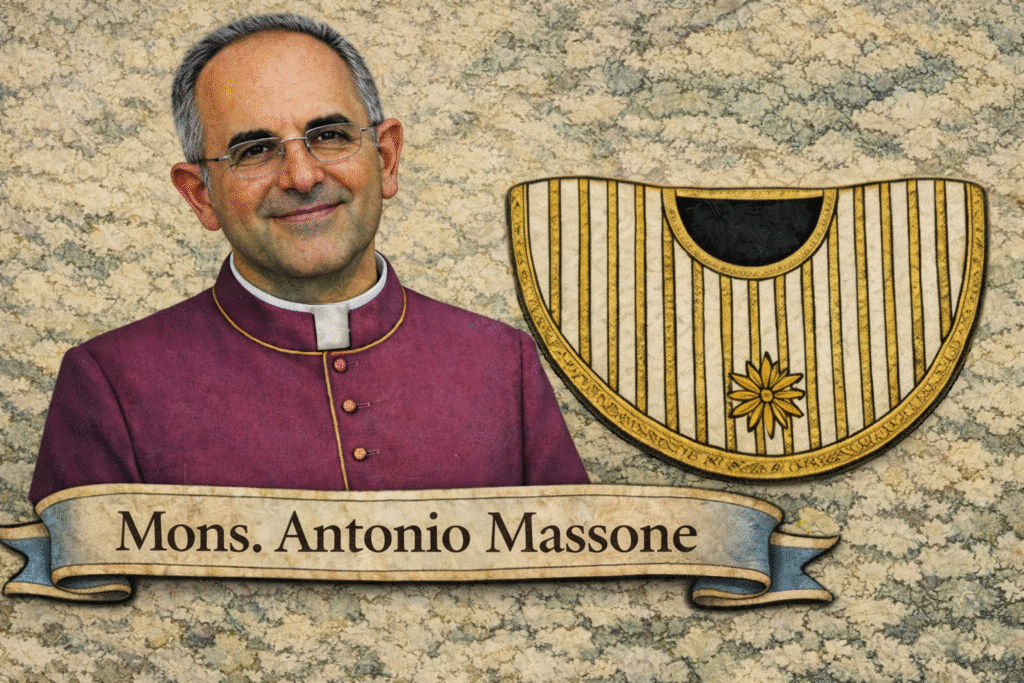
Those who participated in the celebrations in honor of St. Cecilia on November 22, 1984, including the then-sacristan benedictine nun, were said to have confirmed that it was Father Antonio Massone who was the spiritus movens behind the idea of introducing and using the fanon – an idea that Pope John Paul II himself did not oppose, but which understandably provoked the dissatisfaction and even anger of Monsignor John Magee. The entire situation demonstrates that such seemingly insignificant decisions can make history, as this was the only time the papal fanon was used between 1978 and 2012 (34 years; 28 years between 1984 and 2012, when the fanon was first used by Pope Benedict XVI).
RECOMMENDED VIDEOS
RECOMMENDED READINGS
- Homily delivered by Pope John Paul II during Holy Mass celebrated in the Basilica of Saint Cecilia in Trastevere in Rome on November 22, 1984.
- Segreteria di Stato Vaticano, L’attività della Santa Sede nel 1984. Pubblicazione non ufficiale, Libreria Editrice Vaticana, Città del Vaticano 1985.
- Enrico Dante, Fanone, in: Enciclopedia Cattolica, vol. V, Città del Vaticano 1950, coll. 1024-1025.