Die 3 septembris Anno Domini 2026
Sancti Pii X Papæ Confessoris
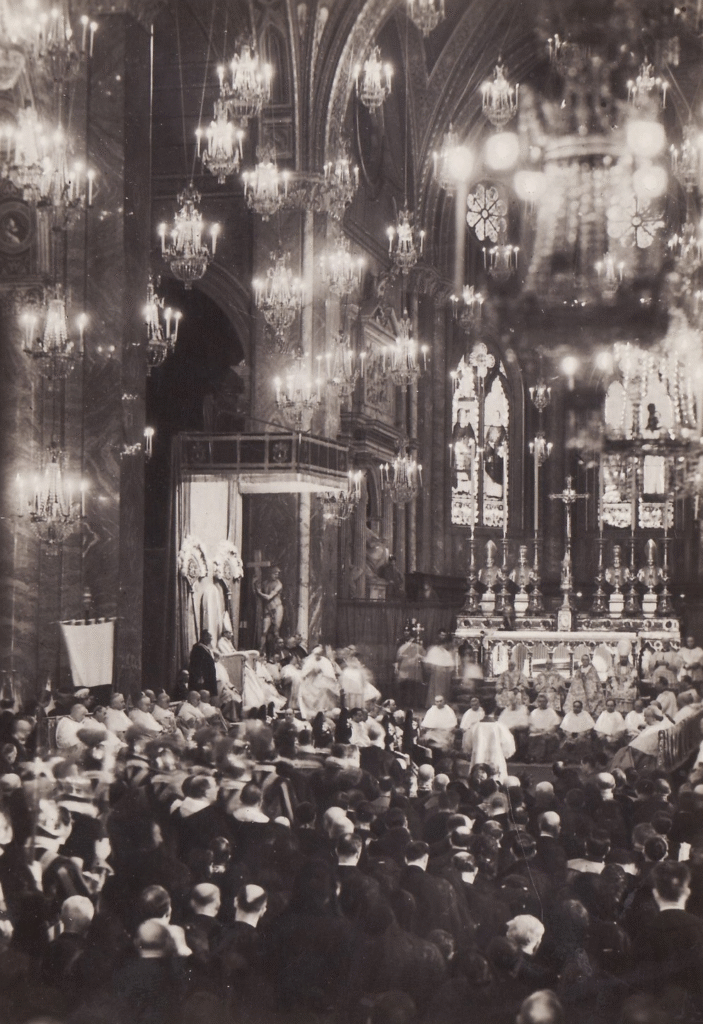
In the history of the papacy, including the modern one, there are symbolic or groundbreaking moments that are, however, forgotten over time. One such event was Pope Pius XII’s visit to the Basilica of Santa Maria sopra Minerva in Rome on May 5, 1940, where the Holy Father, celebrating the establishment of St. Francis and St. Catherine of Siena as principal patrons of Italy, participated in a solemn Pontifical Mass (Missa pontificalis coram Summo Pontifice) and delivered a memorable address.
I. Historical Context
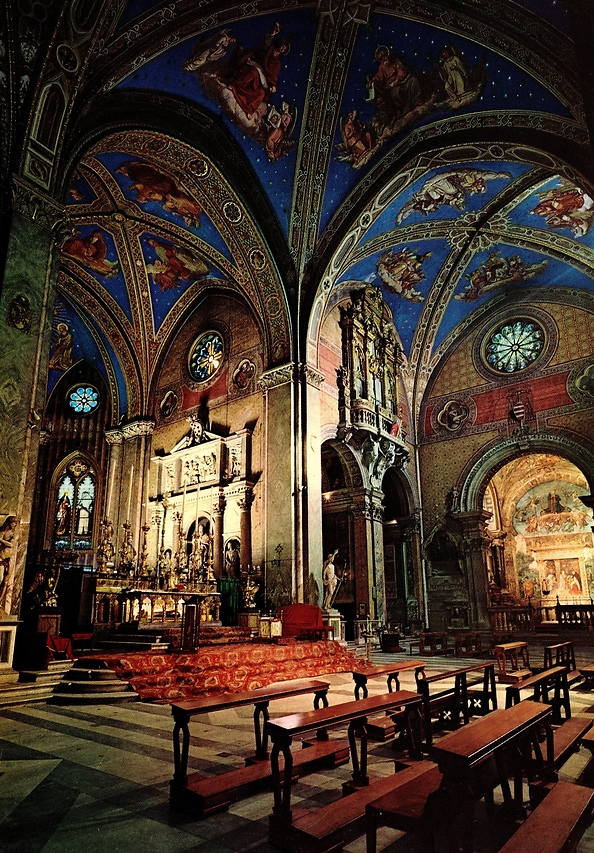
This was the first visit by a Bishop of Rome to the Basilica of Santa Maria sopra Minerva since Pope Pius IX, who in 1870, following the occupation of Rome by the Army of the United Kingdom of Italy, declared himself a prisoner of the Vatican. This, in turn, meant that for the next 59 years the popes were confined to the walls of the Apostolic Palace. Pius XII chose this particular church, which houses the mortal remains of St. Catherine of Siena, to solemnly celebrate the proclamation of St. Francis and St. Catherine as the principal patrons of Italy (breve apostolicum Licet commissa of June 18, 1939, officially published in AAS 31 (1939), p. 256-257).
(old postcard)
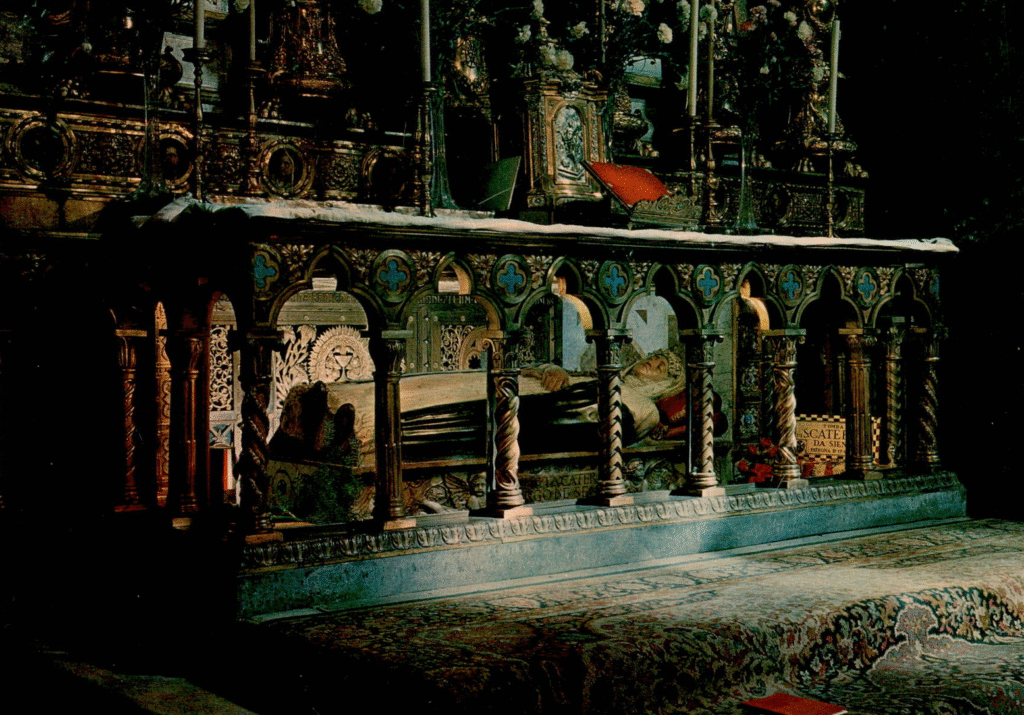
(old postcard)
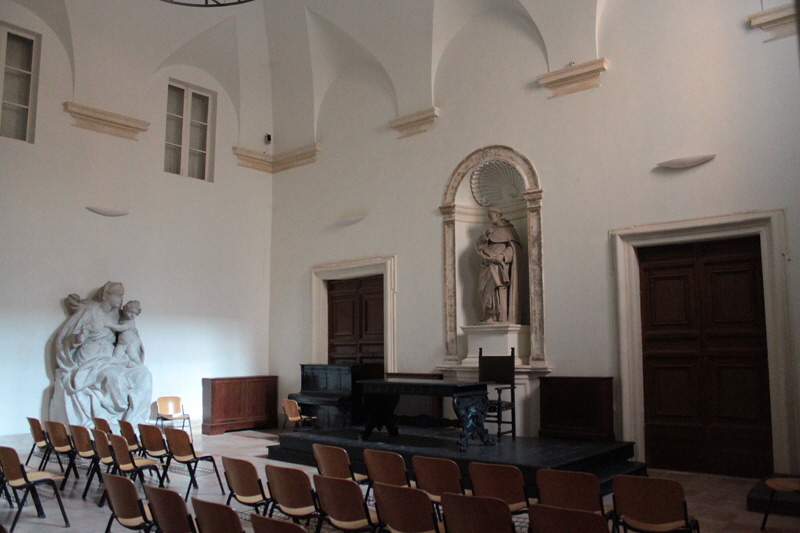
It’s also important to remember that prior to these events, there was a long tradition of popes visiting the Basilica of Santa Maria sopra Minerva. For a very long time, on the Feast of the Annunciation of the Blessed Virgin Mary (March 25th), they presented dowries to young women choosing the religious life or getting married. One of the rooms in the former Dominican monastery adjacent to the Basilica was even called the Sala dei Papi. The entrance to this room was located in a corridor next to the sacristy. This room served as a kind of papal quarters and a place of preparation for liturgical celebrations attended by the Bishop of Rome. It’s also worth noting that the Hall of the Popes houses a monumental but unfinished statue of the Madonna and Child, attributed to Bernini himself or his workshop.
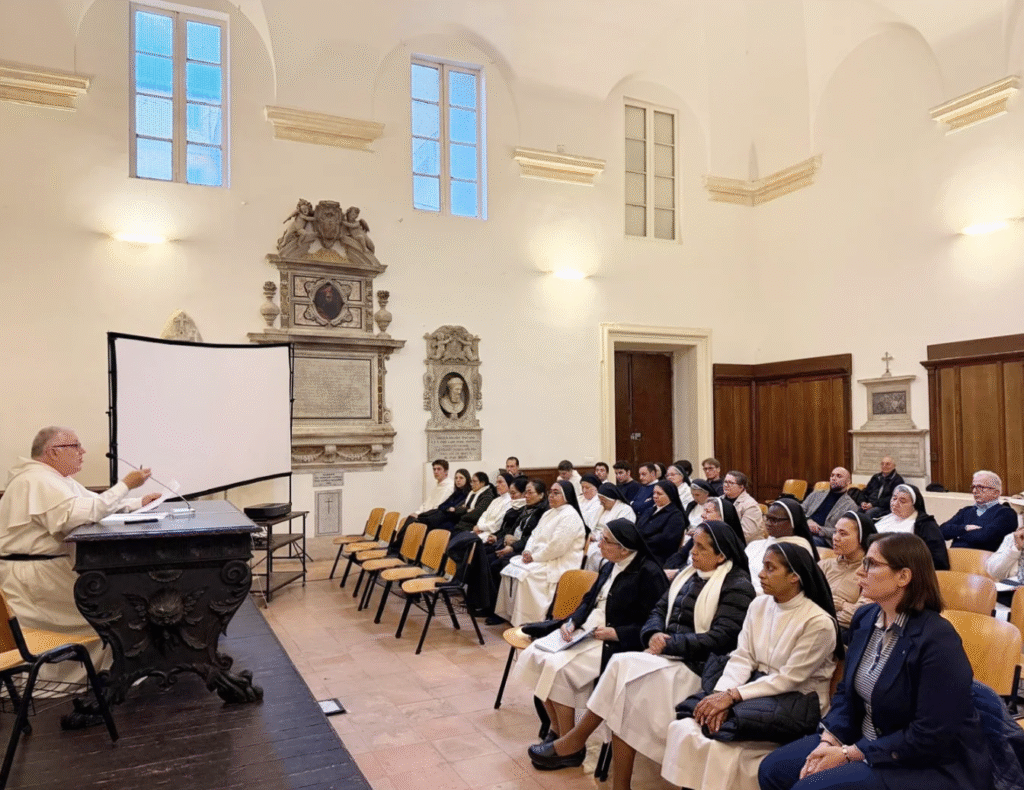
The basilica was also the site of the election of popes. Two conclaves are known to have taken place, electing Pope Eugene IV (1431) and Pope Nicholas V (1447). These events are depicted in a fresco from 1640 by the Roman painter Giovanni Speranza. This painting is located above the entrance door to the sacristy.
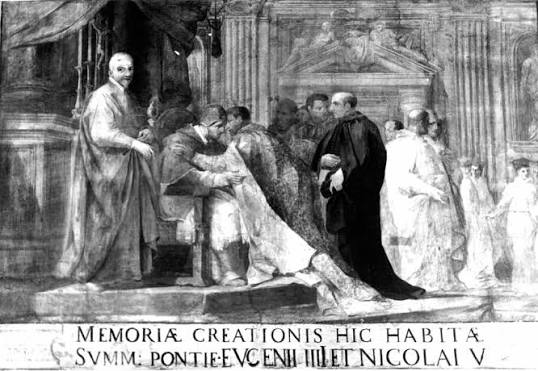
II. Course of the ceremony
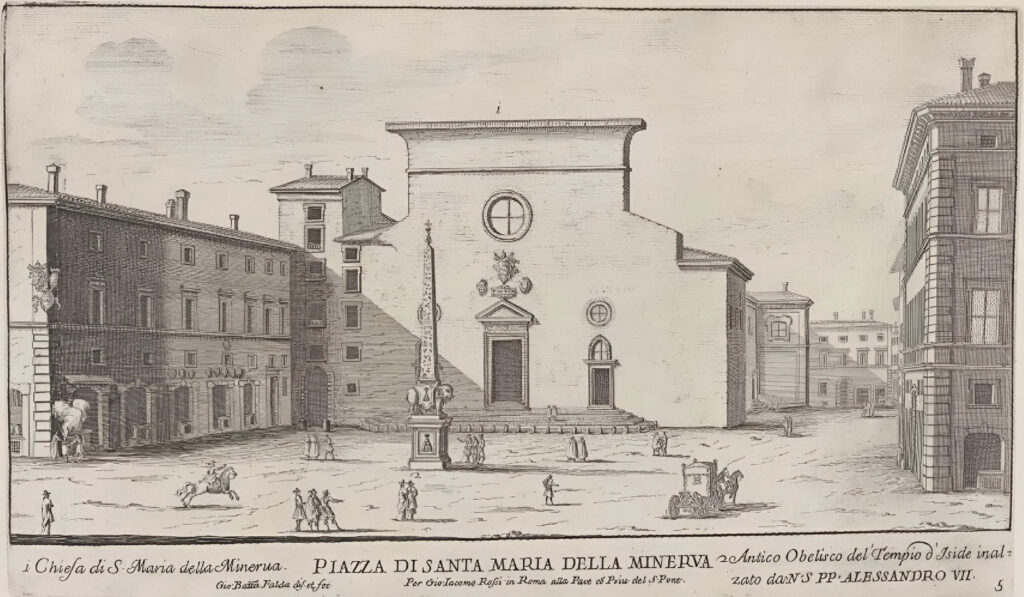
The solemn celebration was scheduled to begin at 10:30 a.m. in the basilica. This meant that around 9:00 a.m., the Holy Father and his entourage departed from the Apostolic Palace. The journey was made by car. On the streets of Rome, the faithful greeted the Pope with endless cheers. According to reports, the wave of enthusiasm was particularly intense in St. Peter’s Square, in front of the Church of Santa Maria in Transpontina, at the Church of San Giovanni Battista dei Fiorentini, at Chiesa Nuova, at Sant’Andrea della Valle, and at Largo Argentina. The culmination of the joy took place in Piazza della Minerva, where the Italian Army, represented by numerous units of various arms, paid homage to the Pope, performing honorary service. The houses along the papal route were lavishly decorated, and the square next to the basilica was resplendent with papal and national banners, tapestries, flowers, and other decorations.
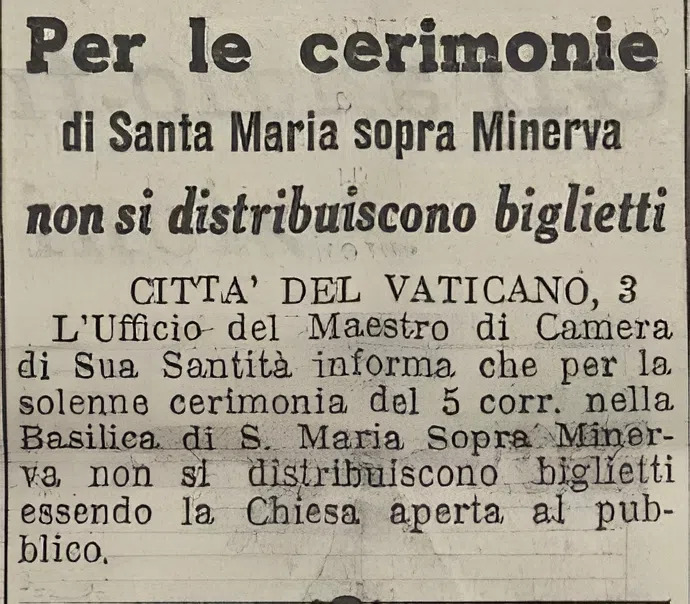
(source: L’Avvenire d’Italia from May 4, 1940)

(source: Radiocorriere from May 5-11, 1940)
(image quality improved)
(source: Archivio LUCE/Centro Cattolico Cinematografico)
At the entrance to the monastery, the Pope was greeted by, among others, Cardinal Tisserant, the Superior General of the Dominican Order, and dignitaries associated with the Franciscan orders. The welcome was accompanied by the singing of Perosi’s O Roma nobilis and numerous shouts from the crowd in honor of St. Francis, St. Catherine of Siena, and the Holy Father himself. The crowd’s uproar reached its peak when the Pope appeared, carried on the sedia gestatoria, vested in a mantum and wearing a tiara, and entered the basilica through the central door in a solemn procession. As soon as Pius XII entered the church, the famous silver papal trumpets rang out. While the Holy Father prayed before the Blessed Sacrament, the Cappella Musicale Pontificia sang Tu es Petrus.
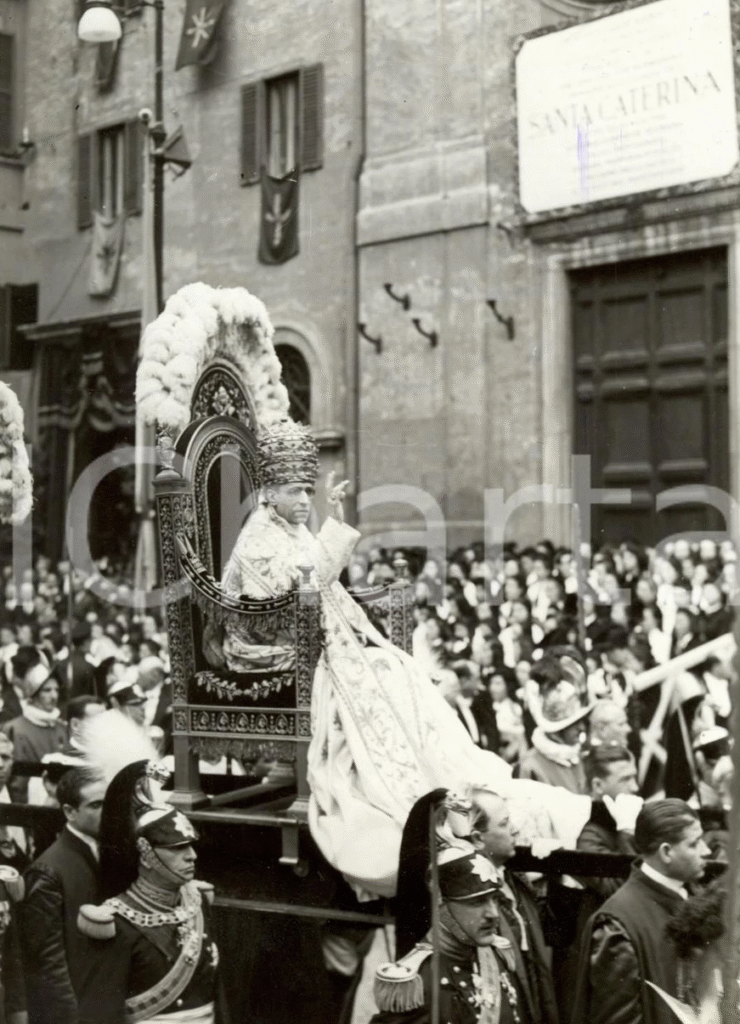
(source: iCharta)
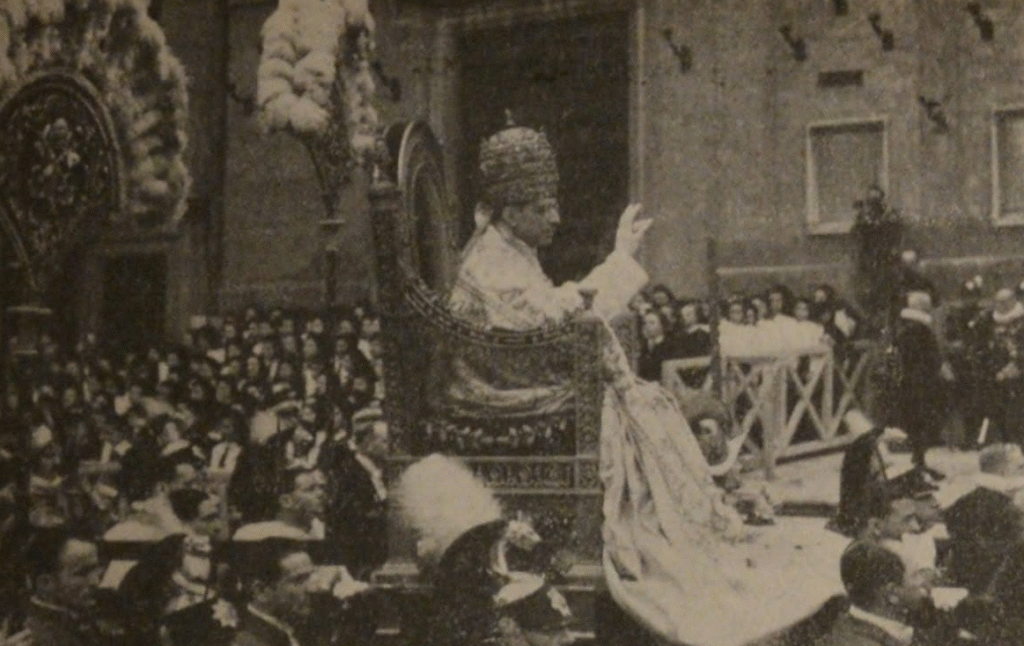
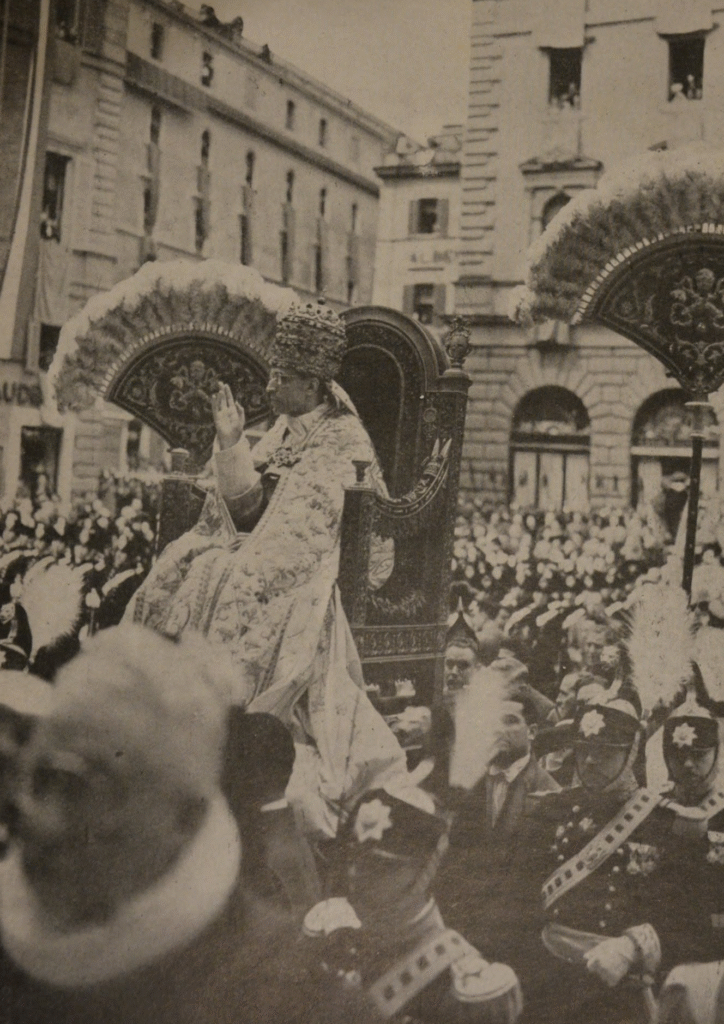
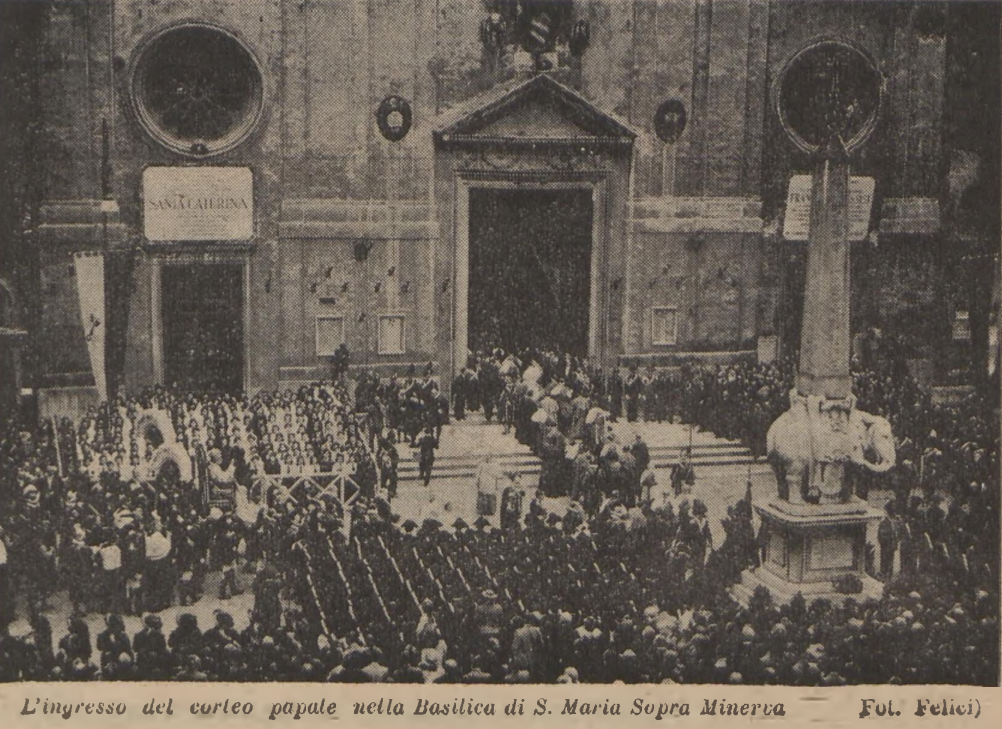
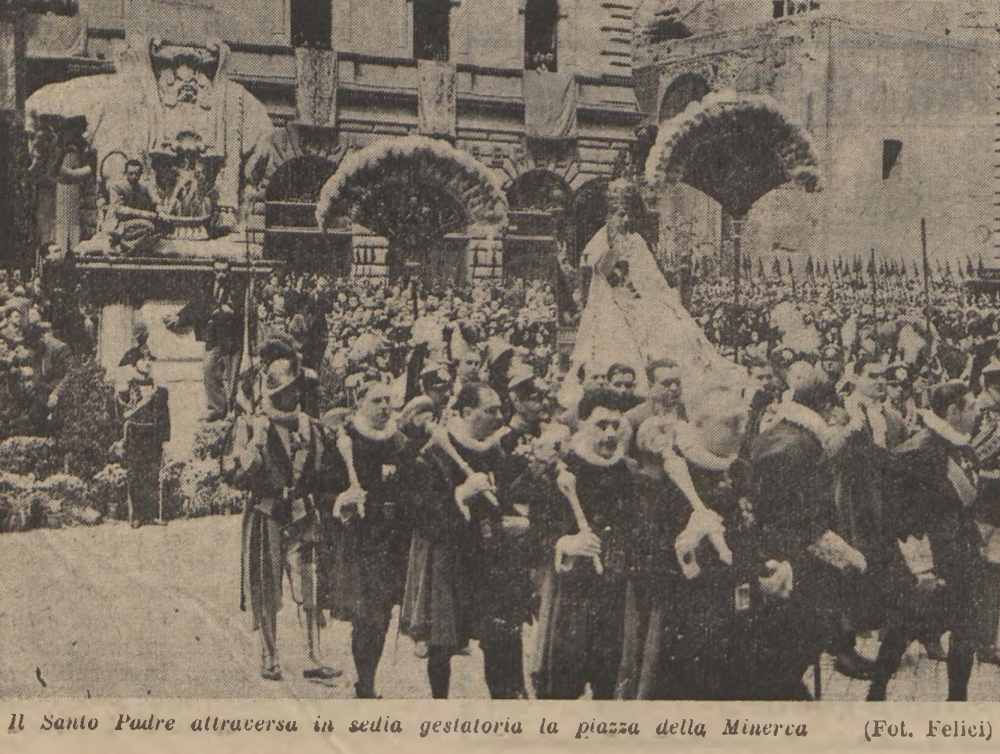
LEFT: View of the square in front of the basilica. RIGHT: Papal procession.
(source: L’Osservatore Romano della Domenica, May 12, 1940)
(source: Archivio LUCE/Centro Cattolico Cinematografico)
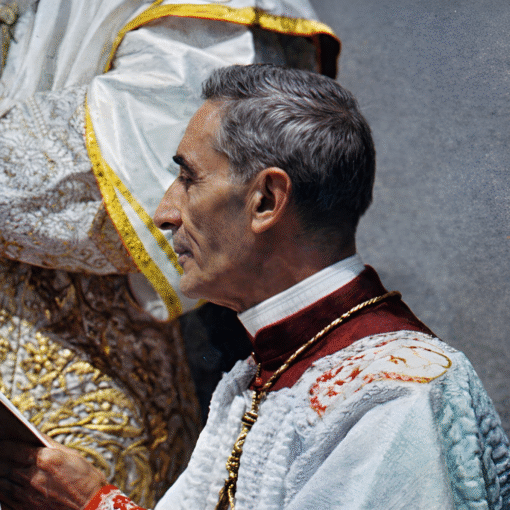
The Pontifical Mass, in the presence of the Bishop of Rome, was celebrated by the titular Cardinal of the basilica, Eugène Tisserant. The liturgy was prepared with extraordinary reverence, and the church was decorated with an extraordinary number of candles. Participating in the service were, among others, the Princess of Italy (Maria Francesca Anna Romana represented the absent Victor Emmanuel III), numerous representatives of the Royal Italian Government (Benito Mussolini was also absent), delegations of clergy and lay dignitaries from Assisi and Siena, and an exceptionally large number of Roman citizens. During the Offertory, Perosi’s O Sanctissima Anima (in honor of St. Francis) was performed, and at the conclusion of Mass, the famous composer’s Ecce Catharina fieri could be heard singing – this chant accompanied the Pope’s prayer, offered kneeling before the saint at the main altar.
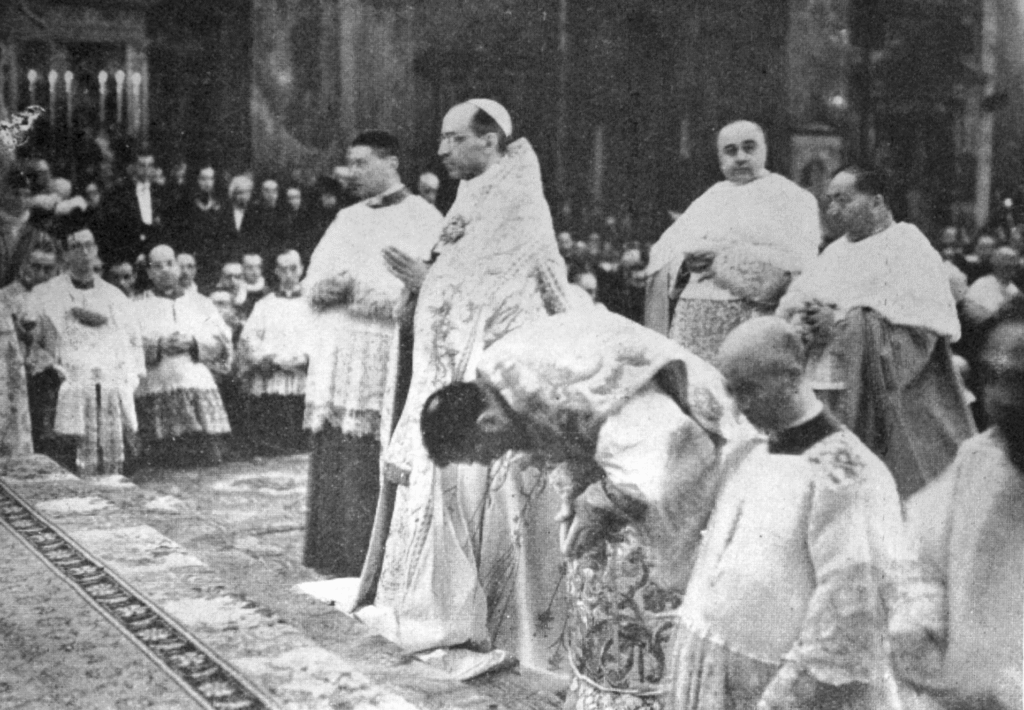
(source: Liturgical Arts Journal)
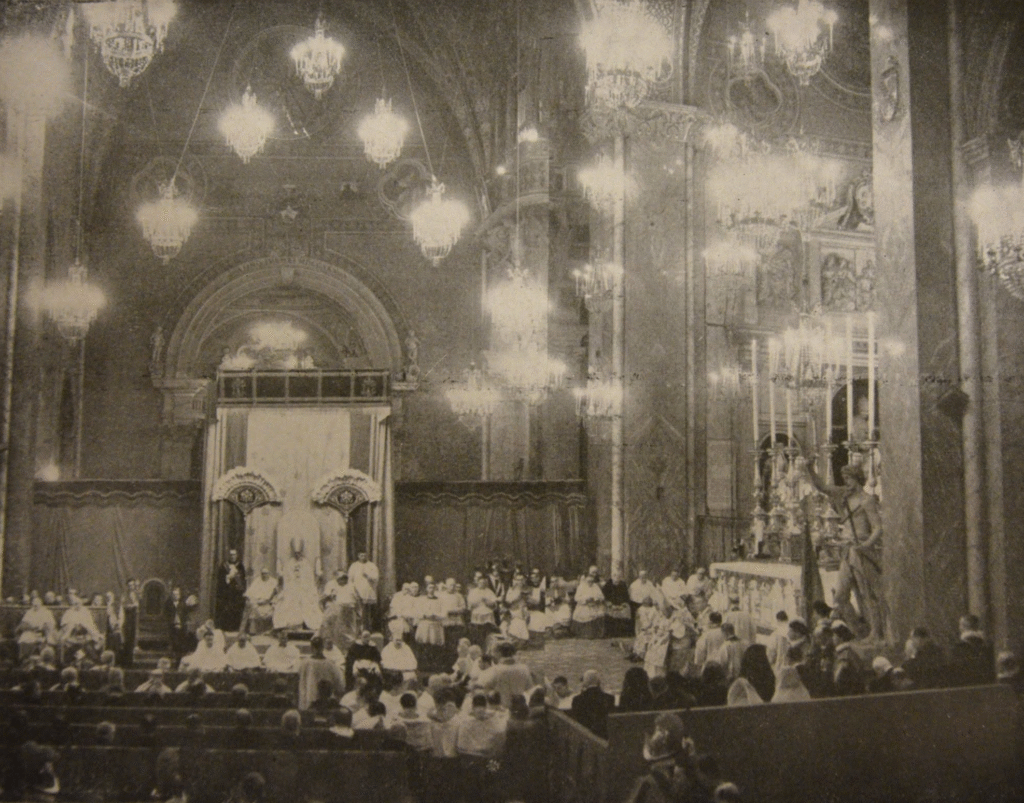
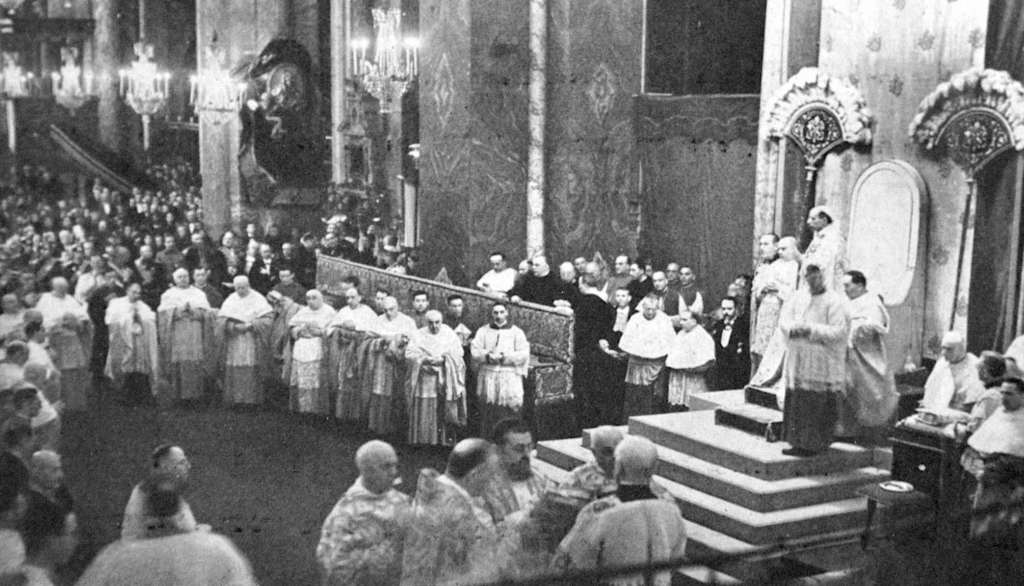
(source: Liturgical Arts Journal)
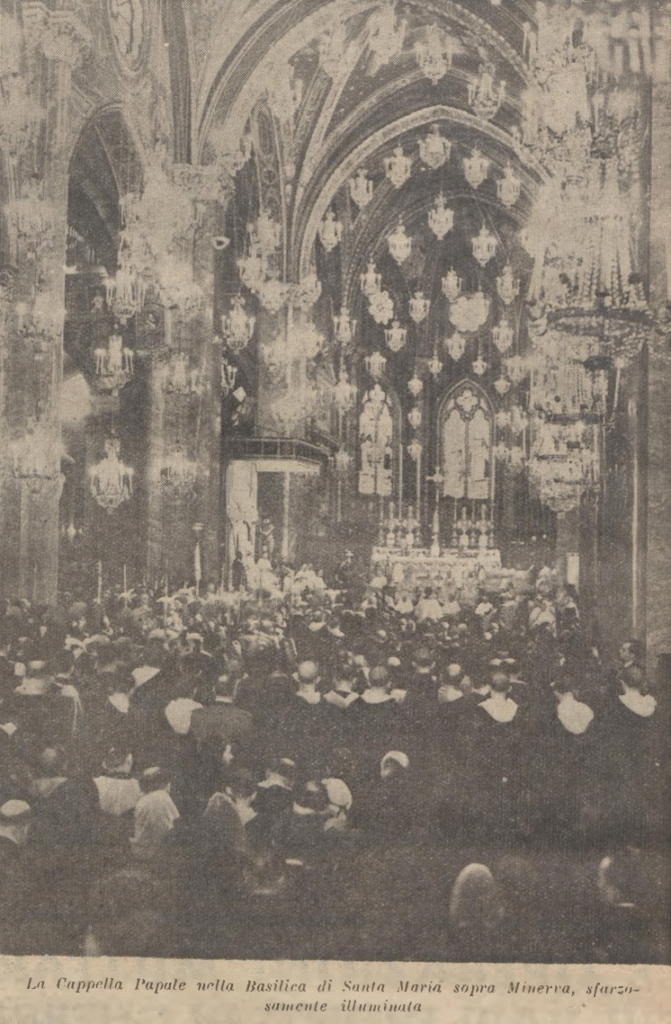
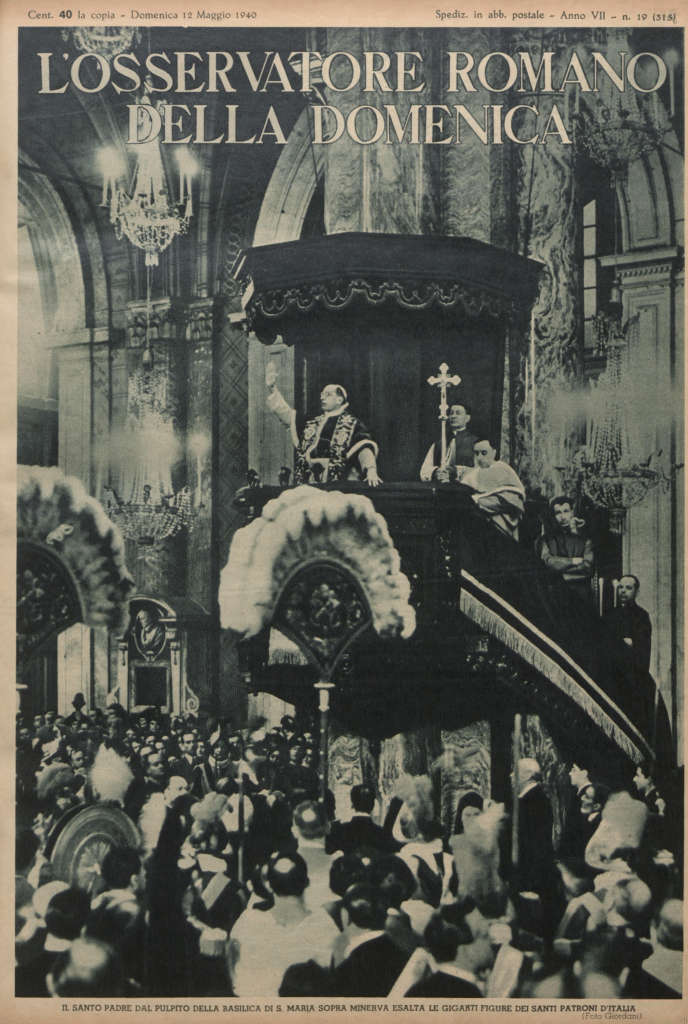
(source: L’Osservatore Romano della Domenica, May 12, 1940)
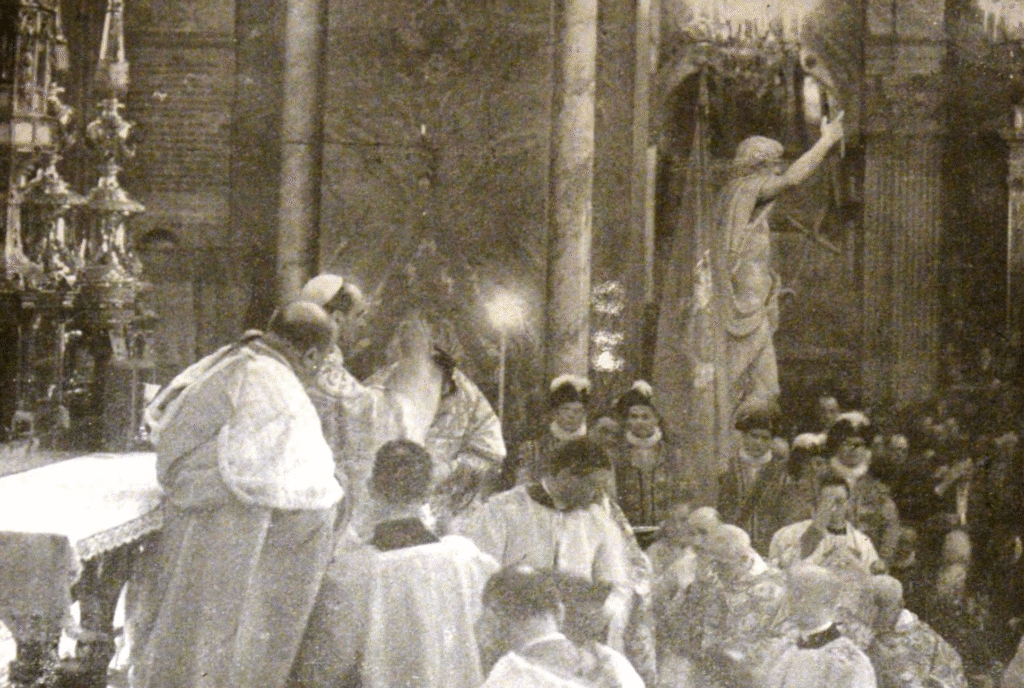
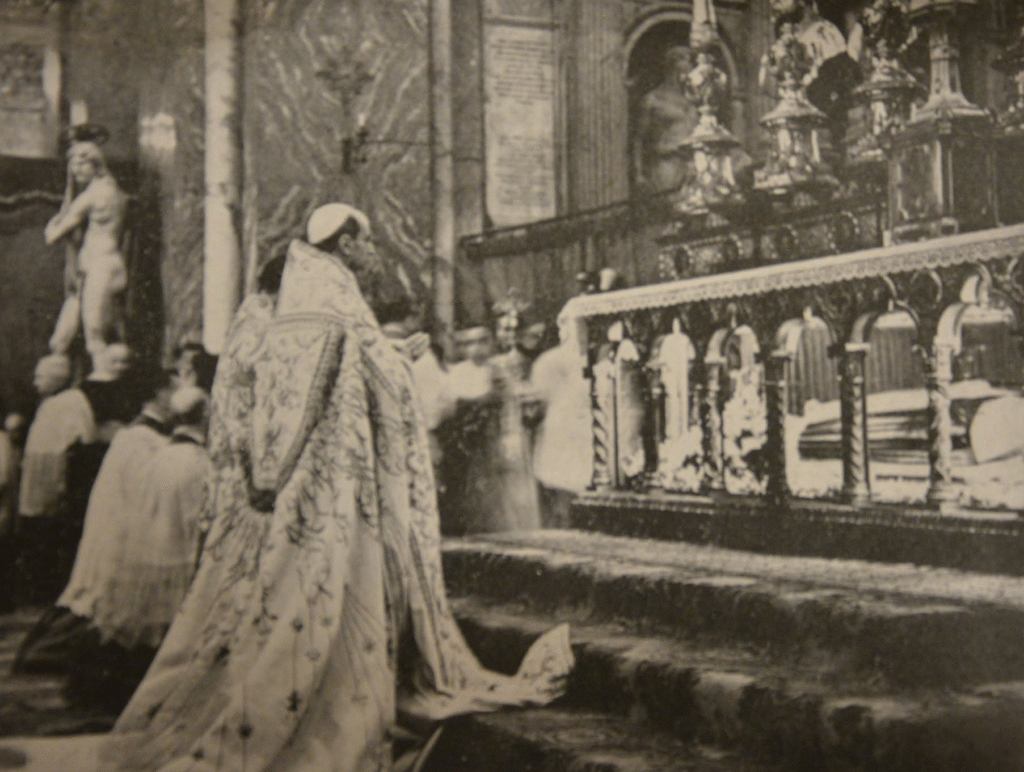
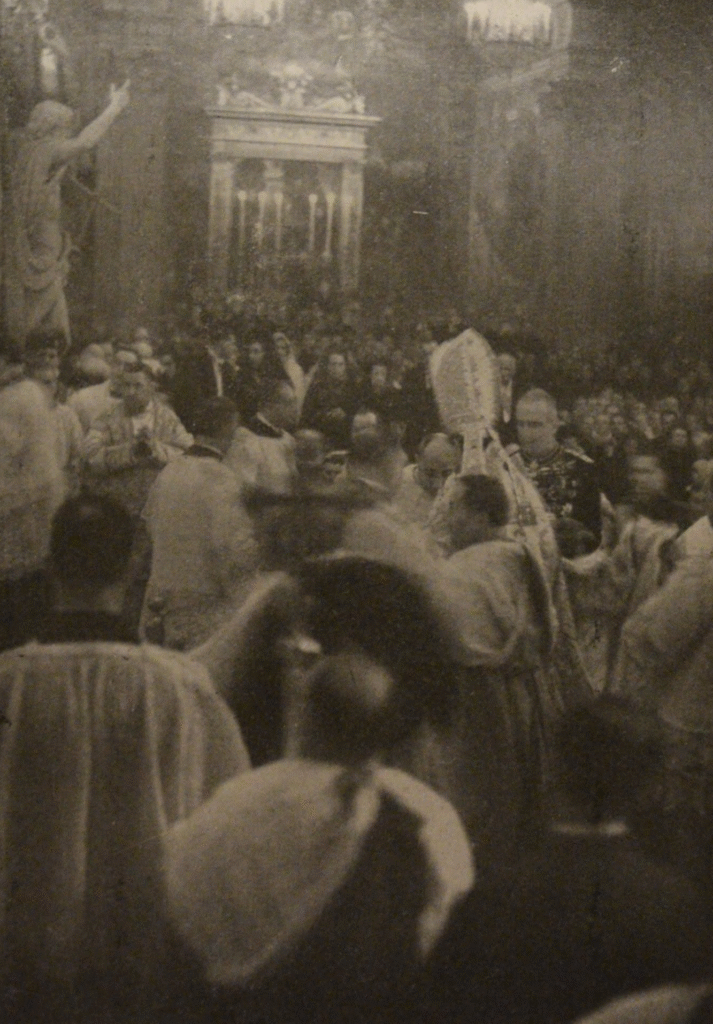
(source:: Frati Domenicani di Santa Maria sopra Minerva)
(source: Archivio LUCE/Centro Cattolico Cinematografico)
After the prayer, the Holy Father returned to the Papal Hall, where he donned his choir dress and went to the ambon, where he delivered a speech. The meeting then proceeded to the great hall of the Biblioteca Casanatense, where Pius XII received the Governor of Rome, who asked for the blessing of the diadem presented to St. Catherine of Siena by the Queen and the Ladies of Rome. He presented a precious chalice for the Mass for the basilica, donated by the City of Rome, and a silver olive branch, a gift from the City of Pisa. The diadem was immediately placed on the saint’s head. The Pope also inaugurated an exhibition devoted to memorabilia related to St. Catherine of Siena. A speech honoring the Holy Father was delivered in the library, and several books were presented to him as gifts. After the meeting, the Pope returned to the Vatican, once again sparking euphoria among the people gathered along the route.
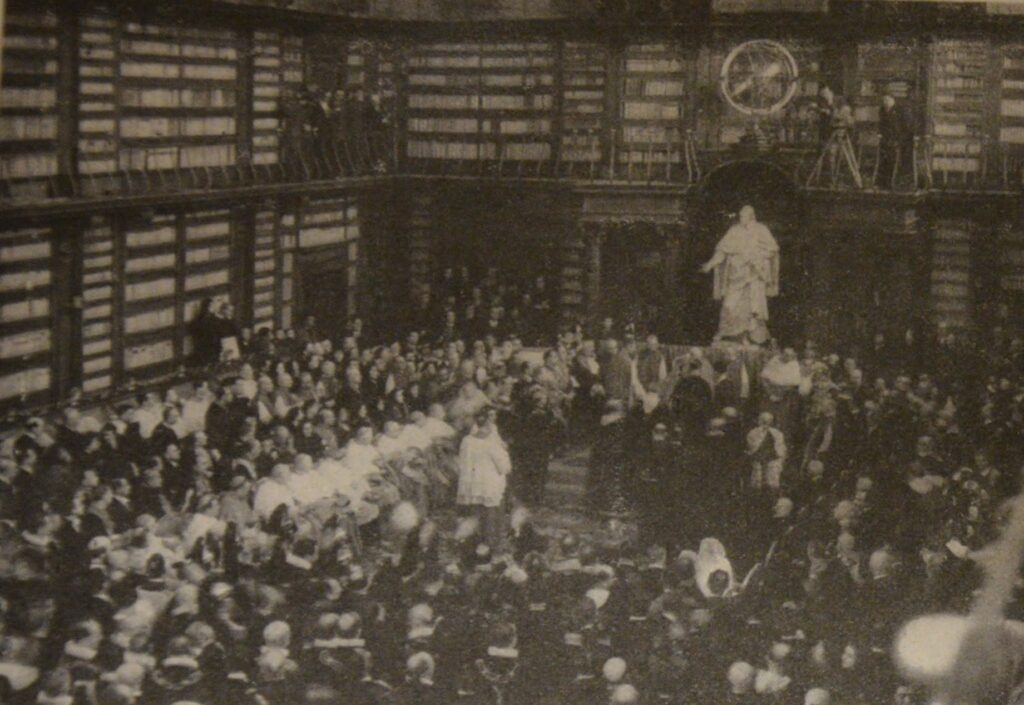
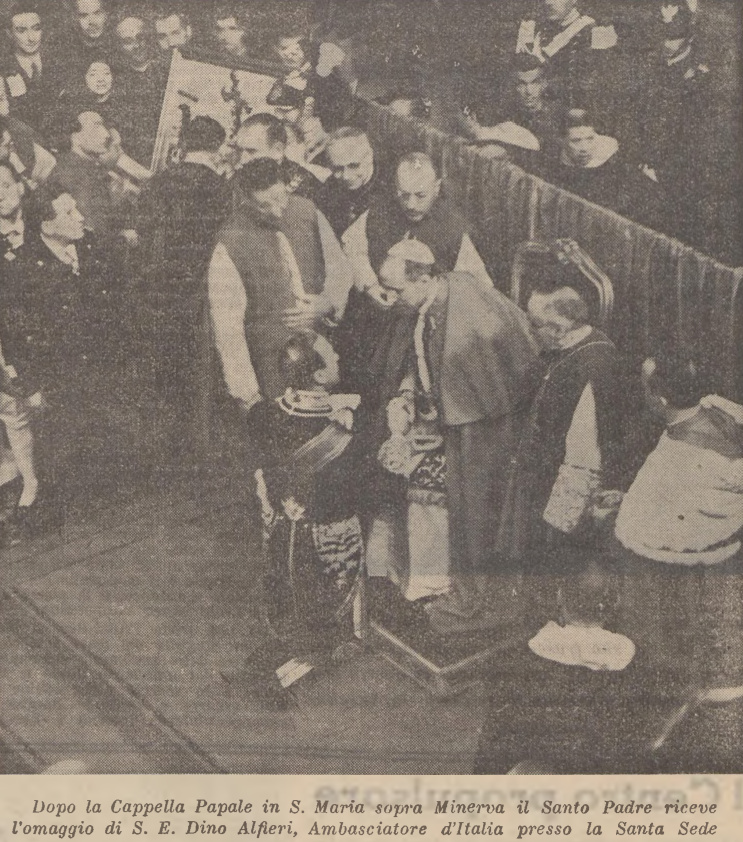
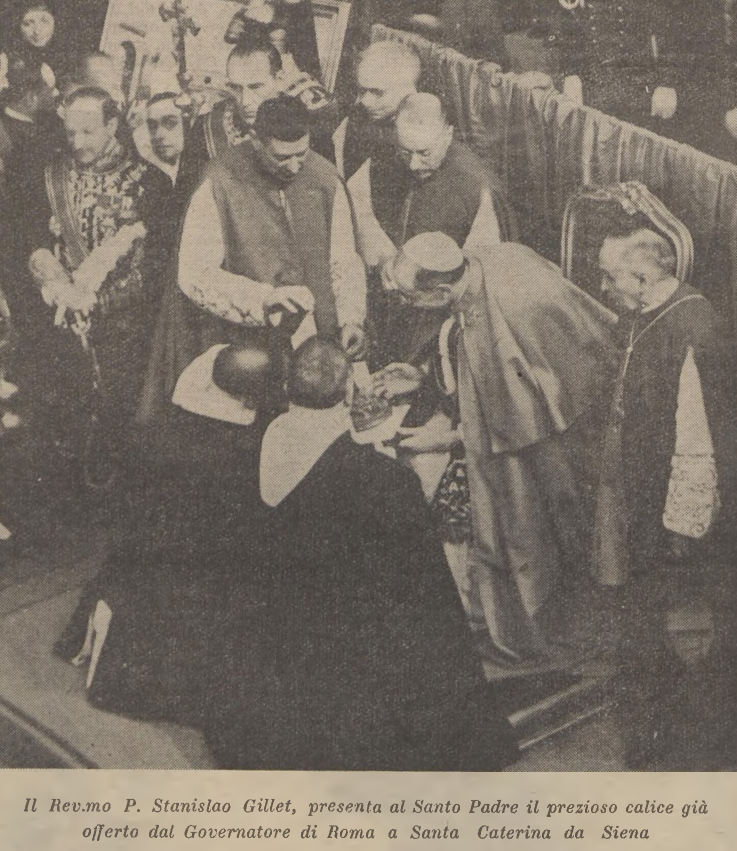
(Source: L’Osservatore Romano della Domenica, May 12, 1940)
III. Address of Pope Pius XII
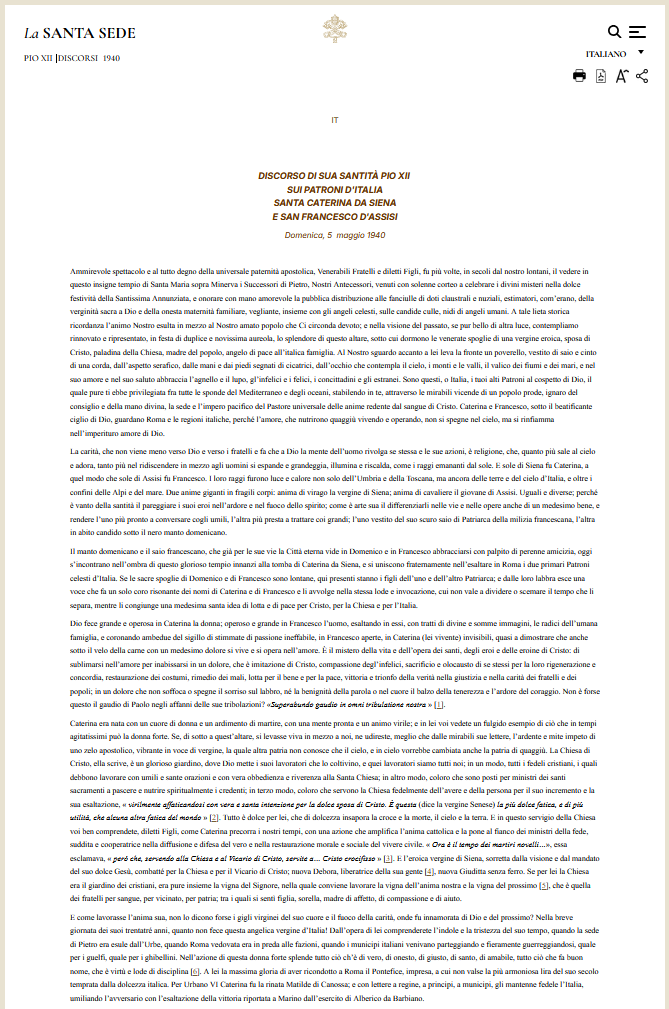
After the solemn liturgy, Pope Pius XII delivered a passionate speech from the basilica’s pulpit, praising St. Francis and St. Catherine of Siena, referring to the ancient traditions of papal visits to the basilica, and calling for peace.
(source: Archivio LUCE/Centro Cattolico Cinematografico)